
You’ve just finalized the logistics for your company’s move, but then your landlord sends a detailed checklist of demands for the old unit. It’s a high-stakes moment that many business owners face as their lease expires. Managing reinstatement works for commercial tenant requirements is often the most stressful part of a relocation, especially when you’re facing tight timelines and the fear of a rejected handover. Landlords are strict because they need the space ready for the next occupant, and any delay usually results in a forfeited security deposit.
We understand that this process needs more transparency and less guesswork. This 2026 guide is designed to help you navigate your lease exit with confidence by breaking down the technical requirements and realistic timelines in Singapore. You’ll learn how to coordinate hacking and demolition works, when you need a Qualified Person to submit plans to the BCA for structural alterations, and how to follow a process-oriented roadmap that ensures a smooth handover to your landlord without hidden costs.
Key Takeaways
- Understand your Tenancy Agreement as the definitive roadmap for restoring your unit to its original bare-shell state.
- Identify the standard scope of reinstatement works for commercial tenant projects, from hacking non-structural partitions to dismantling custom carpentry.
- Learn how factors like floor level and building-mandated after-hours labor impact your final quotation and project budget.
- Establish a clear three-month timeline to manage site inspections and coordinate works before your lease officially expires.
- Save on project costs by engaging a direct contractor to eliminate intermediary markups and ensure technical clarity during the handover.
What are Reinstatement Works for Commercial Tenants in Singapore?
Reinstatement works for commercial tenant obligations are a standard, non-negotiable feature in Singapore’s leasing market. Simply put, it’s the process of restoring a leased space to the exact condition it was in before your business moved in. Most business owners view this as a final hurdle, but it’s actually a legal requirement rooted deeply in your Tenancy Agreement (TA). This document acts as your primary roadmap; it defines the scope of work and the standards you must meet to successfully reclaim your security deposit.
Failing to execute these works properly carries heavy financial risks. Beyond the loss of your deposit, many landlords charge what is known as holdover rent. This is a daily penalty rate, often significantly higher than your standard monthly rent, applied for every day the unit remains un-reinstated after your lease officially expires. Don’t fall into the common As-Is trap. You might believe your expensive glass partitions or high-end flooring add value for the next occupant, but unless the landlord provides written consent to leave them, you’re legally bound to remove them. Landlords usually demand a blank canvas to attract the widest range of future tenants.
Common Reinstatement Clauses in Singapore Leases
Most TAs distinguish between fair wear and tear and mandatory restoration. While you aren’t usually responsible for the natural aging of the building materials, you are responsible for every alteration you made to the unit’s layout. Be careful with clauses that grant the landlord the right to appoint their own contractor if your work is deemed unsatisfactory. This often results in a much higher bill than if you had engaged a direct contractor yourself for hacking and demolition works. Always schedule a joint site inspection with the landlord or the Management Corporation Strata Title (MCST) at least two months before your exit. This meeting clarifies exactly what needs dismantling or repainting, preventing disputes during the final handover.
Bare Shell vs. Partially Reinstated Condition
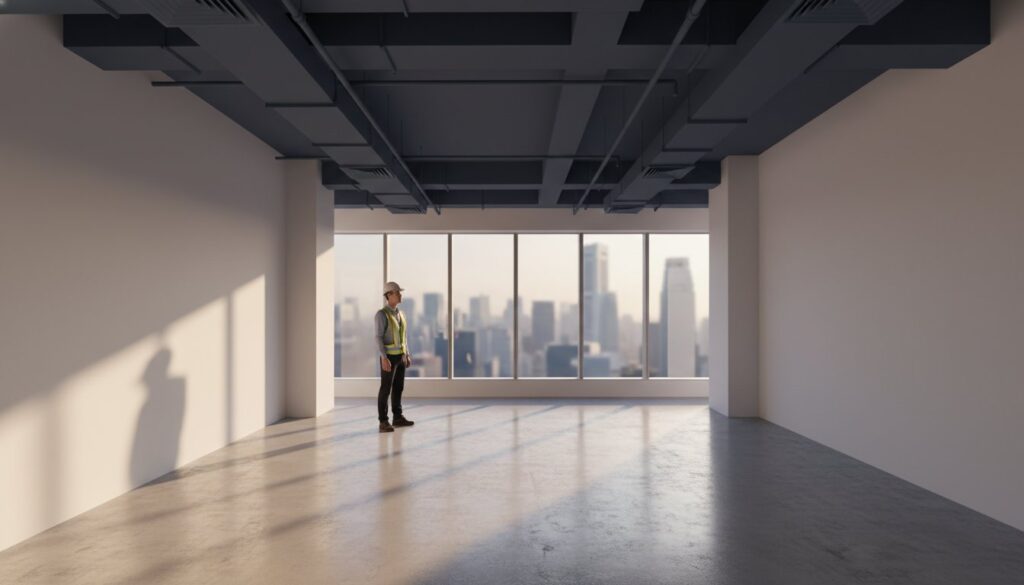
In the 2026 commercial landscape, a bare shell condition typically means the unit is returned with cement screed floors, standard fire protection systems, and a basic ceiling grid or exposed slab. If you installed vinyl flooring or heavy-duty tiling, these must be hacked and the surface leveled. Similarly, all electrical wiring and plumbing works added during your fit-out must be safely decommissioned. Removing customized fixtures like kitchen cabinets or reception counters requires technical precision to ensure the underlying structural integrity of the walls and floors remains intact. Understanding these specific technical requirements early helps you avoid the tight timelines and last-minute stress that lead to failed inspections.
Standard Scope of Commercial Reinstatement: From Hacking to Disposal
Executing reinstatement works for commercial tenant obligations requires a systematic reversal of every modification made during your occupancy. This isn’t a simple cleaning job. It’s a technical process that starts with the physical dismantling of your office or retail environment. The core of this phase involves hacking and demolition works to remove non-structural partition walls, glass doors, and false ceilings. These elements were likely added to create private offices or meeting rooms, but they must be cleared to return the floor plate to its original open layout.
Dismantling built-in carpentry is the next priority. This includes reception counters, pantry cabinets, and custom workstations that are bolted to the structure. Once the furniture is removed, the focus shifts to the floor. If you installed carpet, vinyl, or tiles, these finishes must be stripped away. This often leaves behind stubborn adhesive or grout. We use specialized machinery for grinding the glue off the concrete subfloor to ensure a smooth, clean surface that meets landlord standards. If you’re managing a large-scale office exit, coordinating these Hacking and Demolition Works through a direct contractor prevents communication gaps and keeps the project on schedule.
Proper waste management is a critical, yet often overlooked, part of the scope. Singapore maintains a 99% recycling rate for construction and demolition waste, and your project must comply with National Environment Agency (NEA) regulations. You cannot dispose of bulky commercial debris in general waste bins. All materials must be transported to approved recycling facilities. You should account for regulatory disposal fees, which as of 2024 are set at S$88 per tonne for incinerable waste and S$124 per tonne for non-incinerable waste. Using a contractor who understands these logistics ensures you don’t face illegal dumping fines or landlord rejection during the final walkthrough.
M&E and Fire Safety Restoration
Mechanical and Electrical (M&E) systems are the most scrutinized part of a handover. Any sprinklers or smoke detectors you moved to accommodate your room layout must be relocated to their original positions as per the building’s fire safety blueprint. This often requires specialized electrical wiring and installation knowledge to safely terminate data points and power sockets. Additionally, air-conditioning (HVAC) ducting and diffusers must be restored to the original grid to ensure the building’s central system functions correctly for the next tenant.
Wall and Ceiling Finishing
Once the heavy hacking is done, the unit needs aesthetic restoration. This involves patching up every hole left by wall-mounted shelving, TVs, or decorations. Landlords typically require all walls to be repainted in a “standard white” approved by the building management. The ceiling also needs attention; any damaged grid T-bars or stained ceiling boards must be replaced. The goal is to provide a blank, “like-new” canvas that allows the landlord to market the space immediately without performing additional repairs.
Estimating Costs and Avoiding Hidden Fees in Reinstatement
Estimating the budget for reinstatement works for commercial tenant projects requires looking beyond a simple per-square-foot rate. While unit size is the baseline, the technical complexity of your specific fit-out dictates the final figure. A unit on a high floor with limited cargo lift access will always cost more to clear than a ground-floor space. Similarly, the amount of custom carpentry and specialized partitions you installed directly impacts the labor hours required for dismantling. Most commercial buildings in Singapore mandate that noisy demolition occurs after-hours. You should expect this to influence labor expenses, as night shifts naturally command higher rates than standard day work.
A site walk-through is non-negotiable for an accurate, transparent quote. Don’t trust a “blind” estimate based solely on floor plans. A professional contractor needs to inspect the site to check for hidden challenges, such as the specific type of adhesive used on your vinyl flooring or the current configuration of the fire sprinkler system. When you receive a quotation, look for items that are often omitted to make the initial price look lower. This includes floor protection for common areas, which building managements strictly enforce, and comprehensive debris haulage. If these aren’t listed, you’ll likely face unexpected “variation orders” halfway through the project.
Common Cost Drivers in Commercial Units
The type of partitions you used significantly changes the demolition scope. Hacking heavy masonry or brick walls is far more labor-intensive and generates more heavy waste than removing standard drywall partitions. Fire safety systems add another layer of complexity. If your office layout required additional smoke detectors or modified sprinkler lines, restoring these to the original base-building configuration involves specialized technical trades. Finally, restricted-access buildings or those in the Central Business District (CBD) often have strict security protocols. These requirements slow down the movement of workers and materials, which can increase the overall project duration and total cost.
How to Avoid Handover Disputes
Success is measured by getting your security deposit back in full. To ensure this, you must document the unit’s condition before any work begins. Take clear photos of any pre-existing damage to the landlord’s fixtures or the building’s common areas. Your contractor should follow the building’s specific ‘Fit-out Manual’ or ‘Handover Guide’ to the letter. This document outlines the exact standards for painting, floor leveling, and M&E termination. Once the project is finished, don’t just walk away. Request a final defects clearance from your contractor. This confirms that all identified issues have been rectified, giving you the leverage you need during the final inspection with the landlord.
Timeline Management: When to Start Your Reinstatement
Starting your exit strategy too late is the fastest way to lose your security deposit. You should ideally begin planning your reinstatement works for commercial tenant obligations at least three months before your lease expires. This lead time isn’t just for the physical work; it’s for the administrative hurdles that come with commercial building management. Most tenants underestimate the time required for approvals, which can take anywhere from two to four weeks before a single hammer even touches a wall. Following a structured countdown ensures you don’t pay for “holdover” rent because of a delayed handover.
- Step 1: Review your Tenancy Agreement three months before expiry to confirm the exact restoration scope.
- Step 2: Conduct a joint site inspection with the landlord or MCST to agree on which items must be removed and which can stay.
- Step 3: Secure multiple quotes from direct contractors to compare the technical scope and ensure no items like debris haulage are missing.
- Step 4: Submit all permit applications to the MCST and, if necessary, the Fire Safety and Shelter Department (FSSD) at least 21 days before work starts.
- Step 5: Execute the physical works and set aside the final 3-5 days of your lease for professional cleaning and the official handover.
Navigating Building Management (MCST) Rules
Commercial buildings in Singapore operate under strict bylaws that can stall your project if you aren’t prepared. You must book cargo lifts and loading bays well in advance, as these are often shared with other tenants moving in or out. Your contractor must also submit a comprehensive list of workers and a valid Public Liability Insurance certificate to the building management office. Most importantly, you must adhere to “noisy work” hours. Typically, heavy hacking and demolition works are only permitted after 6:00 PM on weekdays or during weekends. Violating these time slots often results in immediate work stoppages and heavy fines from the MCST.
Why Buffer Time is Essential
Unexpected issues are common once you start stripping back the fit-out. You might discover damaged M&E components or electrical wiring issues that were hidden behind your partition walls. These require immediate rectification to meet fire safety standards. You also need a buffer to manage the landlord’s “snag list.” It’s rare for a landlord to accept a unit with zero comments after the first walkthrough. Having an extra few days allows your team to touch up paint or replace a cracked ceiling board without rushing. If you’re still in the early stages of planning your next move, reading about how to choose an Office Renovation Company can help you find a partner who understands these timeline pressures.
Ready to secure your deposit and ensure a clean exit? Contact us today for a transparent quote on your Commercial Office Renovation and reinstatement needs.
Why Choosing a Direct Contractor Saves You Money on Reinstatement
Managing reinstatement works for commercial tenant requirements doesn’t require high-concept artistic visions or expensive design consultants. It requires technical competence and financial transparency. When you engage an interior design firm for restoration, you’re often paying a 20-30% markup on top of the actual labor and disposal costs. This “coordination fee” covers their role as a middleman between you and the tradespeople. By hiring a direct contractor, you eliminate these unnecessary intermediary commissions. You pay for the actual work performed; the hacking, the electrical termination, and the masonry repairs; without the designer’s premium.
Direct communication with the team on the ground also leads to faster response times. During the final days of a lease, a landlord might suddenly request an extra coat of paint or a specific adjustment to a fire sprinkler head. Because you’re speaking directly with the people performing the electrical wiring and installation or hacking and demolition works, these “last-minute” requests are handled immediately. There’s no back-and-forth through a project manager who isn’t on-site. This streamlined business model ensures that labor costs remain fair and that every dollar spent is visible in your final quotation.
The Advantage of Direct Trade Expertise
Efficiency in reinstatement comes from knowing exactly how to dismantle a fit-out without damaging the building’s core structure. Our specialized hacking and electrical teams focus on the practicalities of restoration. We don’t just clear the space; we ensure all technical requirements, like capping off plumbing lines or restoring fire sprinkler grids, meet local regulatory standards. We also handle the administrative side pragmatically. Dealing with MCST paperwork and BCA permits is part of our daily routine, which allows us to bypass the delays often faced by less experienced firms. For a deeper look at how this model compares to traditional setups, see our Direct Renovation Contractor Singapore comparison guide.
Securing Your Security Deposit
The ultimate goal of any reinstatement works for commercial tenant project is the 100% return of your security deposit. We’re committed to meeting the specific standards laid out in your landlord’s fit-out manual. Our team doesn’t just finish the work and leave; we can handle the final handover inspection on your behalf to address any minor snags immediately. This proactive approach prevents the landlord from finding excuses to withhold funds or charge holdover rent. We value straightforward communication and technical skill over flashy presentations, ensuring your lease exit is as cost-effective as possible.
Get a transparent, direct quote for your reinstatement works today.
Secure Your Security Deposit and Move Forward
Successfully navigating a lease exit is about technical precision and foresight. By reviewing your Tenancy Agreement early and maintaining a strict three-month countdown, you eliminate the risk of high daily penalties and rejected handovers. The objective is always a bare-shell restoration that aligns perfectly with building management standards. Engaging a specialist in hacking and M&E restoration ensures these complex tasks are completed efficiently without expensive intermediary markups.
Request a Direct Reinstatement Quote today to ensure your reinstatement works for commercial tenant needs are handled with technical skill and honesty. We’re here to help you close this chapter with a clean handover and a successful move to your next location.
Frequently Asked Questions
How long does a typical office reinstatement take in Singapore?
A typical project takes between 14 to 30 days to complete. Smaller units under 2,000 square feet often finish within two weeks if the scope is limited to partition removal and painting. Larger floor plates or units with extensive masonry hacking require a full month. You must also account for the two weeks building management usually takes to process work permits before any physical work begins.
Can I leave my air-conditioning units behind for the next tenant?
You generally cannot leave air-conditioning units behind unless the landlord provides explicit written consent. Most tenancy agreements demand a return to a bare shell condition. This means you must remove all split units and restore the central HVAC ducting and diffusers to their original grid configuration. Assuming the next tenant wants your cooling system is a common mistake that leads to handover delays.
What happens if the reinstatement is not completed by the lease expiry date?
Failing to finish by the expiry date often triggers “holdover rent” clauses in your contract. This is a daily penalty rate that is usually significantly higher than your standard monthly rent. The landlord might also forfeit your security deposit to hire their own contractor for the remaining reinstatement works for commercial tenant obligations, which often results in much higher costs than hiring your own team.
Do I need a permit for hacking and partition removal?
Yes, you need internal permits from the building’s MCST for any hacking and demolition works. If your original fit-out involved structural changes or major fire safety modifications, you may also need a Qualified Person to submit plans to the BCA or FSSD for decommissioning. Your contractor should handle the submission of worker name lists and insurance certificates to the building management office.
Is painting always required during commercial reinstatement?
Painting is a standard requirement in almost every commercial handover. Landlords require all walls to be patched, smoothed, and repainted in a neutral “standard white” approved by the building management. This ensures the unit looks uniform and professional, allowing the landlord to market the space to new occupants immediately without performing additional aesthetic repairs.
How much does commercial reinstatement cost per square foot in 2026?
Costs vary based on the technical complexity of your fit-out rather than a fixed square-foot rate. Factors like the volume of partition walls, the type of floor adhesive to be ground off, and mandated after-hours labor requirements determine the final price. We provide transparent, itemized quotations based on a physical site walkthrough to ensure every cost is accounted for without hidden markups.
What is the difference between reinstatement and renovation?
Renovation involves adding features like partitions, custom carpentry, and new electrical points to suit your business needs. Reinstatement is the exact opposite process. It is the technical reversal of those additions to restore the unit to its original, empty state. While renovation focuses on aesthetics and function, reinstatement focuses on structural restoration and meeting the landlord’s handover checklist.
Can the landlord force me to use their preferred reinstatement contractor?
Landlords cannot usually force you to use their specific contractor, but they can insist that your chosen team meets strict building standards. Your contractor must provide valid Public Liability Insurance and follow the building’s fit-out manual precisely. Choosing a direct contractor who is familiar with local MCST requirements is often the most economical path to securing your deposit return.