
Have you ever wondered why your power trips the moment you turn on the aircon and the induction hob at the same time? It isn’t just a minor annoyance; it’s often a clear warning sign from an aging electrical system. Many homeowners ask, Why Do We Need To Replace Our DB Box In Singapore? especially when moving into an older resale flat. It’s a valid concern because your distribution board is the heart of your home’s safety infrastructure.
We understand the anxiety caused by flickering lights during a storm or the fear of electrical fires. You shouldn’t have to decode complex technical jargon just to keep your family safe. Discover the critical safety, regulatory, and functional reasons why upgrading your distribution board is essential for modern Singaporean homes. This article clarifies how a new DB box ensures compliance with EMA and HDB regulations while future-proofing your flat for high-power appliances. We’ll show you how a professional replacement provides the reliability your modern lifestyle demands through a transparent, contractor-direct approach that prioritizes technical competence over flashy markups.
Key Takeaways
- Identify the specific warning signs of an aging electrical system, such as frequent power trips or discoloration, to prevent potential fire hazards in your home.
- Discover the fundamental reasons Why Do We Need To Replace Our DB Box In Singapore? to ensure your flat safely handles modern, high-power appliances.
- Compare the technical advantages of RCD versus RCBO protection to determine which safety configuration best fits your household’s requirements.
- Navigate the legal requirements for distribution board upgrades, including when a Licensed Electrical Worker (LEW) and HDB permits are mandatory.
- Find out how working with a direct renovation contractor eliminates middleman markups, providing transparent pricing for your electrical installations.
Understanding the Distribution Board (DB Box) in Singapore Homes
Every home in Singapore has one, usually tucked away in a cabinet near the front door or in the service yard. This metal or plastic enclosure is the Distribution board (DB Box). It’s the primary interface between the power grid and your living space. When SP Group delivers electricity to your unit, this box acts as the central hub. It isn’t just a junction point; it’s a safety gatekeeper. Its job is to monitor every circuit and cut power instantly if it detects a fault or an overload. During a 2026 renovation, it’s easy to focus on aesthetics like kitchen cabinets or vinyl flooring. However, the DB box is the most critical invisible component. It underpins the safety of every other upgrade you make. Skipping a DB upgrade while spending thousands on carpentry is a risky oversight. It’s the foundation that allows your modern appliances to run without compromising your home’s structural integrity.
Key Components: MCB, RCCB, and Main Switch
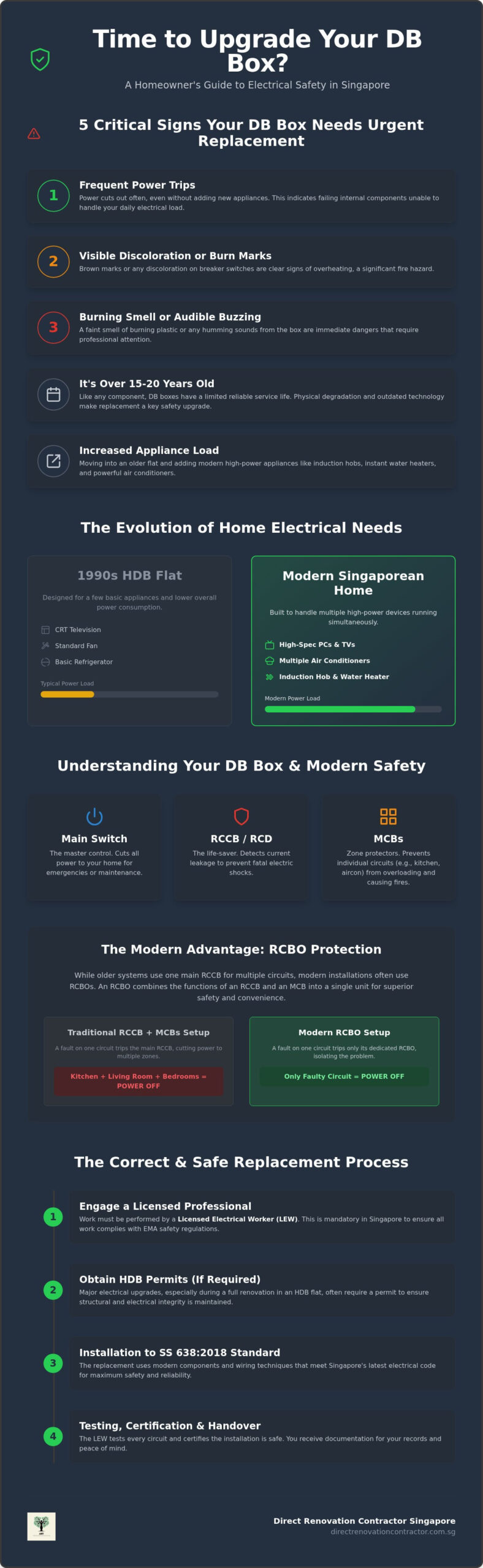
Inside the box, you’ll find three main types of switches. The Main Switch is the master control. It allows you to kill all electricity to the flat for maintenance or during emergencies. The RCCB (Residual Current Circuit Breaker), sometimes called an ELCB in older setups, is the life-saving component. It trips when it detects current leakage, preventing fatal electric shocks. Finally, the MCBs (Miniature Circuit Breakers) protect individual zones. You’ll have separate MCBs for the kitchen, aircon units, and water heaters. Each one prevents a specific circuit from drawing too much current and causing a fire. Modern installations often use higher-quality breakers that react faster than the models used twenty years ago.
Why ‘Original’ Doesn’t Mean ‘Safe’ in Older Flats
Many homeowners ask, Why Do We Need To Replace Our DB Box In Singapore? if the lights still turn on. The answer lies in the age of the infrastructure. HDB flats built in the 1990s or earlier were designed for a different era. Back then, households didn’t use induction hobs, multiple 5-tick aircons, and high-spec gaming PCs simultaneously. Over time, Singapore’s electrical codes, like CP5 and the current SS 638:2018, have evolved to mandate higher safety standards. Older boards often use outdated technology that lacks the sensitivity of modern breakers. Beyond technology, physical degradation is a factor. Decades of heat and humidity cause internal busbars to corrode and wiring insulation to become brittle. An “original” DB box is often a ticking clock, not a badge of durability. If your flat is over 20 years old, the internal components have likely reached the end of their reliable service life.
5 Critical Signs Your DB Box Needs Urgent Replacement
Recognizing the red flags before a total failure occurs saves you from costly emergency repairs. Many homeowners wait until the power goes out completely, but the warning signs are usually present months in advance. If you’re wondering Why Do We Need To Replace Our DB Box In Singapore? look for these five critical indicators within your home. Nuisance tripping is the most common symptom. If your power cuts out frequently even when you haven’t added new appliances, the internal components are likely failing. You should also watch for visible discoloration or brown marks on the breaker switches. These are signs of overheating. A faint smell of burning plastic or audible humming sounds coming from the box are immediate safety hazards. Finally, if your distribution board is more than 15 to 20 years old, it has reached the end of its reliable service life.
The age of your property is a primary factor. Older resale flats often still use legacy components that don’t align with Singapore’s Electrical Safety Regulations. These outdated boards weren’t built to handle the continuous load of modern living. If you’re noticing these signs during a home inspection, our team provides electrical wiring and installation as part of our transparent, direct-to-owner renovation packages.
The Danger of ‘Sticky’ Breakers
Old breakers can become “sticky” over time. This means they may fail to trip even during a real short circuit or a massive power surge. While a breaker that trips frequently is annoying, a breaker that refuses to trip is dangerous. It allows excess current to flow through your wires, which can lead to electrical fires behind your walls. When a circuit breaker refuses to reset after tripping, it’s often a sign of internal mechanical failure. Don’t force the switch back up; this mechanical fatigue indicates the component can no longer protect your home.
Modern Power Demands vs. Legacy Wiring
In 2026, our homes require more stable power distribution than ever before. High-end gaming rigs, multi-room smart home systems, and induction hobs put immense pressure on legacy systems. We’re also seeing an increase in homeowners installing EV chargers in landed properties or executive maisonettes. These high-draw devices can easily overwhelm an old 30-amp or 40-amp setup. If you’re planning to upgrade to a system-4 aircon or a high-capacity water heater, your current load might be insufficient. Upgrading the DB box ensures your electrical infrastructure matches your 2026 lifestyle without the risk of constant blackouts.
Modern Safety Standards: RCD vs. RCBO and Why It Matters
Upgrading your electrical system involves more than just swapping old parts for new ones. It’s about choosing the right technology for 2026 safety standards. When homeowners ask, Why Do We Need To Replace Our DB Box In Singapore?, the conversation often turns to the choice between a traditional Residual Current Device (RCD) and a modern Residual Current Breaker with Overcurrent (RCBO). In a traditional setup, a single RCD acts as a safety gatekeeper for the entire house. If a fault occurs in your kitchen toaster, the RCD trips and plunges every room into darkness. This isn’t just inconvenient; it’s a safety hazard. Modern RCBOs provide individual protection for each circuit. This shift aligns with the Energy Market Authority’s push for higher safety standards in residential units, ensuring that a minor fault in one room doesn’t paralyze the entire household.
The Practical Benefit of RCBO Upgrades
Choosing RCBOs offers immediate functional advantages. The most significant benefit is fault isolation. If a water heater develops a leak, only that specific breaker trips. Your lights, fridge, and internet remain powered. This makes troubleshooting incredibly straightforward. You won’t have to guess which appliance caused the blackout because the specific breaker tells you exactly where the problem lies. RCBOs also reduce the risk of nuisance tripping. In older homes, cumulative minor leakages from multiple appliances can add up. A single RCD might trip under this combined load, even if no individual appliance is dangerous. RCBOs prevent this by treating each circuit as an independent zone.
Is a Full Rewiring Necessary with a DB Upgrade?
A common question during a Why Do We Need To Replace Our DB Box In Singapore? assessment is whether the wires behind the walls also need changing. Think of the DB box as the heart and the wires as the veins. If your flat has concealed wiring that’s over 25 years old, the insulation has likely become brittle. Simply replacing the box won’t fix degraded wires. However, if your wiring is relatively new or in good condition, a DB replacement might be sufficient. A Licensed Electrical Worker (LEW) will evaluate your specific situation during the site visit. This technical assessment is a core part of any comprehensive Home Renovation in Singapore. We focus on structural integrity rather than just cosmetic changes. If your wiring insulation is still flexible and the continuity tests pass, we’ll provide an honest recommendation. If a full rewire isn’t required, we won’t push for it, ensuring you avoid unnecessary expenses while maintaining a safe home environment.
The DB Box Replacement Process: Regulations and HDB Permits
Replacing a distribution board is a structured technical procedure that must follow strict safety protocols. When homeowners ask, Why Do We Need To Replace Our DB Box In Singapore?, the answer often lies in the complexity of the installation itself. The process begins with an on-site assessment by a Licensed Electrical Worker (LEW). They inspect the existing condition of your wiring and calculate the total expected load of your new appliances. Following this, we determine if your flat requires an HDB load upgrade permit, particularly if you’re moving into an older resale block. The actual replacement involves a safe shutdown of the entire unit to remove the legacy board. We then install the new DB box, populating it with modern RCBOs for superior protection. The final and most critical step is rigorous testing. The LEW commissions every circuit to ensure the breakers trip correctly under simulated fault conditions before the system is certified for use.
Managing these steps correctly prevents future power trips and ensures your renovation stays on schedule. If you’re planning a major overhaul, our team provides transparent, LEW-certified electrical wiring and installation services without the typical interior design markups.
Why You Must Hire a Licensed Electrical Worker (LEW)
Under the Electricity Act, only an EMA-Licensed Electrical Worker is legally authorized to perform or supervise DB box modifications. This isn’t just about following the law; it’s about protecting your assets. Most home insurance policies in Singapore explicitly state that any claims resulting from “unlicensed” electrical work will be rejected. If a fire occurs due to a DIY or unlicensed installation, your insurance coverage is effectively void. You can verify any contractor’s LEW license number directly on the EMA website to ensure they’re qualified to handle your home’s safety infrastructure.
HDB Load Upgrades: 30A vs. 40A
Understanding your flat’s electrical capacity is essential before buying high-draw appliances. Many older HDB blocks were originally designed with a 30-amp (30A) main switch, which is often insufficient for 2026 living standards. If you’re installing a system-4 aircon or an induction hob, you’ll likely need to upgrade to a 40-amp (40A) load. This requires a formal application to HDB to verify if the block’s current electrical riser can support the additional draw. If approved, SP Group will schedule a meter upgrade. We handle the paperwork and technical coordination for these upgrades, ensuring your home has the necessary “juice” to run your modern equipment safely.
Saving on Electrical Works: Why Choose a Direct Renovation Contractor?
When you manage a home makeover, the cost of specialized trades like electrical work can quickly inflate. Choosing a direct contractor allows you to eliminate the 20% to 30% markup typically added by Interior Design (ID) firms. These firms often act as intermediaries, outsourcing the technical work to sub-contractors while adding a significant management fee to your bill. By working directly with us, you ensure that every dollar spent goes toward high-quality materials and LEW-certified labor. We provide transparent, itemized quotes that break down the costs of every MCB, RCBO, and man-hour. This clarity is essential for homeowners trying to understand Why Do We Need To Replace Our DB Box In Singapore? without feeling pressured by hidden commissions.
Efficiency is another major advantage of the direct model. We can bundle your DB box replacement with other essential services like Kitchen Cabinet Carpentry or Tiling and Masonry Works. This integrated approach ensures a smoother project flow. You won’t have to coordinate between different firms to ensure the electrical points align with your new carpentry layout. Our team manages the entire sequence, from the initial hacking to the final commissioning of your circuits.
The ‘No-ID’ Advantage for Electrical Safety
Interior designers primarily focus on aesthetics and “lifestyle” visions. While a beautiful home is important, structural integrity and electrical safety are the real priorities for long-term living. Direct contractors prioritize these functional requirements. You get technical advice directly from the professionals who understand the nuances of HDB and EMA regulations. We won’t suggest a layout that compromises your safety just to achieve a specific look. For a deeper look at how this model benefits your budget and home safety, read our Direct Renovation Contractor Singapore comparison guide. It explains the practical differences between the ID-led and contractor-direct approaches.
Future-Proofing Your Home Investment
A certified DB upgrade is more than a safety measure; it’s a strategic investment in your property. If you ever decide to sell your flat, having a modern, LEW-certified distribution board significantly increases the resale value. Buyers in 2026 are savvy. They look for homes that are ready for immediate move-in without the need for urgent rewiring or electrical repairs. As part of our service, we provide the ‘Single Line Diagram’ (SLD). This technical drawing is a roadmap of your home’s electrical system, making future maintenance much easier for any electrician. Investing in your DB box now prevents the “penny wise, pound foolish” mistake of ignoring the heart of your home. Safety is the most important renovation investment you’ll ever make. It ensures your family’s peace of mind and the long-term reliability of your household’s power supply.
Secure Your Home’s Electrical Future Today
Upgrading your distribution board is a fundamental step in maintaining a safe and efficient modern household. We’ve highlighted the critical role of modern RCBOs in isolating faults and the necessity of aligning your flat’s load capacity with today’s high-draw appliances. When you evaluate Why Do We Need To Replace Our DB Box In Singapore?, remember that it’s about more than just preventing nuisance trips; it’s about adhering to mandatory safety standards and protecting your property investment.
As an HDB-registered contractor, we specialize in LEW-certified electrical installations that prioritize technical precision over stylistic flair. We eliminate middleman markups on labor and materials, ensuring you receive honest, transparent pricing for every component. Get a Direct Quote for Your Electrical Rewiring & DB Upgrade to start your renovation on a solid, safe foundation. Taking action now prevents the risk of electrical hazards and ensures your home remains a reliable sanctuary for years to come.
Frequently Asked Questions
How long does it take to replace a DB box in an HDB flat?
A standard DB box replacement typically takes between three to five hours to complete. This duration includes the safe shutdown of your power, the physical installation of the new board, and the mandatory testing phase. If your home requires complex circuit tracing or if we’re integrating the upgrade with a full rewiring project, the process might extend to a full working day. Our Licensed Electrical Worker (LEW) ensures every circuit is commissioned correctly before restoring power.
Can I replace just one faulty breaker instead of the whole DB box?
You can replace individual Miniature Circuit Breakers (MCBs) if the distribution board’s housing and internal busbars are still in good structural condition. However, if your board is over 15 years old, replacing only one component is often a temporary fix. Older boards may not be compatible with modern, high-sensitivity safety components. Replacing the entire unit ensures that every circuit in your home benefits from the latest protection standards and prevents future mechanical failures.
Is it mandatory to upgrade my DB box during an HDB renovation?
It isn’t legally mandatory to upgrade your DB box unless you’re performing a full electrical rewire or adding high-capacity appliances that require a load upgrade permit. However, when homeowners ask, Why Do We Need To Replace Our DB Box In Singapore? during a renovation, the reason is safety and reliability. Upgrading during a renovation is the most cost-effective time to ensure your electrical infrastructure can safely support your new interior layout and modern appliances.
How much does a typical DB box replacement cost in Singapore for 2026?
The total cost depends on the number of circuits in your home and whether you opt for standard RCD protection or individual RCBOs. While we don’t quote fixed prices here, choosing a direct renovation contractor typically saves you the 20% to 30% middleman markup charged by interior design firms. We provide transparent, itemized quotes that cover all LEW-certified labor and high-quality components, ensuring you pay only for the technical work performed without hidden fees.
What is the difference between an RCD and an RCBO?
An RCD is a single safety switch that protects your entire home, while an RCBO combines circuit breaker and leakage protection for individual circuits. If a fault occurs with an RCD setup, your whole house loses power. With RCBOs, only the faulty circuit trips, leaving the rest of your home powered. This isolation makes troubleshooting much easier and prevents a minor appliance fault in the kitchen from plunging your entire living room into darkness.
Will I be without power during the DB box replacement process?
Yes, your home will be without electricity for the duration of the installation, which usually lasts about half a day. We must shut down the main supply to safely remove the old board and install the new components. We recommend planning ahead by clearing out perishable items from your fridge and ensuring your electronic devices are charged. Our team works efficiently to minimize downtime and restore your power as quickly as possible.
Do I need a permit from HDB to change my electrical board?
You don’t need a specific HDB permit for a like-for-like replacement of an existing DB box. However, a permit is mandatory if you’re upgrading your home’s electrical loading, such as moving from a 30A to a 40A supply. Regardless of permit requirements, the Energy Market Authority (EMA) stipulates that all distribution board work must be carried out by a Licensed Electrical Worker to ensure the installation meets Singapore’s strict safety codes.
How do I know if my DB box is the original one from the developer?
Original boards often feature the developer’s specific labeling or brands that were standard during your block’s construction year. If you notice the plastic casing has turned yellow and brittle, or if the labels are handwritten and faded, it’s likely the original unit. Understanding Why Do We Need To Replace Our DB Box In Singapore? often starts with recognizing these signs of age. If your flat is over 20 years old, the internal components have likely reached their reliable service limit.