
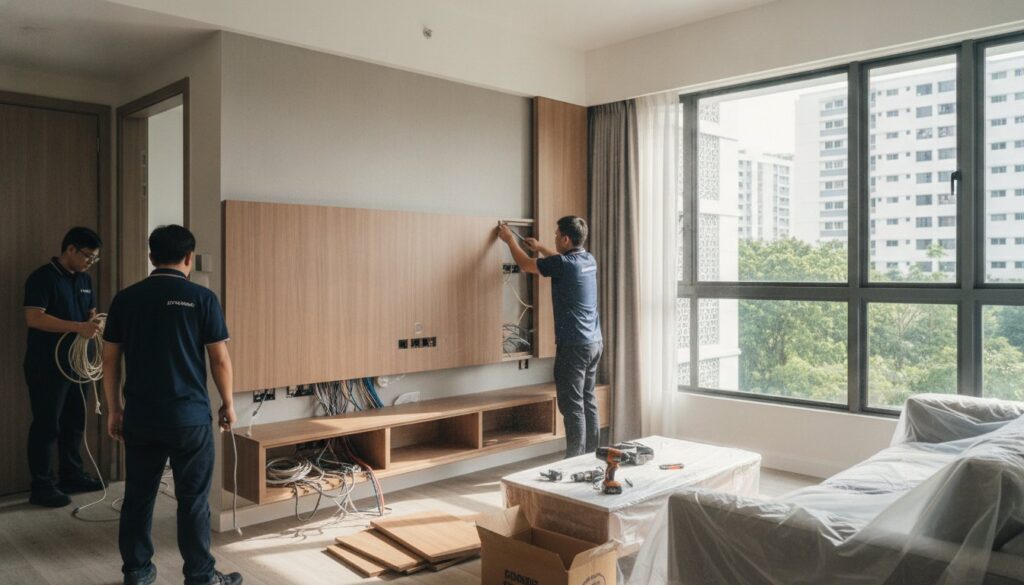
Why are you paying a 30% markup just to have someone tear down a kitchen cabinet and throw it away? Many homeowners assume they need an interior designer to manage every stage of a renovation, but when it comes to the heavy labor of hacking and clearing, you’re often just paying for an expensive middleman. If you’re currently planning a home or office overhaul, understanding What Are The Costs For Dismantling & Disposal Services in Singapore is the first step toward protecting your budget from hidden markups.
We understand the frustration of facing unexpected disposal fees at the end of a project or feeling lost while trying to compare quotes that don’t seem to provide a full picture. It’s common to feel confused about HDB hacking permits and the actual labor involved in dismantling built-in wardrobes or partitions. This article provides a transparent breakdown of what you should realistically expect to pay when hiring a direct contractor. We promise to give you the clarity needed to avoid inflated costs and ensure your site is cleared legally. You’ll get a clear price list for common tasks, a guide to legal NEA requirements, and practical tips on how to save money by working directly with the experts who do the work.
Key Takeaways
- Save approximately 20-30% on your renovation budget by hiring a direct contractor for demolition works instead of paying interior designer markups.
- Understand the specific variables behind What Are The Costs For Dismantling & Disposal Services in Singapore, including the difference between technical labor and transportation fees.
- Identify potential hidden charges related to site accessibility, such as stair-carrying fees for walk-up units or long distances to the loading bay.
- Ensure your project stays legal by following the correct administrative procedures for HDB hacking permits and NEA-compliant waste disposal.
- Get a realistic budget estimate for common dismantling tasks, from removing built-in kitchen cabinets to hacking wall and floor tiles.
Understanding the Basics of Dismantling and Disposal in Singapore
Many homeowners confuse a simple furniture move with a full-scale renovation clearing. When you ask What Are The Costs For Dismantling & Disposal Services in Singapore, you need to realize that you aren’t just paying for a lorry. You’re paying for technical labor. Dismantling a built-in wardrobe requires careful unscrewing to avoid damaging the floor or walls, whereas disposal is the logistics of moving that waste to a licensed facility. Your quote reflects the manpower needed to carry heavy debris through narrow corridors and the time spent on-site carefully deconstructing your old fixtures.
Don’t rely on Town Council’s free bulky item removal for a renovation project. This service is designed for one-off items like an old sofa or a mattress. They usually limit residents to three items per month and strictly exclude renovation debris such as hacked tiles, concrete, or built-in kitchen cabinets. If you try to leave renovation waste at the void deck, you’re looking at a heavy fine from the town council or NEA. Professional contractors provide a dedicated lorry and team to clear everything in one go, keeping the common areas clean and compliant with estate rules.
Dismantling vs. Hacking: What is the Difference?
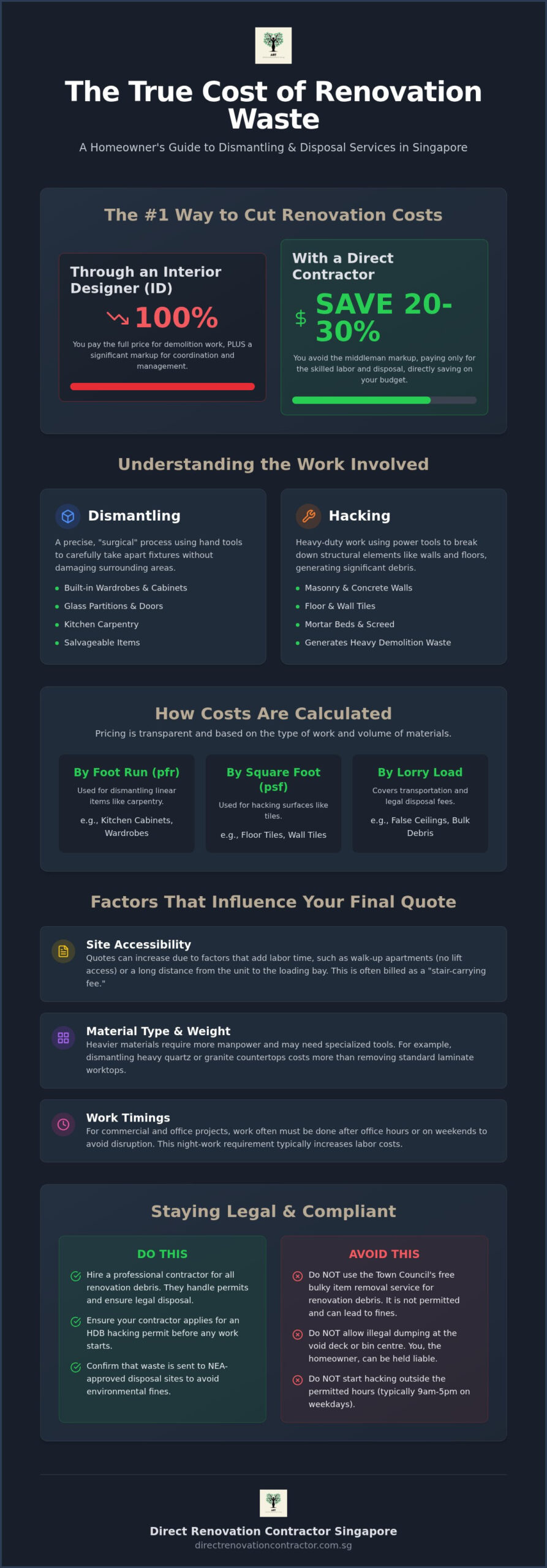
Dismantling is a surgical process. We use hand tools to take apart carpentry, glass partitions, or doors. It’s about salvage and safety, ensuring we don’t hit electrical wires or pipes hidden behind the wood. Hacking is the heavy stuff. It involves jackhammers and sledgehammers to break down masonry, floor tiles, and wall tiles. Hacking generates a significant amount of demolition waste. This process requires heavy-duty protection for your unit’s remaining surfaces and specialized tools to manage the dust and vibration that comes with structural demolition.
The Legal Side: NEA and HDB Regulations
Singapore has strict rules about where your waste goes. You must use licensed waste collectors who transport debris to NEA-approved disposal sites. Illegal dumping carries severe penalties, including heavy fines and potential jail time for repeat offenders. For HDB owners, you also need to manage the timing and permits. Hacking and dismantling can only happen during specific hours to minimize noise for your neighbors. We handle the site protection and ensure every load is disposed of according to local environmental standards, protecting you from legal liabilities and ensuring a smooth renovation start.
Breakdown of Dismantling Costs for Residential and Commercial Units
Pricing for dismantling isn’t a one-size-fits-all number. To accurately calculate What Are The Costs For Dismantling & Disposal Services in Singapore, we look at two main models: per-item dismantling and lorry load disposal. Per-item pricing covers the technical labor of taking down specific fixtures, while lorry load pricing covers the transport and NEA fees for the debris. Most full-unit renovations require a combination of both to ensure the site is cleared efficiently and the budget remains transparent.
Residential Dismantling: HDB and Condo Specifics
Residential dismantling often focuses on built-in carpentry. We measure kitchen cabinets and wardrobes in foot run (pfr). A standard kitchen set includes top and bottom cabinets, but the cost can vary if you have heavy quartz or granite worktops that require more manpower to lift. Hacking masonry, such as bathroom floor and wall tiles, is calculated per square foot (psf). This labor is more intensive because it involves chipping away the mortar bed, not just the surface tile. When planning these works, checking the Building and Construction Authority (BCA) permit guidelines is vital if your project involves structural changes or temporary partitions. Removing false ceilings and drywall partitions is usually priced based on the total surface area and the volume of waste generated.
Commercial and Office Reinstatement Costs
Office reinstatement is a high-stakes job because tenants must return the unit to its original ‘bare shell’ condition for a successful lease handover. You’ll need to budget for removing carpet tiles, glass partitions, and extensive electrical trunking. Commercial projects often happen after office hours to avoid disrupting other tenants. This night-work requirement increases costs because of higher labor rates and restricted transport windows. Unlike residential jobs where you can use the service lift during the day, commercial buildings often have strict booking times for loading bays. If you’re managing your own demolition, hiring direct hacking and demolition services ensures you don’t pay for the unnecessary administrative markups typical of large design firms.
Ultimately, the cost is a reflection of the labor hours and the weight of the material. A heavy masonry hacking job will always cost more than dismantling a few plywood cabinets because of the physical effort and the number of lorry trips required to clear the site. We prioritize a direct approach, giving you a clear breakdown of these technical costs so you can plan your renovation without financial surprises.
Factors That Influence Your Final Dismantling and Disposal Quote
Calculating What Are The Costs For Dismantling & Disposal Services in Singapore involves more than just listing the items you want removed. Your final quote is heavily influenced by the physical environment of your property and the technical difficulty of the task. For instance, removing a glass partition requires specialized suction tools and a slower pace to prevent shattering. This differs significantly from the brute force used in tile hacking. We look at the specific risks and labor hours required before finalizing any price to ensure you don’t face unexpected surcharges.
Site protection is a critical factor that many homeowners overlook. Before we even start dismantling, we must protect your existing flooring, lifts, and common corridors with corrugated cardboard or plastic sheets. This prevents damage to areas you intend to keep and fulfills MCST or HDB requirements. The cost of these materials and the labor to install them is a standard part of a professional quote. Skipping this step often leads to much higher repair costs or forfeited deposits later, especially in condominiums with strict management rules.
Logistics and Manpower Requirements
The number of workers assigned to your project depends on the timeline and the volume of work. A typical 4-room HDB hacking job usually requires two to three workers over several days to manage the heavy lifting and haulage. Haulage refers to the process of moving debris from your unit to the disposal lorry. If your unit is far from the loading bay or requires navigating multiple doors, the labor time increases. For commercial projects, night-time disposal is often mandatory to comply with building management rules. This adds a premium to the manpower costs due to shift allowances and restricted transport windows.
Waste Type and Disposal Fees
Not all waste is treated equally at the dumping ground. General waste, like old furniture and wood, is lighter and easier to process. Construction debris, such as concrete chunks and tiles, is significantly heavier and incurs higher NEA disposal fees based on weight. We differentiate between these waste types to ensure your quote is accurate. In commercial settings, we also look for hazardous materials like old chemical containers or specialized e-waste. These require transport to specific treatment facilities rather than a standard incineration plant. Our direct model ensures these external fees are passed through without the typical 20% to 30% markup added by intermediaries.
How to Budget for Hacking Permits and Site Protection
Administrative fees and site preparation are often the “invisible” parts of your renovation budget. When asking What Are The Costs For Dismantling & Disposal Services in Singapore, you must account for the time and materials spent securing the environment before any hacking starts. These costs ensure your project remains legal and that you don’t end up paying for damages to common property like lift interiors or corridor tiling. Skipping these steps is a common mistake that leads to forfeited deposits and legal disputes with building management.
Step-by-Step Permit Application Process
HDB hacking requires a formal permit submitted through the HDB portal. We start by reviewing your original floor plans to distinguish between structural and non-structural walls. Structural walls cannot be touched under any circumstances. For non-structural partitions, we submit the request on your behalf or guide you through the process. Approval usually takes about three to five working days. You shouldn’t schedule your contractor until this permit is in hand, as hacking without one can lead to heavy fines and an immediate stop-work order.
Preventing Collateral Damage
Professional site protection is non-negotiable. We lay corrugated boards or heavy-duty plastic sheets across lift lobbies and corridors to prevent scratches or cracks from heavy debris haulage. Inside the unit, we seal off non-work areas with plastic sheets to manage the fine dust generated during masonry hacking. This isn’t just about cleanliness; it’s about protecting your investment. If you’re in a condominium, the MCST will likely hold a substantial renovation deposit. Any damage to common areas during the disposal phase will be deducted from this amount, often costing far more than the protection itself.
Insurance and liability also play a role in your quote. A reputable contractor carries public liability insurance to cover accidental damage to neighbors’ property or common areas. This protection is a standard part of our service model and provides peace of mind during high-risk demolition phases. If you want to avoid the high markups of interior designers while ensuring a safe, legal demolition, consider hiring our direct hacking and demolition works team to handle the heavy lifting. We focus on the technical execution, ensuring your site is ready for the next phase of renovation without legal or structural headaches.
Direct Contractor vs. ID: Saving on Demolition and Reinstatement
Hiring an Interior Designer (ID) for a full renovation project is a common choice, but it comes with a hidden premium. When you analyze What Are The Costs For Dismantling & Disposal Services in Singapore, the ID’s price often reflects a management fee that adds 20% to 30% to the total bill. This markup covers their time spent coordinating sub-contractors, but it doesn’t add technical value to the hacking process itself. By working directly with a hacking specialist, you eliminate this intermediary cost and gain access to the actual labor rates without the design firm’s overhead.
Direct contractors provide itemized quotes that break down the labor for each room and the specific number of lorry trips required. This level of transparency is rare in ID contracts, which often use vague lump-sum “disposal fees.” When you see exactly what you’re paying for, you can make informed decisions about what to keep and what to remove. Direct communication also reduces the risk of errors; you speak directly to the team leader on-site instead of relying on instructions passed through a design consultant who may not understand the structural realities of the unit.
Eliminating the Middleman Markup
The traditional ID model relies on commissions from sub-contracted works to sustain their business. While this works for homeowners who want a completely hands-off experience, savvy owners are increasingly opting for a hybrid approach. You can hire an ID for the aesthetic design and carpentry but manage the “dirty works” yourself. For more insights on how these models differ in the local market, read our Direct Renovation Contractor Singapore: The 2026 Comparison Guide. This approach ensures that your funds go directly toward quality workmanship rather than administrative margins.
Planning Your DIY Renovation Journey
If you’re managing a phased renovation, start with a clear plan. Use your unit’s floor plans or 3D drawings to visualize the new layout before the hacking begins. This allows you to identify exactly which partitions need to go and where new electrical points will be. Coordinating direct contractors requires more effort, but the savings are significant. You can schedule the hacking team to clear the site first, followed by the masonry and electrical teams. When you’re ready to start, you can request a specific quote for hacking and demolition works to get an accurate baseline for your project. We provide the technical expertise and manpower to ensure your site is cleared safely and legally, giving you a clean slate for your new home.
Take Control of Your Renovation Budget
Navigating the technical and administrative requirements of a property clearing doesn’t have to be a financial burden. By understanding What Are The Costs For Dismantling & Disposal Services in Singapore, you can separate technical labor from logistics fees. You’ve seen that hiring a direct contractor eliminates the standard 20% to 30% markup typically added by interior design firms. You also now understand the importance of securing the correct HDB hacking permits and investing in professional site protection to safeguard your renovation deposit. These steps keep your project legal and on budget.
We prioritize financial transparency and technical excellence in every project we undertake. As an HDB registered contractor with specialized expertise, we provide detailed itemized quotes for total transparency. There are no hidden middleman commissions or undisclosed fees in our business model. Get a Transparent Dismantling Quote from Direct Renovation Contractor Singapore and start your project with the confidence of a direct, unmarked-up price. Your renovation journey starts with a clean, professionally cleared site that’s ready for your new vision.
Frequently Asked Questions
How much does it cost to hack a wall in an HDB flat in 2026?
Hacking costs are determined by the wall’s thickness, length, and the material used, such as hollow blocks or reinforced concrete. You also need to factor in the labor for haulage and the cost of NEA disposal fees. We provide clear, itemized quotes for hacking works so you don’t have to worry about the hidden 20% markups often added by interior design firms. Every job includes site protection and debris clearing.
Do I need a permit for simple furniture disposal in Singapore?
You don’t need a formal HDB or BCA permit for disposing of loose furniture like old sofas, dining tables, or beds. These items aren’t considered structural or part of renovation works. However, you must comply with your estate’s bulky item disposal rules. For larger clearings involving built-in cabinets or partitions, a professional contractor is recommended to ensure the items are dismantled safely and disposed of at licensed NEA sites.
Can I use the Town Council bulky item removal for renovation waste?
No, Town Council bulky item services strictly exclude renovation waste like hacked tiles, concrete, or built-in kitchen cabinets. This service is designed for standard household items such as mattresses or standalone wardrobes. Attempting to leave renovation debris at the void deck can result in heavy fines from the NEA. You must hire a licensed waste collector to handle the haulage and legal disposal of all construction and renovation materials.
How long does the dismantling process usually take for a 4-room HDB?
A full dismantling and hacking project for a 4-room HDB flat usually takes between three to five working days. This timeline includes the initial site protection phase, the technical removal of all built-in carpentry, and the hacking of masonry tiles. The duration also accounts for the time needed to haul several lorry loads of debris from your unit to the loading bay, ensuring the common areas remain clean throughout.
What is included in a standard commercial reinstatement quote?
A standard quote covers the labor and transport required to return an office to its original bare shell condition. This includes dismantling glass partitions, removing carpet tiles, and hacking false ceilings. It also accounts for the removal of electrical trunking and the haulage of all debris. Understanding What Are The Costs For Dismantling & Disposal Services in Singapore is vital for tenants to avoid lease handover disputes and unexpected building management fees.
Are there extra charges for walk-up apartments without lift access?
Yes, walk-up units incur additional stair-carrying fees because of the intensive manual labor involved. Moving heavy masonry debris or large cabinet panels down multiple flights of stairs takes significantly more time and manpower than using a service lift. We calculate these logistics fees based on the number of floors and the total volume of waste. This ensures our pricing remains transparent while fairly compensating our workers for the extra physical effort.
How is disposal waste measured—by weight or by lorry load?
Disposal waste is typically measured by the number of lorry loads, such as a 10-foot or 14-foot lorry. While NEA disposal sites charge based on weight, contractors quote based on the volume of trips required to clear the site. Understanding What Are The Costs For Dismantling & Disposal Services in Singapore helps you realize that heavy materials like concrete tiles fill a lorry’s weight capacity faster than lighter materials like plywood cabinets.
Is it possible to dismantle built-in cabinets without damaging the floor?
It’s possible to dismantle built-in cabinets without damaging the floor by using technical dismantling instead of brute force hacking. We use hand tools to carefully unscrew carcasses and pry them away from walls using protective blocks. We also lay down corrugated board protection before work begins. This is a standard procedure for homeowners who want to refresh their kitchen carpentry or wardrobes while keeping their existing high-quality floor tiles intact.