
Forcing a bulky, custom-built closet into a 90-square-foot BTO bedroom often leaves you with more regrets than actual storage space. You have probably felt the pressure to sign for expensive carpentry just to get a decent fit, or perhaps you have considered cheap modular sets that feel like they will collapse under a week’s worth of laundry. It is a common struggle in Singapore’s tight housing market where every square centimeter counts and renovation budgets are stretched thin.
You deserve a high-end walk-in look without the 30% markup typically added by interior design firms. This guide explains why a pole system wardrobe is the smartest choice for 2026, offering superior floor-to-ceiling storage and better airflow to prevent the musty smells common in enclosed cabinets. We will provide a clear comparison of materials, explain how to secure factory-direct pricing, and show you how to achieve a premium finish without hidden contractor fees. From technical durability to cost-saving hacks, here is everything you need to know about upgrading your bedroom storage.
Key Takeaways
- Understand why the modular pole system wardrobe is becoming the preferred space-saving alternative to traditional built-in carpentry for modern HDB BTOs and condos.
- Compare linear footage costs and installation timelines to see how you can save money and reduce on-site renovation time by up to 50%.
- Learn how to navigate technical installation requirements, including managing L-box false ceilings and ensuring proper floor leveling for long-term stability.
- Discover the practical benefits of open-concept storage, such as superior ventilation that prevents mould and musty smells in Singapore’s humid climate.
- Find out how to bypass the standard 20-30% interior designer markup by sourcing your storage solutions directly from a factory-based renovation contractor.
What is a Pole System Wardrobe and Why is it Trending in 2026?
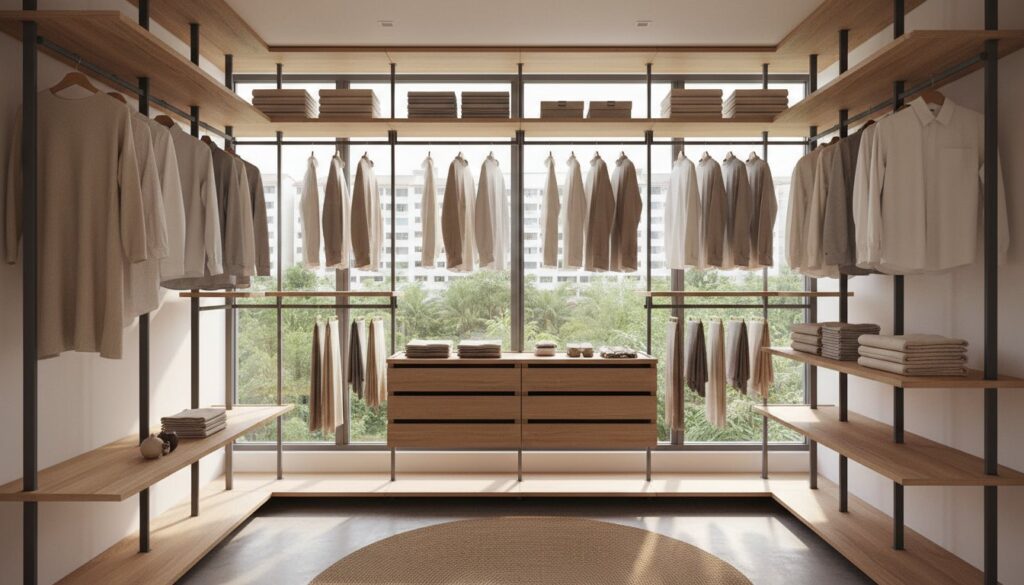
To understand What is a Pole System Wardrobe, you have to look at its structural framework. Unlike traditional built-in carpentry that relies on heavy wooden carcasses, a pole system wardrobe is a modular storage solution built using vertical aluminium tracks. These tracks extend from the floor to the ceiling, creating a rigid skeleton that supports shelves, drawers, and hanging rods. It’s a lightweight yet incredibly strong alternative to the bulky wardrobes of the past.
In 2026, we’ve seen a massive shift toward these systems in Singaporean HDB BTOs and Condos. Homeowners are moving away from fixed, permanent structures that are difficult to modify. A pole system offers high modularity. If your storage needs change in two years, you can simply adjust the height of the brackets or add more components. This flexibility is a major draw for young couples who expect their lifestyle to evolve. The system consists of four core components:
- Vertical Poles: The backbone of the unit, usually made of extruded aluminium.
- Adjustable Brackets: These lock into the poles at any height to support weight.
- Shelving Units: Horizontal surfaces for folded clothes or display items.
- Hanging Rods: Dedicated space for dresses, shirts, and suits.
The Anatomy of a Modern Pole System
Quality matters when it comes to the structural integrity of your wardrobe. We always recommend industrial-grade aluminium poles over the cheaper retail kits found in DIY stores. Retail versions often use thin-walled tubes that can bow under the weight of a full winter coat collection. The “Korean Concept” modularity has become the gold standard for local homes because it maximizes vertical space without requiring wall drilling. For shelving materials, you’ve got options like Ecoply for durability, high-pressure laminates for a specific aesthetic, or even 8mm tempered glass for a premium look. These materials are chosen for their ability to withstand Singapore’s humidity without warping.
Open Concept vs. Enclosed Pole Systems
The “boutique” walk-in wardrobe look is the primary aesthetic driver in 2026. An open-concept pole system wardrobe makes a master bedroom feel significantly larger and more airy. However, dust is a practical concern for many Singaporeans. To solve this, we often integrate sliding glass doors or slim-profile aluminium frames with transparent panels. This configuration gives you the visual appeal of a display gallery while protecting your clothes. Modern installations also feature integrated LED strips recessed directly into the vertical poles. This provides clean, functional lighting that illuminates every shelf without the messy look of external wiring or bulky light fixtures.
Key Benefits: Why Choose Pole Systems Over Traditional Carpentry?
Homeowners often default to traditional built-in carpentry, but the rigid nature of fixed cabinets doesn’t always suit the fast-paced lifestyle of Singapore. A pole system wardrobe offers a modular alternative that prioritizes long-term utility. Unlike fixed wardrobes that require messy hacking for any modification, pole systems allow you to adjust shelf heights and hanging rods in minutes. This flexibility is vital as your storage needs evolve over five to ten years, moving from basic apparel storage to accommodating bulky items or additional accessories.
Air circulation is a critical factor in Singapore’s 80% average humidity. Closed wooden cabinets often trap moisture, leading to “musty” smells and mould growth on leather bags or cotton shirts. Because pole systems use an open-frame design, they provide superior ventilation that keeps your clothes fresh. When comparing a Pole System vs. Traditional Built-In Wardrobe, the space-saving profile is also immediate. Traditional carcasses use 18mm thick plywood for every partition, which eats into your actual storage area. Pole systems use slim aluminium profiles, reclaiming roughly 10% to 15% of floor space in tight HDB bedrooms.
One of the biggest financial advantages is relocation. If you’re living in a rental or planning to move from a 4-room to a 5-room resale flat, you don’t have to leave your investment behind. These systems are designed to be dismantled and reinstalled without damaging the floor or ceiling. It’s a pragmatic choice for anyone who values mobility and wants to avoid the recurring cost of new carpentry with every move.
Maximising Vertical Space in HDBs and Condos
Standard HDB ceiling heights range from 2.6m to 2.8m, while some condos reach up to 3m. Traditional built-ins often stop at 2.4m or use “top-fillers” to close the gap, creating dead space that collects dust. A pole system wardrobe utilizes the entire vertical span. By placing high-level shelving near the ceiling, you create a dedicated zone for luggage and seasonal bedding. This eliminates the need for external storage boxes, keeping your room clutter-free. If you’re looking for a way to optimize your layout, our direct renovation services can help you map out the most efficient configuration for your specific floor plan.
Durability and Weight Loading
There’s a common myth that pole systems are flimsy compared to wood. In reality, professional-grade aluminium tracks are engineered for high structural integrity. A standard 1-meter shelf in a high-quality system can comfortably support 35kg to 45kg without bowing. We distinguish between two main types of installation:
- Tension-mount systems: These use pressure between the floor and ceiling, requiring no drilling. They’re ideal for renters but have slightly lower weight limits.
- Screw-mount systems: These are bolted into the wall or ceiling, offering maximum stability for heavy winter coats and dense storage.
Aluminium is also naturally resistant to termites and water damage, unlike wood-based carcasses that can swell or rot if there’s a minor leak or high moisture levels in the master bedroom ensuite.
Pole System vs. Traditional Built-In Wardrobe: The Ultimate Comparison
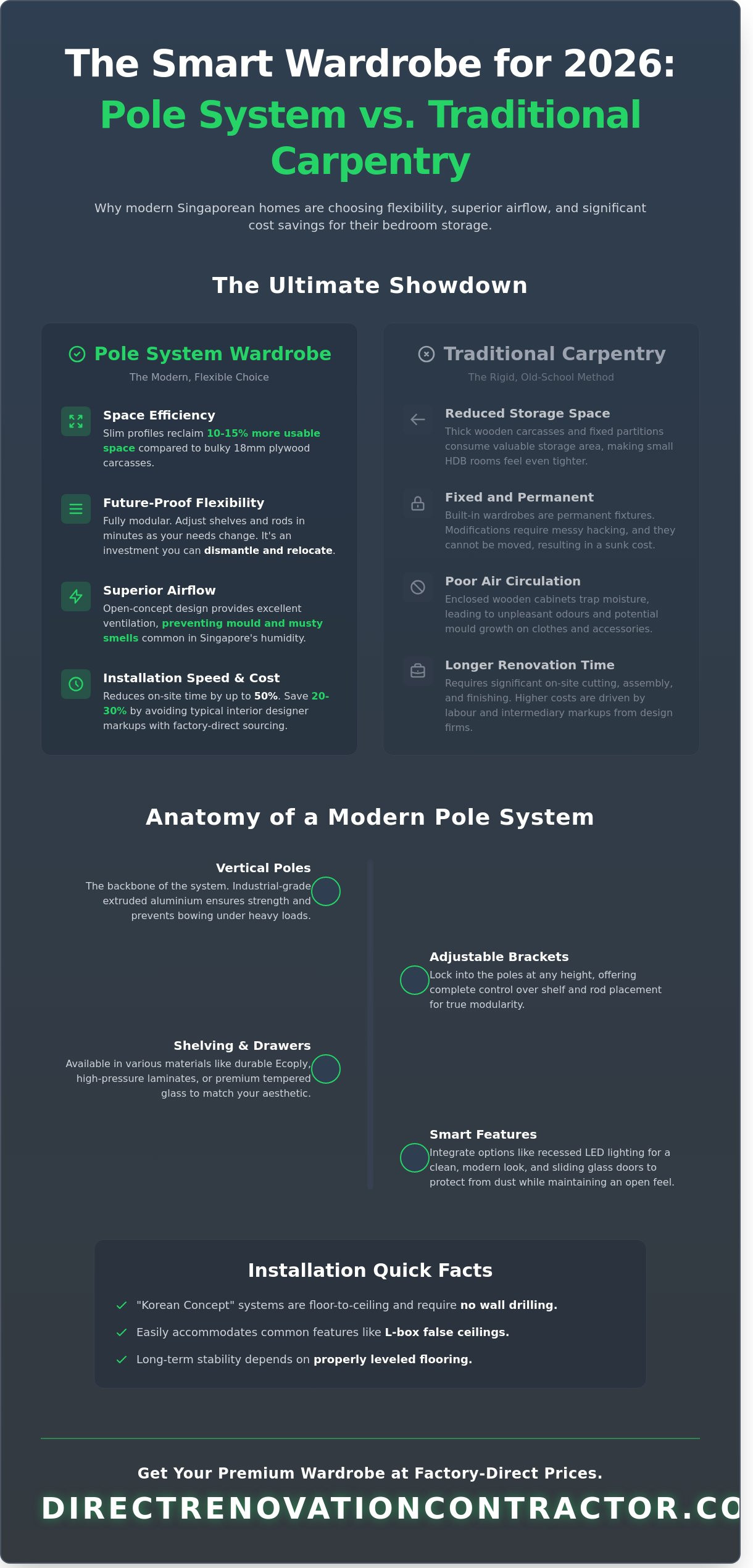
Choosing between a pole system wardrobe and traditional built-in carpentry is a technical decision that impacts your renovation timeline and budget. Traditional carpentry involves permanent carcasses and doors fabricated to fit specific wall dimensions. In contrast, a pole system uses vertical aluminum tracks to support modular components. This structural difference means pole systems are 50% faster to deploy on-site. While a custom wardrobe requires days of assembly and finishing, a modular system is often ready for use within 4 to 6 hours.
Maintenance and repair also differ significantly between the two. If a wooden panel in a built-in unit suffers water damage or cracks, the repair often involves hacking the structure, which can damage your flooring or walls. With a modular system, you simply unscrew the affected shelf or rod and replace it. This flexibility extends to aesthetics. You can achieve a modern, industrial look with exposed poles or maintain a classic feel by adding custom external doors to hide the internal modular racks.
Cost Analysis for Singapore Homeowners
The financial advantage of a modular system comes from reduced labor and the lack of middleman markups. Because these systems use standardized components, you aren’t paying for the intensive manual labor required for intricate wood joinery. When you work with a direct contractor, you secure factory prices that bypass the 20% to 30% commissions typically charged by interior design firms. For those who prefer the seamless look of wood, you can compare these costs against direct carpentry singapore rates to see which fits your budget better. Long-term value is another factor; the modularity of a pole system wardrobe allows you to reconfigure the layout as your storage needs change without spending more on new carpentry.
Which is Right for Your Property Type?
Property type and room shape usually dictate the best choice. Pole systems are the superior option for dedicated walk-in wardrobes or small BTO master bedrooms where you want to maximize every inch of vertical space without the bulk of heavy wooden frames. They provide an airy feel that makes small rooms appear larger. However, traditional carpentry remains the better choice for homes with irregular wall shapes, such as slanted ceilings or odd corners in older HDB flats. Many savvy homeowners now choose a hybrid approach: they use pole system internals for cost-effective organization and pair them with custom-built external doors for a high-end, seamless appearance. This strategy provides the durability of aluminum with the polished look of custom cabinetry. If you are also planning your living room at the same time, exploring a custom tv console singapore design can help you apply the same direct carpentry approach to eliminate cable clutter and maximize storage in your entertainment area.
Technical Considerations for a Successful Installation
Installing a pole system wardrobe isn’t just about picking a design; it’s about understanding the structural physics of your Singapore home. If you’re mounting to an L-box false ceiling, you can’t simply screw into the plasterboard. It will crack under the weight of a fully loaded rack. We usually install internal timber reinforcements or switch to a wall-mounted configuration to prevent ceiling sagging. Original concrete slabs found in most BTO bedrooms are the gold standard for tension-based systems because they provide the necessary resistance for a secure fit.
Floor leveling is another critical factor that many homeowners overlook. Many older HDB resale flats have a floor gradient of 3mm to 5mm across a single bedroom. This slight slope causes vertical poles to lean, which puts uneven pressure on the shelf brackets and can lead to structural failure over time. We use precision laser levels to ensure every upright is perfectly 90 degrees. If your walls are partition walls rather than load-bearing concrete, we must locate the internal metal studs to secure the side-mounts. This technical groundwork should be integrated into your broader home renovation plan to ensure painting and flooring are completed before the wardrobe components are fixed in place.
Measuring Your Space Like a Pro
Don’t just measure wall-to-wall. You must account for skirting boards which typically add 12mm to 15mm of thickness at the base of the wall. For tension-based systems, leave a “finger gap” of roughly 20mm at the top to allow for the tensioning tool to tighten the pole against the ceiling. If you’re adding swing doors to your pole system wardrobe, ensure there’s at least 600mm of clearance from the bed frame to avoid cramped walkways in tight Singaporean bedrooms. This ensures the doors don’t hit your bedside tables or block access to the ensuite bathroom.
Electrical and Lighting Integration
Modern wardrobes need power. We recommend planning at least two power points for internal dehumidifiers or garment steamers. Singapore’s 80% average humidity makes dehumidifiers essential for protecting leather bags and expensive suits from mold. You can conceal the wiring within the hollow grooves of the aluminium pole profiles for a seamless look. For lighting, we suggest 3000K warm white LEDs for a premium feel, while 4000K cool white is better for color accuracy when choosing outfits. Position the LED strips at the front of the shelf, facing inward, to avoid casting shadows on your clothes when you stand in front of the rack.
Ready to build a wardrobe that lasts? Contact us for a direct renovation quote and skip the middleman markups.
Get Your Pole System Wardrobe at Factory Prices
Working with a direct renovation contractor changes the financial math for your home improvement project. Most Interior Design (ID) firms in Singapore add a 20% to 30% markup on carpentry work to cover their office overheads and sales commissions. We eliminate that middleman cost. By dealing directly with our fabrication team, you access factory prices for your pole system wardrobe without sacrificing professional oversight. Your budget stays focused on the physical product rather than administrative fees.
Our process is built for efficiency and technical accuracy. We begin with 3D visualisation to ensure the layout fits your specific HDB or BTO floor plan. Once the design is locked in, we move to direct fabrication in our local workshop. Our own team handles the on-site assembly to ensure the structural integrity of the poles and shelving. Because we’re a full-service contractor, we manage the entire suite of works. If your room requires hacking of old built-in cabinets or minor masonry touch-ups before the new pole system wardrobe goes in, we handle it all in-house.
Our Direct Carpentry Expertise
Quality control is easier to maintain when the person quoting the project also oversees the workshop. We use industrial-grade aluminium for our pole structures. This material is chosen for its high load-bearing capacity and resistance to the humid Singapore climate. For all shelving and drawer units, we apply high-pressure laminates. These are significantly more durable than the thin paper foils often found in mass-market furniture.
Transparency is a core part of our business model. Our quotes are comprehensive and final. You won’t find hidden “installation fees,” “transport charges,” or “material surcharges” added to your final invoice. We provide a clear breakdown of costs so you know exactly where your money is going. For a detailed breakdown of how our direct model compares to traditional design firms, you can read our Direct Renovation Contractor Singapore comparison guide. We value functional results over flashy sales presentations.
Start Your Wardrobe Transformation Today
Getting started is a straightforward process. You can request a non-obligatory quote by providing your floor plan and basic requirements. This allows us to give you a realistic price range based on the actual dimensions of your space. To make the most of your first consultation with our site supervisors, prepare a few details in advance:
- Identify the specific wall where the wardrobe will be installed.
- Note any existing electrical points or DB boxes that might need relocation.
- List your storage priorities, such as the ratio of hanging space to folded shelving.
Pragmatic homeowners in Singapore choose us because they want quality workmanship without the “designer” price tag. We offer a reliable partnership for those who value technical skill and honest pricing. Reach out to our team to secure a durable, factory-priced storage solution for your home.
Secure Your 2026 Wardrobe Upgrade at Factory Prices
Choosing a pole system wardrobe for your 2026 renovation project offers the flexibility and modularity that traditional built-in carpentry often lacks. It’s a practical choice for HDB and Condo owners who want to maximize floor space without committing to permanent, heavy structures. By opting for a direct contractor approach, you eliminate middleman markups and high interior design commissions. We specialize in HDB and Condo carpentry works, providing transparent, itemised quotations so you know exactly where your S$ is going. Our team handles every technical detail, from site measurement to final installation, ensuring your system meets local safety standards. You don’t have to deal with hidden costs or vague estimates. Instead, you get straightforward, professional service from experts who understand the Singaporean housing landscape. Taking control of your home storage needs is simpler when you work directly with the builder.
Get a Direct Factory Quote for Your Pole System Wardrobe
Your ideal home storage solution is just one step away, and we’re ready to help you build it right.
Frequently Asked Questions
Are pole system wardrobes sturdy enough for heavy clothing?
Pole system wardrobes are sturdy enough for heavy clothing, provided they’re installed with high-grade aluminum poles. A standard 25mm thick aluminum pole can support up to 30kg per linear meter. This capacity is more than enough for heavy winter jackets or leather coats. We use reinforced brackets to ensure the system remains stable even when your hanging rods are full.
Can I install a pole system wardrobe if I have a false ceiling?
You can install a pole system wardrobe if you have a false ceiling, but you shouldn’t use tension-based mounting. Instead, we secure the poles to the side walls or the structural concrete slab above the false ceiling. Standard gypsum boards will crack under the pressure of a vertical pole. We provide specialized brackets that bypass the false ceiling to ensure a secure fit.
How do I prevent dust from accumulating in an open pole system?
To prevent dust, you should integrate glass sliding doors or use breathable storage bags for delicate garments. Open systems lack the side panels of traditional cabinets, which allows 50% more dust to settle on clothes. Installing a top pelmet can also block falling particles. Many homeowners in Singapore choose to enclose their system with a slim aluminum frame and glass panels.
Is it cheaper to get a pole system or a traditional built-in wardrobe in Singapore?
A pole system wardrobe is typically 25% cheaper than a traditional built-in wardrobe because it requires less raw material and labor. Traditional carpentry involves building full carcasses with side and back panels, which increases the price. By choosing a direct contractor model, you also save on the 10% to 20% commission fees usually charged by interior design firms.
Can I move my pole system wardrobe to a new house in the future?
You can definitely move your wardrobe to a new home. Unlike custom carpentry that’s permanently fixed to the walls, these systems are modular and held by screws. You can dismantle the entire unit in under 2 hours and reassemble it in a different room. This flexibility is ideal for HDB dwellers who might renovate or move within 5 years.
How long does the installation of a 6-foot pole system take?
Installation for a 6-foot system usually takes between 3 and 5 hours. Our team performs the heavy lifting and drilling, ensuring every shelf is perfectly level. Since the components are prefabricated in our factory, there’s very little mess or noise. You can usually start using your new wardrobe on the same day the installers arrive.
Do I need an interior designer to plan my pole system wardrobe layout?
No, you don’t need an interior designer to plan your layout. Direct contractors have the technical expertise to design a functional configuration based on your HDB or BTO room dimensions. We provide straightforward advice on shelf heights and rod placements without the high-concept markups. Dealing directly with the builder ensures your storage needs are met with practical, cost-effective solutions.
What materials are best for the shelving in a pole system?
High-pressure laminate on plywood is the best material for shelving due to its moisture resistance. In Singapore’s 80% humidity, cheap particle boards will swell and rot over time. Plywood offers better screw-holding strength for the brackets. For a modern look, 8mm tempered glass is also a durable option that doesn’t warp and it’s very easy to wipe down.