
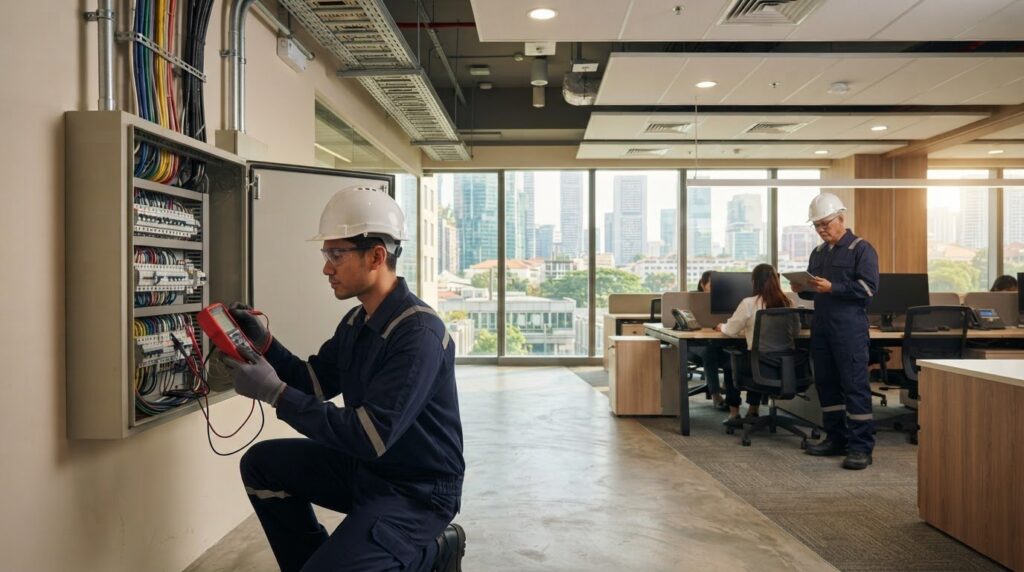
Office electrical faults need a qualified professional, not a quick DIY fix. In Singapore, electrical wiring and fittings should be handled by a qualified electrical contractor, and rewiring, load changes or new circuits require a Licensed Electrical Worker (LEW), according to the Energy Market Authority. A commercial electrician in Singapore can assess whether office electrical repair involves troubleshooting, replacing a component or further work.
A flickering light, tripping circuit, or faulty socket can disrupt work and point to a fault that needs proper troubleshooting. Engage a commercial electrician in Singapore when the problem keeps recurring, affects several points, or involves wiring, circuits, or the distribution board. Prompt office electrical repair can help identify the cause and limit further disruption.
This guide explains when to hire an office electrician, what commercial troubleshooting and maintenance may involve, and what affects repair scope and cost. It also covers the difference between planned upkeep and urgent repairs, and how electrical wiring and installation fit into an office renovation.
Key Takeaways
- Bring in a qualified electrical contractor for office or retail wiring and installation, and use a Licensed Electrical Worker for rewiring, load changes or new circuits.
- When power fails or a fault keeps recurring, note which areas and equipment are affected. This helps the electrician trace the issue and determine the repair needed.
- Commercial electrical work varies with the site, fault and project scope. Larger facilities can take longer, while emergency work can cost more than scheduled maintenance.
- Routine maintenance can help identify faulty components before they cause further disruption. Avoid attempting electrical upgrades yourself, as power-point work can pose an electrocution risk.
- For a home renovation rather than commercial fault repair, explore Direct Renovation Contractor Singapore’s HDB BTO Renovation Packages.
Should I Hire an Office Electrician?
Hire an electrician for office or retail wiring, installation, and faults involving fixed fittings. In Singapore, electrical wiring and fittings should be handled by a qualified electrical contractor.
Choosing a Licensed Electrician
Choose a Licensed Electrical Worker (LEW) for commercial electrical work, with experience relevant to the task, such as diagnosing a faulty office circuit or installing retail lighting. Describe the issue clearly, including the affected rooms and equipment. A WhatsApp photo may show visible damage, but it cannot replace an on-site assessment of wiring or concealed components. For office electrical repair, explain when the fault started and whether it affects one area or several.
Office Wiring and Installation
Office and retail installation may include wiring for lights, equipment, and new work areas. In Singapore, rewiring, load changes, and new circuits require an LEW, according to the Energy Market Authority. Conduit wiring runs behind walls, while surface wiring runs outside them. The choice affects access, appearance, and how the installation fits the premises. A commercial electrician in Singapore can assess the wiring plan against the intended layout and equipment.
Power Point and Socket Installation
Plan power points around desks, printers, payment terminals, and other equipment. A shop counter may need sockets for tills and display equipment, while an office layout may need outlets near workstations. Don’t upgrade power points yourself: electrical work without professional help can cause electrocution. A commercial electrician in Singapore can assess the intended equipment and socket locations before installation.
Lighting is another reason to arrange professional installation or repair. An electrician can assess flickering fittings, failed lights, or a layout that leaves work areas poorly lit. LED lights emit less carbon dioxide than other forms of lighting and contain no toxic mercury, lead, or other hazardous materials. Replacing a fitting still involves electrical connections, so treat it as electrical work.
For repairs, explain what changed before the fault appeared, such as whether lights stopped working after equipment was moved or a new fitting was installed. This gives the electrician a useful starting point for troubleshooting. Work may involve testing the affected circuit, locating a damaged connection, and replacing a faulty component. Don’t keep using a fitting that shows visible damage.
Office electrical installation also needs to suit the premises and renovation plan. Singapore commercial renovations must comply with BCA building regulations, SCDF fire safety guidelines, MOM workplace safety standards, and landlord fitting-out manuals. These requirements matter when adding circuits, changing lighting, or coordinating wiring with partitions and ceiling work. Aligning electrical installation with the office or shop layout helps avoid clashes during fit-out.
Electrical troubleshooting and power failures
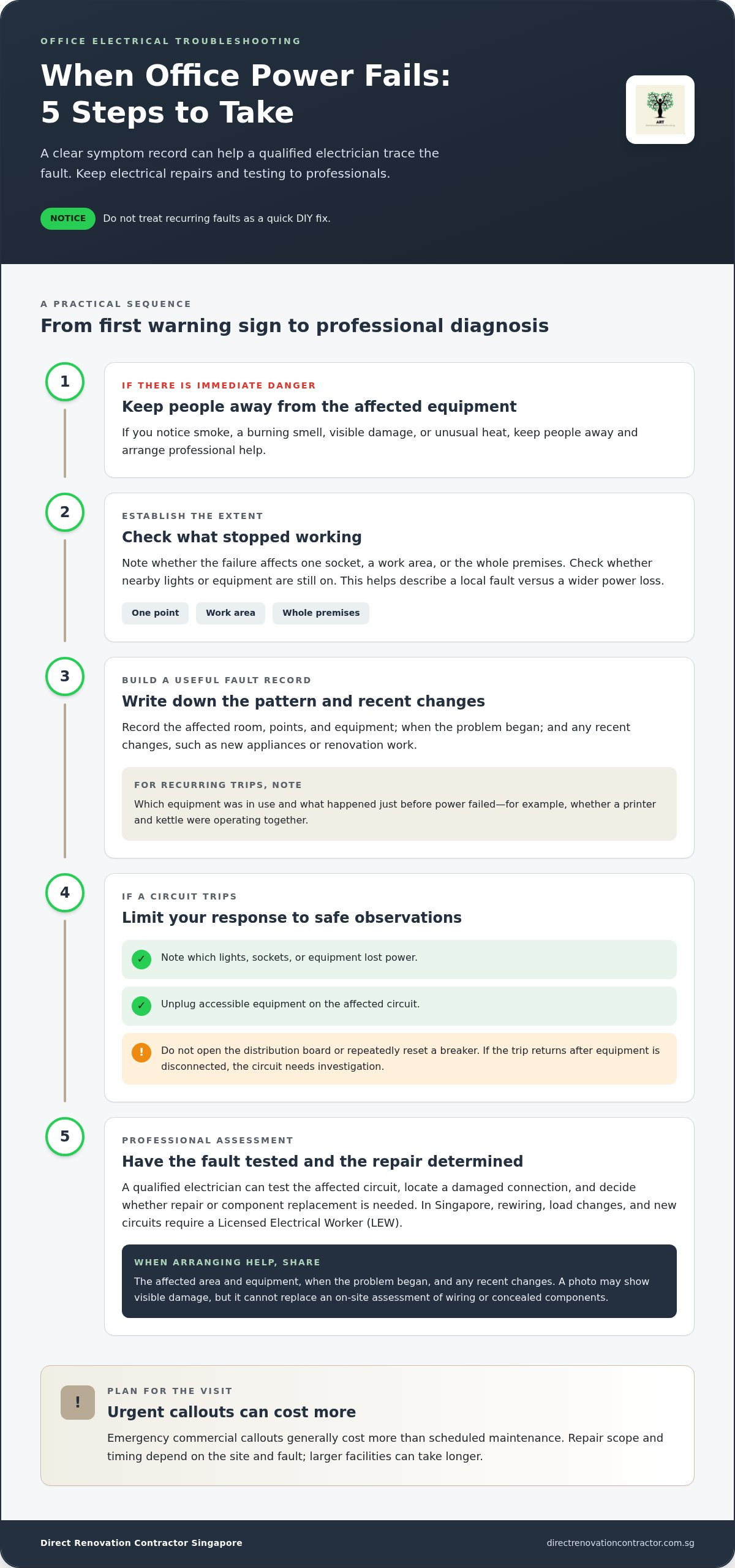
A sudden power loss can affect one socket, a work area, or the entire premises. Start by noting what stopped working and whether nearby lights or equipment remain on. This helps distinguish a local fault from a wider outage before troubleshooting begins. If there is smoke, a burning smell, visible damage, or unusual heat, keep people away from the affected equipment and arrange professional help.
For an urgent fault, give the electrician clear details: the affected area and equipment, and when the problem began. Mention recent changes, such as new appliances or renovation work. An emergency commercial callout generally costs more than scheduled maintenance. Clear information helps the electrician prepare for the likely fault and focus the visit on diagnosis.
Power Trip Recovery
If a circuit trips, note which lights, sockets, or equipment lose power. Unplug accessible equipment on the affected circuit, but don’t open the distribution board or repeatedly reset a breaker. If the trip returns after equipment is disconnected, the circuit needs investigation, not repeated switching. A qualified electrician can test it, identify the cause, and determine whether repair or component replacement is needed.
Keep a simple record of recurring interruptions. Include the room, affected points, equipment in use, and whether the trip followed a particular action. For example, note if power failed while a printer and kettle were operating together. This pattern may help identify an overloaded circuit or faulty appliance, though inspection and testing are needed to locate an electrical fault.
Switchboard and Power-Point Placement
When planning an office, map power points against desks, meeting tables, printers, and pantry equipment. Commercial fit-out specialists such as Excel Business Environments Ltd emphasize coordinating power access directly with office furniture to prevent trailing cables across walkways. Keep the switchboard accessible for inspection and operation, not behind storage or fixed furniture. A retail layout also needs points near counters and equipment, positioned to work with shelving and display units.
Power-point repairs and upgrades should match the equipment and circuit requirements. A loose socket, damaged faceplate, or point that fails during normal use needs assessment before continued use. Don’t use extensions as a permanent substitute for planned sockets. A trained electrician can inspect the point and wiring, then advise whether repair, replacement, or a new circuit is appropriate.
After troubleshooting, ask for a clear explanation of the fault, the work completed, and any remaining affected points. If the issue connects to a wider fit-out, coordinate electrical work with the renovation sequence so wiring doesn’t clash with partitions or other installation work. Electrical wiring and installation can be planned alongside office renovation work, helping align socket locations and equipment needs before the space is finished.
Electrical services for offices, warehouses, factories and public buildings
Commercial electrical services cover installation, troubleshooting, repairs, and maintenance across different premises. A 24-hour emergency service is an availability arrangement; urgent faults still need qualified electrical attention.
Services for Commercial Buildings
Offices may need work on lighting, switches, power points, or distribution boards. Warehouses and factories may require electrical support for equipment, operational areas, and higher-load systems. Faults in public buildings also need assessment with occupants and facility operations in mind. Describe the affected area, equipment, and required work so the technician understands the job scope.
Facility size and electrical demand affect the work involved. A warehouse with equipment across several zones may require more inspection time than a small office. A factory load change also calls for different planning from replacing a faulty switch. The Energy Market Authority (EMA) states that rewiring, load changes, and new circuits require a licensed electrical worker in Singapore.
For high-load facilities, document the equipment affected and when the problem occurs. A circuit that fails during production may need a different investigation from a single faulty light. In demanding environments such as commercial kitchens and food production units, specialized ventilation systems from fabricators like Commercial Canopy Fan Pro require dedicated electrical infrastructure to operate safely. Don’t treat repeated trips as a reason to keep resetting switches. A technician can inspect the relevant circuit and determine whether the fault relates to equipment, wiring, or capacity.
Service Costs and Emergency Support
Commercial electrical service costs depend on project scope and complexity. The number of affected areas, type of fault, required component replacement, and access to the work area all shape the job. Larger facilities generally need more time for electrical work. Emergency commercial work costs more than scheduled maintenance, so planned inspections can help address known issues before they become urgent.
For an emergency call, explain whether the issue affects one zone or the whole premises. Note whether equipment has stopped, lights have failed, or switches are hot or damaged. These details help the electrician prepare and focus troubleshooting. Don’t attempt wiring repairs or load changes yourself; those tasks require a licensed electrical worker in Singapore.
Commercial electrical services in Singapore can also form part of a wider fit-out. A new office layout, for example, may need electrical installation coordinated with partitions, workstations, and equipment locations. Break the work into clear items, such as fault diagnosis, switch replacement, or new circuit installation. A written scope makes it easier to understand what the technician will assess and complete.
Reliable service starts with matching the technician’s work to the building’s needs. A public building, warehouse, factory, and office each have different operating demands, access constraints, and affected users. Record recurring faults and changes to equipment or layout. This information helps the commercial electrical technician investigate efficiently and identify suitable repairs or maintenance.
Electrical troubleshooting and faulty component replacement
A recurring fault needs diagnosis before parts are replaced. In Singapore, commercial electrical repairs are supervised or carried out by a Licensed Electrical Worker to comply with EMA standards.
Electrical Troubleshooting
Troubleshooting starts with the fault pattern. Record which lights, sockets, or equipment fail, and when the problem occurs. For example, an intermittent switch differs from an entire area losing power. Share recent changes, such as equipment moves or new fittings. This gives the electrical contractor useful clues before testing begins.
The electrician can inspect the affected point, trace the relevant circuit, and test components. A faulty switch, loose connection, damaged socket, or failed light fitting can produce similar symptoms. Diagnosis identifies the actual cause instead of replacing parts without evidence. Keep staff away from visibly damaged fittings, and don’t open electrical enclosures yourself.
Maintenance and Fault Diagnosis
Maintenance creates a record of recurring faults and a plan for follow-up. Log the location, symptom, equipment involved, and repair date for each incident. For instance, note whether a meeting-room socket fails with one appliance or several. Comparing these details can help the technician distinguish an equipment issue from a problem with the installation.
During a maintenance visit, the electrician can review reported faults, inspect relevant fittings, and identify components that need attention. Prioritise points that show damage, produce unusual heat, or repeatedly stop working. A clear list of affected areas keeps the inspection focused. For commercial repairs, the licensed worker should explain the diagnosed fault and proposed corrective work.
Faulty Component Replacement
Replace components only after diagnosis. A faulty switch may need replacement, while a damaged socket or failed lighting component calls for a different part and scope of work. The electrical contractor should identify the component and explain why it failed. That explanation helps distinguish a local component fault from a wider wiring issue.
After replacement, the worker can test the affected point and confirm whether it operates as intended. If the fault continues, further troubleshooting may be needed rather than fitting another identical part. Record what was replaced, where it was installed, and any observations about the related circuit. These details help the next maintenance visit address repeat problems.
For example, if several lights fail in the same area, list each fitting and note whether the switches respond. If only one socket is affected, record its location and the equipment connected to it. These practical details make the initial assessment more precise. Avoid using damaged electrical points while waiting for repair, and leave component removal to a qualified worker.
Office electrical maintenance and repairs
A practical maintenance plan records faults, repairs, and affected equipment. In Singapore, commercial electrical repairs are supervised or carried out by a Licensed Electrical Worker (LEW) to comply with EMA standards. Keep a clear record of each repair, including the office area, fault symptoms, and work completed.
Use the record to spot repeat problems. If the same meeting-room lights fail after a fitting is replaced, the issue may need further troubleshooting rather than another identical part. Note when the fault occurs, which switches or equipment are involved, and whether other areas lose power. These details help the licensed worker investigate the pattern.
For each maintenance visit, organise the inspection around reported issues and visible changes. A simple checklist can cover:
- Lights, switches, and power points reported as faulty.
- Equipment or fittings connected before a trip or outage.
- Previous repairs, replacement parts, and affected locations.
Prioritise faults that disrupt work or show visible damage. For example, a loose switch in a frequently used office corridor needs attention before the problem worsens. Staff should stop using damaged fittings and report their location. Don’t remove covers or attempt repairs; electrical work should be handled by a qualified professional.
A transparent repair process explains the diagnosed fault, the component involved, and the work required. Ask for a clear record of what was repaired or replaced and whether the affected point was tested afterward. If the fault remains, the worker can continue troubleshooting instead of treating the first repair as a complete fix.
Scheduled maintenance and urgent repairs serve different purposes. A planned visit can review known faults and check problem areas before they interrupt office operations. An urgent visit addresses a current failure, such as lights going out across a work area. Commercial emergency electrical work generally costs more than scheduled maintenance, so recording recurring issues can help teams plan ahead.
Coordinate electrical repairs with other office work. Ceiling repairs, partition changes, or equipment relocations can affect access to wiring and fittings. Sharing the renovation sequence helps prevent later tasks from disrupting completed electrical work. Keep the fault log with the premises’ maintenance records so staff and the next electrician can track each issue through to repair.
Direct Renovation Contractor Singapore: HDB BTO Renovation Packages
Direct Renovation Contractor Singapore is a practical next step when electrical work is part of a home renovation, rather than an isolated commercial fault repair. Its HDB BTO Renovation Packages support homeowners planning renovation work alongside electrical wiring and installation. HDB resale flat, condo, and landed property owners can also consider the package suited to their home.
Plan electrical requirements alongside the wider renovation scope, including how new fittings or partitions may affect the layout. This helps coordinate the work instead of treating each renovation task as a separate decision. For office renovation needs, the company also handles commercial office renovation.
Contact Direct Renovation Contractor Singapore to discuss your renovation plans, or visit directrenovationcontractor.com.sg.
Plan the Next Step for Your Space
Keep urgent electrical faults separate from renovation planning. A commercial electrician in Singapore can assess a workplace fault, while office electrical repair should be scoped around the affected equipment and area. For a home renovation, decide which property works need coordinating before setting the renovation scope.
Direct Renovation Contractor Singapore offers HDB BTO Renovation Packages, HDB Resale Renovation Packages, and Condo Renovation Packages. These suit home renovation planning, not as a substitute for a commercial electrician in Singapore addressing an electrical fault. Set out the property type and planned works to give the renovation discussion a clear starting point.
Contact Direct Renovation Contractor Singapore to discuss your renovation plans. A clear scope helps you take the next practical step.
Frequently Asked Questions
What commercial electrician services are available for offices in Singapore?
Office electrical services can include wiring and installation, fault diagnosis, component replacement, lighting work, and maintenance. A commercial electrician in Singapore can assess issues such as a meeting-room circuit that fails while other office areas remain powered. For larger fit-outs, coordinate electrical work with office renovation so equipment locations, partitions, and wiring plans align before installation begins.
How much does office electrical repair cost in Singapore?
Repair cost depends on the fault, the parts needed, access to the affected area, and the amount of testing or repair work involved. A simple fitting issue differs from tracing a fault across several circuits. The price depends on the case and is provided after a quote request. A clear description of the fault and affected equipment helps define the work scope.
What are commercial electrician hourly rates and call-out fees in Singapore?
Hourly rates and callout fees vary with job scope, site conditions, and urgency. Emergency commercial electrical work costs more than scheduled maintenance. To understand a quote, separate the attendance or callout charge from diagnostic work, labour, replacement components, and any follow-up work. For example, tracing an intermittent fault may require more investigation than replacing an accessible, failed fitting.
Do office electrical repairs in Singapore require permits or inspections?
Requirements depend on the electrical work and renovation scope. According to the Energy Market Authority, rewiring, load changes, and new circuits require a Licensed Electrical Worker. Commercial renovations must comply with BCA building regulations, SCDF fire safety guidelines, MOM workplace safety standards, and landlord fitting-out manuals. These requirements help determine which approvals and checks apply to each premises and project.
What are common office electrical faults, and what troubleshooting steps can staff take?
Common problems include a failed light, an unresponsive socket, or power loss affecting a work area. Staff can note the location, equipment in use, and whether nearby areas still have power. Don’t remove socket covers, open the distribution board, or repeatedly reset a tripping circuit. If there’s visible damage, smoke, or unusual heat, keep people clear and arrange a professional assessment.
How should I compare commercial electrician quotes in Singapore?
Compare quotes by matching the stated scope, not just the total. Check whether each item covers diagnosis, repair or replacement, testing, and follow-up work. Note assumptions about access, equipment, and affected areas. An itemised quote makes it easier to see whether one proposal covers circuit troubleshooting while another only replaces a visible component. Keep the fault description consistent when requesting estimates.
What are the safety risks of electrical repairs in Singapore offices?
Electrical repairs can expose staff to electrocution, particularly if someone tries to upgrade a power point or open electrical equipment. Keep damaged fittings and affected areas out of use, and don’t handle exposed wiring. A licensed electrician can assess the fault and carry out the necessary work. Promptly report repeated trips, a hot switch, or a burning smell.