
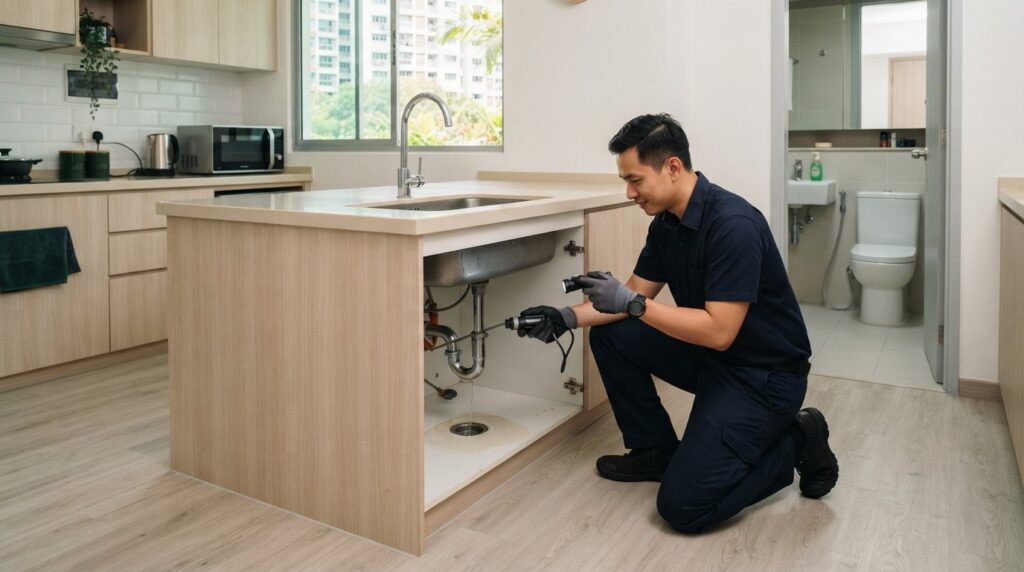
A toilet or sink that’s backing up needs prompt attention; a slow drain that still clears can usually be booked as a scheduled repair. If you’re looking for an HDB plumber in Singapore for toilet choke clearing or sink blockage repair, the key is to match the response to the signs and the risk of overflow or water damage.
Before deciding what to do about a blockage, it helps to know what the symptoms may mean. This guide explains how to spot common sink and toilet chokes, when to seek urgent help, and what can affect repair costs. It also covers safe first steps and ways to reduce repeat blockages.
From a kitchen sink clogged by food waste and grease to a toilet that will not drain properly, learn what may be causing the problem and how plumbing work is approached in Singapore homes. Use these practical pointers to decide what to do next without guessing at the cause.
Key Takeaways
- Slow drainage and gurgling can signal a developing blockage; food waste and grease commonly affect kitchen sinks, while hair and soap scum often clog bathroom drains.
- Before plunging, block other outlets with wet rags and make sure the plunger cup fully covers the opening to direct pressure towards the clog.
- Choose urgent help if a blockage is causing an overflow risk; a slow drain that still clears may be suitable for a scheduled repair.
- Reported repair costs vary with the blockage’s location, access and whether manual clearing is enough, so compare the work involved rather than relying on a single reported price.
- Keep food scraps, grease and oil out of drains, use strainers to catch solid waste, and consider regular drain inspections to spot issues early.
What Are the Signs of A Sink Choke?
Slow drainage, gurgling, or wastewater backing up through another outlet can signal a blockage. The affected fixtures and pipe location help narrow down the likely cause and next step.
Blockage Symptoms and Common Causes
Pay attention to how the water behaves, not just whether it drains. A kitchen sink that empties slowly after washing dishes may have food waste or grease restricting the flow. Hair and soap scum commonly collect in bathroom drains, while gurgling can indicate trapped air moving around an obstruction. If several outlets are affected, note each one before trying a plunger.
Clearing a residential choke generally starts with inspecting the drain or plumbing system to locate the problem. The method depends on the obstruction and access to the pipe. Do not assume a chemical cleaner will dissolve every clog.
Affected Drains and Fixtures
Kitchen sinks often clog from food scraps and cooking grease. Bathroom floor traps and shower drains can collect hair and soap scum, while waste can obstruct a toilet outlet. Note whether one fixture is slow or several show symptoms. That pattern can help distinguish a local drain issue from a blockage further along the pipework.
Who handles the blockage? First work out whether the obstruction affects a fixture or branch serving only your flat, or a shared pipe. Arrange repairs for an internal fixture. If you suspect a shared pipe, report the symptoms to your town council or HDB so the affected location can be assessed.
How can you tell where it is? Check whether the kitchen sink, bathroom drain, and toilet are affected together. One slow fixture points to a local outlet; several affected outlets may indicate a shared or downstream blockage. Inspection is needed to locate it.
When should you call? Contact your town council or HDB if several homes or shared areas appear affected. For a blockage limited to your flat, arrange a plumber. PUB requires regulated water-service and sanitary plumbing works to be handled by a PUB Licensed Plumber where applicable. Simpler work, including a toilet choke, may fall within the permitted scope for trained handymen.
How do you assess a plumber? For toilet choke clearing or sink blockage repair, choose an HDB plumber in Singapore whose work matches the job. Verify PUB licensing for regulated work. Before proceeding, ask for a clear explanation of the inspection, clearing method, and any follow-up work.
What about cost, insurance, and warranties? Clearing costs depend on the blockage location, access, and whether manual clearing is sufficient. Check your home policy for relevant exclusions, and read any written workmanship warranty to understand its coverage and conditions.
Chemical cleaners can damage surfaces or pipes if misused, and plungers can splash contaminated water. Forcing a drain snake can scratch or damage pipework. Stop if resistance remains, and arrange a professional inspection for a stubborn or recurring choke.
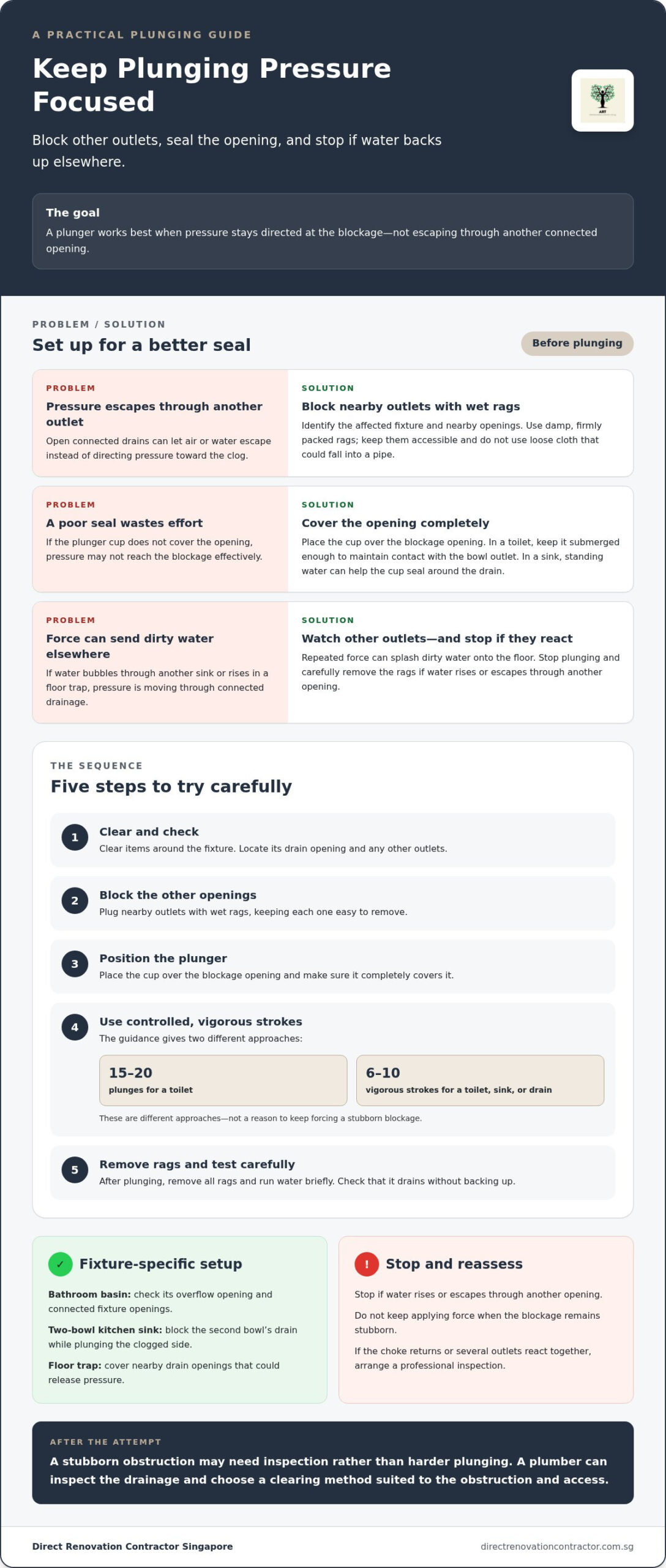
Blocking other outlets before plunging
A plunger works best when pressure stays focused on the blockage. If another outlet is open, air or water may escape there instead. Before plunging a sink, toilet, or drain, plug other outlets with wet rags. This directs pressure towards the clog rather than connected openings.
First identify the fixture you are clearing and any nearby outlets. For a bathroom basin, check its overflow opening and connected fixture openings. For a kitchen sink with two bowls, block the second bowl’s drain while plunging the clogged side. At a floor trap, cover nearby drain openings that could release pressure. Use damp, firmly packed rags, not loose cloth that could fall into a pipe.
- Clear items around the affected fixture, then locate its drain opening and other outlets.
- Plug the other outlets with wet rags. Keep each rag accessible for easy removal.
- Place the plunger cup over the blockage opening. The cup must completely cover it.
- Push and pull with controlled, vigorous strokes. For a toilet, the guidance is 15 to 20 plunges. For a toilet, sink, or drain blockage, another recommended approach is 6-10 vigorous strokes.
- Remove the rags, then test drainage carefully. Stop if water rises or escapes through another opening.
These are different ways to plunge, not a reason to keep forcing a stubborn blockage. A poor seal wastes effort, so reposition the cup until it fully covers the opening. In a toilet, keep the cup submerged enough to maintain contact with the bowl outlet. For a sink, standing water in the basin can help the cup seal around the drain.
Watch other outlets during each attempt. If water bubbles through a second sink or rises in a floor trap, pressure is travelling through connected drainage. Stop plunging and carefully remove the rags. Repeated force can send dirty water onto the bathroom or kitchen floor. A stubborn obstruction may need inspection rather than harder plunging.
After clearing, run water briefly and check that it drains without backing up. Remove all rags before using the fixture. If the choke returns or several outlets react together, arrange a professional inspection instead of repeating the same attempt. A plumber can inspect the drainage and choose a clearing method suited to the obstruction and access.
Planning a renovation that changes sink or bathroom fixtures? Consider drain access during renovation planning, so future maintenance remains practical.
Customer-reported plumbing repair prices
Customer reviews can show what a repair involved, but one account doesn’t set a standard rate. A Singapore customer reported a plumbing issue fixed in 15 minutes. That short job illustrates why repair time alone can’t predict the cost of another callout. A slow kitchen drain and a blocked main stack need different work and methods.
The price of plumbing work depends on the situation and is provided after a quote request. Key factors include the blockage location, pipe access, and whether manual clearing is sufficient. A floor-trap choke with open access involves different work from a blockage that needs powered equipment or attention to a main stack.
Compare the work included, not just the headline amount. One estimate may cover inspection and manual clearing, while another may include powered-machine work. Ask what the quote covers, whether additional work is separate, and what findings could change the method. This makes estimates easier to compare without assuming they cover the same work.
- Location: Identify whether the job concerns a sink, toilet, floor trap, or main stack.
- Access: Note whether the plumber can reach the affected pipe through an open trap or fixture.
- Method: Separate manual clearing from powered equipment or further inspection.
- Scope: Confirm whether the estimate covers only clearing or includes additional plumbing work.
Reported repair costs should be read with those details in mind. A customer’s 15-minute repair describes that customer’s job, not the time required for every choke. A recurring blockage, limited access, or a suspected shared pipe changes the assessment. Ask for the work scope and cost factors in writing before approving extra work.
DIY methods can also affect the eventual repair. For example, forcing a drain snake into a stubborn obstruction may complicate access or damage pipework. Chemical products can create a hazard if mixed with other cleaners. After using a chemical cleaner, do not add hot water or another product unless the label permits it.
For repeat chokes, record which fixture is affected and what happened during earlier attempts. This history helps a plumber assess whether the blockage is local or further along the drainage. A clear description of the problem, access, and requested work gives you a more useful basis for comparing estimates.
Preventing toilet bowl blockages
To help prevent toilet blockages, flush only toilet waste and toilet paper. Keep wipes, sanitary products, cotton buds, and food scraps out of the bowl, as they can collect in the outlet or pipe. Apply the same care in the kitchen: do not pour cooking oil or grease down the drain or wash food scraps into it.
Keep a small waste bin in the bathroom for items that should not be flushed. In the kitchen, use a strainer to catch solid scraps before they enter the drain. Empty the strainer into the bin rather than rinsing its contents away. Grease can cool and collect inside pipes, while scraps can lodge at bends or narrow sections.
Pay attention to changes in flushing. Slow drainage, gurgling, or unusually high water in the bowl may signal a developing blockage. Stop flushing if the water rises towards the rim, as repeated flushing can add water without clearing the obstruction. If other outlets also drain poorly, note which fixtures are affected before arranging an inspection.
A professional drain inspection can help identify developing problems, particularly when a toilet choke returns or several outlets show symptoms. A plumber can inspect the drainage, locate the likely obstruction, and choose a suitable clearing method. Recurring problems deserve attention because clearing the bowl alone may not address an obstruction further along the pipe.
For a suspected organic-waste blockage, a baking soda and white vinegar method is one reported household approach. Use ½ cup of baking soda, followed by ½ cup of white vinegar, then hot water. The method may need repeating several times. Do not mix chemical drain cleaners with other products, and follow product labels when using any chemical cleaner.
For a drain blockage, another reported method uses 1 cup of baking soda with ½ cup of salt. Leave the mixture for a few hours to overnight, then pour 2 cups of boiling water. Keep this approach to a suitable drain, and don’t assume it will clear every toilet obstruction. A plunger can be used when the cup fully covers the opening. Stop if water backs up or the blockage remains stubborn.
- Keep wipes and bathroom products out of the toilet bowl.
- Use a kitchen sink strainer and dispose of captured scraps.
- Arrange an inspection for recurring chokes or multiple affected outlets.
- Treat an overflowing toilet as urgent, and stop flushing until assessed.
Singapore HDB and landed-home toilet choke case studies
Two residential situations show why the affected fixtures matter. These are practical examples, not named customer case records. In an HDB flat, one toilet that drains slowly may indicate a local obstruction. If the bathroom floor trap also backs up, the problem may extend beyond the toilet outlet. Note the symptoms before arranging an inspection.
In a landed home, different bathrooms or toilets may show different symptoms. A blockage affecting one toilet may point to its branch pipe; multiple affected fixtures call for a wider inspection. The plumber assesses the drainage system and access before choosing a clearing method. Larger or more complex pipe layouts can change the inspection and work involved.
In either situation, start by describing what is happening clearly. Record whether water rises, drains slowly, or returns through another outlet. Note whether the kitchen sink or bathroom floor trap is affected too. This gives the plumber a practical starting point, while an on-site inspection identifies the obstruction and suitable response.
A customer reported that a Singapore plumbing appointment was arranged the same day, with the issue resolved within about two hours of the initial enquiry. This is one reported experience, not a promise about service times. Residential clear-choke work usually takes a few hours. Access, obstruction location, and whether manual clearing is sufficient all affect the work.
For HDB residents, work out whether the issue appears limited to your flat or affects shared drainage. Tell the town council or HDB if shared areas or neighbouring homes show similar symptoms. For work within the flat, a plumber can inspect the affected fixtures. Where required, regulated water-service and sanitary plumbing work must be handled by a PUB Licensed Plumber. Simpler tasks, such as a toilet choke, may fall within the permitted scope for trained handymen.
Do not keep flushing a toilet bowl that is close to overflowing. Stop using affected fixtures and describe the symptoms when arranging help. A plunger may help with an accessible local blockage, but repeated forceful attempts can send water through another outlet. For recurring or multi-fixture problems, professional inspection is the more useful next step.
The practical takeaway is that one affected fixture calls for a different inspection path than several affected outlets. State the home type, affected fixtures, visible overflow, and earlier clearing attempts. This helps the plumber plan a suitable response without assuming every HDB or landed-home choke has the same cause.
Planning upgrades alongside plumbing work in a landed home? Plan your landed-home renovation with drainage access and fixture locations in mind.
Direct Renovation Contractor Singapore: HDB BTO Renovation Packages
Direct Renovation Contractor Singapore helps homeowners plan renovation work alongside plumbing decisions. Its HDB BTO Renovation Packages suit new-flat projects, while HDB Resale Renovation Packages are for resale-home renovations. Condo Renovation Packages and Landed Property Renovation are options for those home types.
Plan fixture locations and drainage access as part of the wider renovation scope. Clear planning can help keep the plumbing layout practical for daily use and future maintenance. Direct Renovation Contractor Singapore also provides 3D drawings and a curated list of direct contractors and material suppliers for homeowners managing their own projects.
For renovation planning that includes your home’s plumbing needs, contact Direct Renovation Contractor Singapore.
Make Your Next Plumbing Decision With Confidence
A recurring choke can be a useful prompt to review how your home’s fixtures and drainage fit together. Keep a simple record of affected outlets, earlier repairs, and changes to your bathroom or kitchen. This can help distinguish an isolated repair from a wider maintenance concern. For HDB plumber Singapore services, including toilet choke clearing and sink blockage repair, describe the symptoms and affected fixtures clearly when arranging the work.
If plumbing concerns arise alongside a planned home upgrade, consider the layout before choosing new fixtures or cabinetry. A practical renovation plan should account for access to pipes and drains, not just visible finishes. Direct Renovation Contractor Singapore offers HDB BTO, HDB Resale, and Condo Renovation Packages for homeowners planning those projects.
For a renovation plan that considers your home’s practical needs, contact Direct Renovation Contractor Singapore. A clear next step can help you move forward with confidence.
Frequently Asked Questions
How much to clear a toilet choke?
The cost depends on the blockage location, pipe access, and clearing method. A local obstruction that can be reached manually involves different work from a choke requiring powered equipment or investigation further along the drainage. When requesting a quote, describe whether one toilet or several fixtures are affected. The price should reflect the work needed for that specific blockage, not simply the time spent on site.
What are typical prices in Singapore for HDB toilet choke clearing and sink blockage repair?
There is no single useful price for every HDB toilet or sink blockage because the scope can differ substantially. A quote is more meaningful when it specifies the affected fixture, inspection, clearing method, and any additional work separately. For example, ask whether it covers only clearing a sink trap or also addresses a blockage further into the pipe. Compare the work described rather than treating different jobs as equivalent.
How much do emergency, after-hours, or weekend plumber call-outs cost in Singapore?
The amount depends on the call-out timing, affected pipe, access, and work required. An emergency involving active overflow may call for a different response from a slow-draining fixture that remains usable. When seeking a quote for after-hours or weekend work, include the timing you need. Ask about the call-out and repair scope together so you understand what the stated amount covers before work begins.
What causes toilet chokes and sink blockages in HDB flats, and what can residents safely try first?
Toilets can choke when unsuitable items obstruct the outlet; kitchen sinks commonly collect food waste and grease. For a minor, accessible blockage, use a plunger that seals over the opening, then make 6-10 controlled, vigorous strokes. Block other outlets with wet rags first. Stop if water rises, backs up elsewhere, or the blockage persists. Avoid forcing tools into pipework, which can turn a simple obstruction into a more difficult repair.
What steps do Singapore plumbers use to clear a blocked HDB toilet or sink?
A plumber starts by inspecting the drain or plumbing system to locate the blockage. The method depends on the obstruction and access to the pipe. Manual clearing may suit an accessible choke; hydro jetting uses high-pressure water to remove debris, grease, and scale. If the location or pipe condition needs investigation, a CCTV camera can help locate the obstruction and show the pipe’s condition. The plumber can then assess whether further work is needed.
How can HDB residents prevent recurring toilet chokes and sink blockages?
Keep grease, oil, and food scraps out of drains, and use a strainer to catch solid waste at the kitchen sink. Keep unsuitable items out of the toilet too. If the same outlet slows again after clearing, note when it happens and which fixtures are affected. Professional drain inspections can help identify developing problems, particularly when a blockage recurs or more than one outlet shows symptoms.