

A Pinterest-perfect mood board won’t save you from a five-figure budget blowout or a stop-work order from HDB. Many Singapore homeowners spend weeks picking paint colors while ignoring the structural and regulatory realities that actually dictate the final bill. Knowing exactly what to do before renovation starts is the difference between a smooth handover and months of expensive, avoidable delays. We agree that the fear of hidden markups and the complexity of HDB or MCST permits can make the process feel like a financial minefield. This article promises to equip you with a technical and financial roadmap to secure your home without the stress of unnecessary intermediaries or hidden commissions. We will walk you through the essential 2026 checklist, covering everything from mandatory neighbor notifications and permit timelines to setting a realistic 10% to 15% contingency buffer for your masonry and carpentry works. You will learn how to bypass the fluff and focus on the technical preparation that ensures a cost-effective, high-quality result.
Key Takeaways
- Differentiate between essential structural works and cosmetic upgrades to allocate your 2026 budget toward high-impact results.
- Master the sequence of what to do before renovation starts, from securing HDB permits to providing mandatory neighbor notifications.
- Evaluate the financial transparency of the direct contractor model to avoid the hidden markups and commissions often found in design-heavy firms.
- Conduct a thorough technical site assessment to identify existing defects and verify electrical capacities before hacking begins.
- Implement a practical logistics plan for utility activation and furniture storage to ensure a seamless transition from planning to execution.
Defining Your Renovation Scope and 2026 Budget
Before you pick a single paint swatch, you need a clear-eyed assessment of your property’s structural health. In the broader context of What is Renovation?, the process involves more than just surface-level changes; it is about restoring or improving a structure to a functional and safe state. For many Singaporeans, the most critical step in determining what to do before renovation starts is separating essential technical works from purely aesthetic upgrades. Focusing on the “bones” of the house ensures you don’t waste money on cosmetics that will eventually be ruined by a leaking pipe or faulty wiring hidden behind a new wall.
The “Must-Have” vs. “Nice-to-Have” Audit
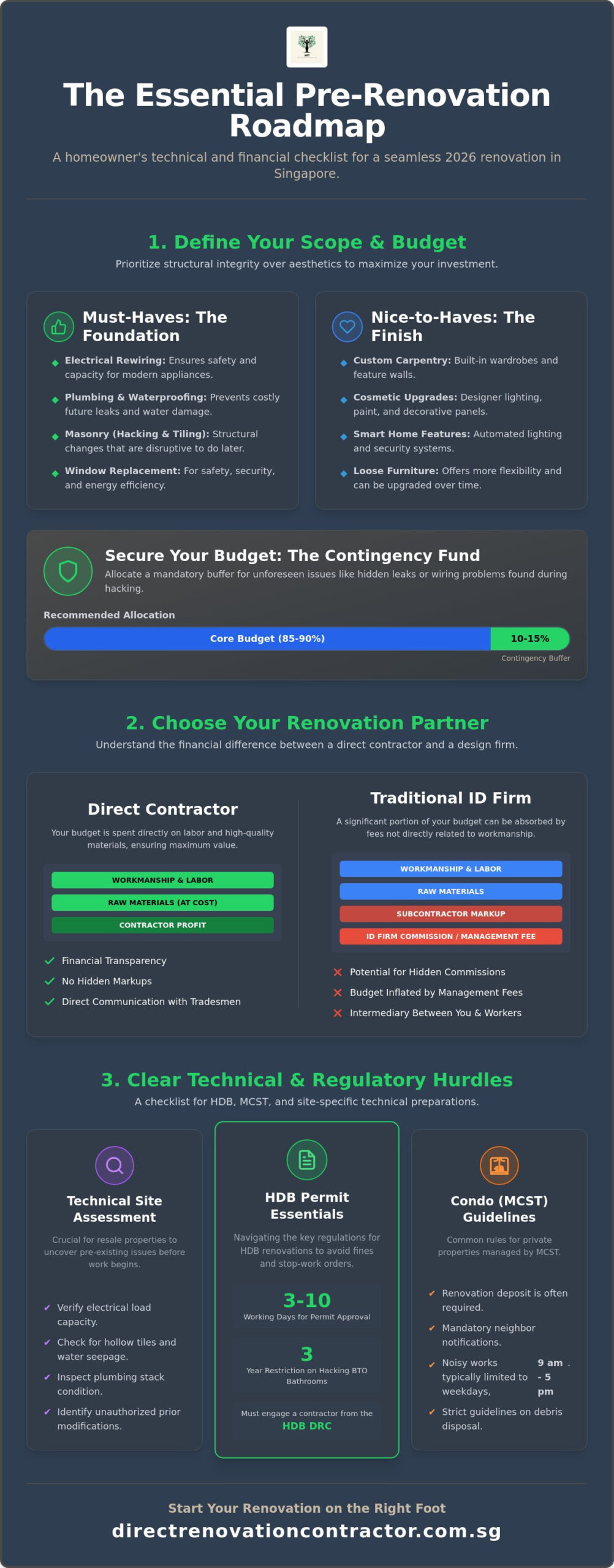
Prioritize works that are difficult or expensive to change once the project is complete. This includes electrical rewiring, plumbing, and extensive masonry like tiling or hacking. If you’re moving into a resale flat, these are non-negotiable for safety and longevity. While custom kitchen cabinet carpentry and wardrobes are popular, evaluate if loose furniture can provide more flexibility for your lifestyle in other areas. Consider the long-term ROI of durable materials. For instance, high-quality vinyl flooring installation offers a balance of cost-efficiency and durability that often outlasts cheaper, less resilient alternatives.
Calculating Your 2026 Renovation Budget
Planning your finances in 2026 requires understanding current market pressures. Global supply chain shifts have impacted the cost of raw materials like cement, timber, and imported tiles. We recommend researching these material costs directly from suppliers rather than relying on bundled quotes that may hide significant markups. This transparency allows you to see exactly where your money is going.
A key rule for any project is setting aside a contingency fund of 10% to 15% of your total budget. This buffer is essential for addressing unforeseen site conditions, such as hidden leaks found during demolition or unexpected wiring issues. Choosing a direct-to-contractor model helps you avoid the “hidden commission” trap common in the industry. Traditional design firms often add a management fee or take a percentage from sub-contractors, which inflates your final bill. By working directly with the professionals handling the hacking, plumbing, and electrical work, you ensure your budget is spent on quality workmanship. Factor in the prevailing GST and local labor costs early to avoid surprises when the final invoice arrives.
Technical Site Assessment and Regulatory Approvals
Once you have defined your budget, the next phase of what to do before renovation starts involves a deep dive into the technical constraints of your property. Skipping a professional site walkthrough can lead to catastrophic delays once the hacking begins. In Singapore, whether you are in a high-rise HDB or a private condominium, the building’s structural integrity and existing utility capacities dictate what is physically possible. You must verify your unit’s electrical load capacity before purchasing high-consumption appliances like induction hobs or multi-split air conditioning systems. Older resale flats often have lower amperage limits that require an electrical upgrade permit from SP Group before any wiring work begins.
Navigating HDB and BCA Regulations
HDB regulations in 2026 remain strict regarding structural modifications. You cannot hack load-bearing walls, which are usually marked in thick bold lines on your floor plan. If the original floor plan is missing, you can purchase a copy from HDB for S$5. For BTO owners, remember the three-year restriction on removing original bathroom wall and floor finishes to prevent waterproofing issues. If you plan to hack non-structural walls or replace windows, you must engage a contractor from the HDB Directory of Renovation Contractors (DRC). Most HDB permits take between 3 to 10 working days to process, so factor this into your project timeline. For condominiums, your MCST will have specific renovation guidelines, often requiring a renovation deposit and limiting noisy works to specific weekday hours between 9 am and 5 pm.
Site Condition Checks for Resale Properties
Resale units demand a more rigorous inspection than new BTOs. We look for hollow tiles, water seepage in the ceiling, and the condition of existing plumbing stacks. Testing these early prevents mid-reno changes that can cost thousands of dollars in variations. If the previous owner made unauthorized modifications, you might be liable to restore the flat to its original condition at your own expense. A technical site assessment identifies these risks before the first hammer swings. By choosing a partner who understands technical HDB Resale Renovation Packages, you get a clear picture of the necessary remedial works before committing to a design. This pragmatic approach eliminates the guesswork and ensures that your renovation is built on a solid, legal foundation. Assessing the state of existing electrical conduits and plumbing stacks now saves you from the stress of emergency repairs during the execution phase.
Choosing Your Team: Interior Designer vs. Direct Contractor
Choosing the right execution partner is the most consequential decision in your planning phase. Many homeowners reflexively look for an Interior Designer, assuming they need a middleman to manage the project. However, a major part of what to do before renovation starts is evaluating whether you actually need a design consultant or a technical expert. If you already have a clear vision for your home, paying an ID’s management fees often doesn’t make financial sense. These fees can add a significant percentage to your total bill without necessarily improving the quality of the actual construction.
Direct contractors operate on a transparent cost structure. You pay for the actual manual labor and the materials used, with no undisclosed commissions passed down from sub-contractors. This model appeals to pragmatic owners who prioritize quality workmanship and structural integrity over high-concept artistic presentations. Before you sign any papers, verify your contractor’s HDB Registered status. This isn’t just a formality; it’s a legal requirement for any works involving hacking or structural changes. Engaging an unregistered contractor can lead to heavy fines and the forced restoration of your flat at your own expense.
The Direct Contractor Advantage
Working directly with the people performing the work ensures nothing gets lost in translation. When you speak to the person in charge of your tiling and masonry works or your plumbing and sanitary works, you get technical answers instead of sales pitches. This direct communication allows for faster problem-solving on-site. By eliminating the middleman, you also gain access to direct sourcing for materials like vinyl flooring or kitchen cabinet carpentry. For a detailed breakdown of how these models differ in the current market, read our Direct Renovation Contractor Singapore: The 2026 Comparison Guide.
Vetting Your Contractor in 2026
Don’t be swayed by glossy 3D renders that may not be technically feasible. Instead, review portfolios for technical complexity and finish quality. Look for clean tile alignments, precise carpentry joints, and well-organized electrical wiring installations. A reliable contractor provides a clear, itemized contract from the start. Avoid any company that uses “lump sum” pricing for major categories. Every hacking and demolition work or painting service should be listed with a specific price and scope. In 2026, transparency is your best protection against budget creep. This technical vetting is a vital step in what to do before renovation starts to ensure your project stays on track and within budget.
The Pre-Renovation Logistics Checklist
Neighbor and MCST Management
Building goodwill with your neighbors is a practical necessity in Singapore’s high-density living. You or your contractor must provide written notice to neighbors within a two-unit radius at least five days before starting any work. This is a mandatory HDB requirement. Stick strictly to the regulated hours: noisy works like wall hacking are only allowed on weekdays from 9 am to 5 pm. General, less noisy works can run from 9 am to 6 pm on weekdays and Saturdays. Ensure your contractor protects common areas, including lift interiors and corridors, with proper hoarding materials like corrugated plastic or plywood. This prevents damage to public property that your MCST or HDB will hold you financially responsible for. Clear communication now prevents complaints that could lead to a stop-work order later.
Site Preparation and Utilities
Before the first hammer swings, walk through the empty unit with your lead contractor to mark out every electrical point, socket, and plumbing outlet directly on the walls. This visual confirmation ensures that the 3D drawings and floor plans are translated accurately into the physical space. If you’re renovating all bathrooms simultaneously, you must arrange for a temporary site toilet for the workers. It’s a technical requirement for site hygiene and professionalism. Finalize your 3D drawings now so the hacking team has a definitive guide. These documents must clearly identify the non-structural walls approved for removal in your HDB permit. For a team that manages these technical logistics with professional transparency, consider our direct renovation services in Singapore to ensure your project begins on a solid foundation.
Executing the “Direct” Way with Direct Renovation Contractor
Understanding what to do before renovation starts is only half the battle; the other half is executing with technical precision. Our 3D drawing service acts as the bridge between your initial planning and the physical work on-site. These drawings aren’t just for aesthetic approval. They serve as accurate blueprints that ensure every hacking and demolition work aligns with your approved HDB permits. We move beyond the conceptual to provide a professional project schedule that dictates the exact sequence of trades, from electrical wiring and installation to the final painting services. This chronological approach eliminates the confusion and overlapping of sub-contractors that often cause project delays.
By choosing our HDB BTO Renovation Packages or HDB Resale Renovation Packages, you gain access to a curated list of direct sub-contractors and material suppliers. We’ve vetted these professionals for technical skill and reliability over years of local project delivery. Because we operate without intermediaries, you avoid the common industry practice of markups on tiles, vinyl flooring installation, and plumbing fixtures. This direct model keeps your costs predictable and your project timeline lean. You deal directly with the experts responsible for the structural integrity of your home, ensuring that every technical requirement is met without anything getting lost in translation.
Our DIY Renovation Support Package
For homeowners who prefer a hands-on approach, our DIY support package provides the essential technical blueprints you need to manage your own project. We don’t just hand over a drawing; we provide the roadmap. This includes connecting you with our network of unmarked-up carpentry and flooring suppliers. You get the same trade rates usually reserved for industry insiders, which can result in significant savings on raw materials. This model is perfect for those who have the time to oversee the site but want to avoid the high overheads of traditional firms. Learn more about the technical requirements and regulatory steps in our HDB Renovation in Singapore: The Ultimate 2026 Owner’s Guide.
Direct Carpentry and Workmanship
Carpentry often accounts for 30% to 40% of a total renovation budget. Working with a direct carpenter in Singapore ensures your kitchen cabinet carpentry or wardrobe carpentry is built to last without the middleman surcharge. Our in-house carpentry fabrication allows us to save you on linear footage costs by controlling the entire production line. We prioritize structural integrity over flashy finishes, ensuring every joint and hinge meets professional standards. When you’re ready to finalize your contract, we provide fixed-price guarantees and a clear milestone payment schedule. This ensures you only pay for completed work that has passed our quality assurance checks. This technical transparency is the final piece of the puzzle in knowing what to do before renovation starts, moving you from the stress of planning to the satisfaction of a well-executed home.
Secure Your Renovation Success with Technical Precision
Success in a Singapore home makeover depends on how well you handle the technical and financial groundwork before the first wall is hacked. You’ve learned that prioritizing structural integrity and regulatory compliance is far more effective than focusing solely on design aesthetics. Mastering the sequence of what to do before renovation starts, from securing HDB permits to managing neighbor protocols, ensures you avoid the delays and legal fees that trap many unprepared homeowners. By choosing a direct contractor model, you eliminate the middleman and ensure your budget is spent on high-quality workmanship and materials rather than undisclosed commissions.
As an HDB Registered Contractor, we provide direct-to-consumer pricing with no ID markups. We also offer specialized 3D drawing and DIY support packages to bridge the gap between your vision and professional execution. Get a Direct, Transparent Renovation Quote Today and take the first step toward a stress-free home transformation. Your property is a significant investment; treat it with the technical respect it deserves. With the right preparation and a transparent partner, you can achieve a high-quality result that stays within your 2026 budget.
Frequently Asked Questions
How long before my key collection should I start looking for a contractor?
You should start your search three to six months before your key collection date. This timeframe allows you to conduct site visits, compare itemized quotes, and finalize your technical requirements without rushing. Starting early ensures your chosen contractor can secure the necessary manpower and raw materials to meet your 2026 project timeline.
Do I really need an interior designer, or can I just hire a direct contractor?
You don’t need an interior designer if you have a clear functional vision for your home. Hiring a direct contractor eliminates the middleman markup and undisclosed commissions often found in design-heavy firms. It’s a pragmatic choice for homeowners who prioritize technical competence, structural integrity, and financial transparency over high-concept artistic presentations.
What are the most common hidden costs in a Singapore renovation quote?
Common hidden costs include haulage fees, debris removal, and electrical variations. Many quotes use “lump sum” pricing for wiring, which leads to extra charges when you specify the exact number of power points. Always check if your quote includes sub-floor leveling and waterproofing for masonry works to avoid sudden budget increases during the execution phase.
How do I apply for an HDB renovation permit in 2026?
Your HDB-registered contractor must submit the permit application through the HDB e-portal on your behalf. You’ll receive an official notification to authorize the request digitally. Understanding what to do before renovation starts involves factoring in the three to ten working days HDB typically takes to process these approvals before any hacking can begin.
What happens if my renovation contractor is not HDB-registered?
Engaging an unregistered contractor for works that require a permit is illegal in Singapore. HDB can impose heavy administrative fees and legally require you to restore the flat to its original condition at your own expense. Always verify a contractor’s status on the Directory of Renovation Contractors to ensure your project remains compliant with local regulations.
Should I buy my own tiles and bathroom fittings or let the contractor handle it?
Buying your own fittings allows for better cost control and personalized selection. However, you must ensure the technical specifications match your contractor’s requirements. For instance, confirm that your chosen tiles are suitable for the planned masonry works and that plumbing fixtures align with the existing pipe stacks to prevent expensive on-site modifications.
What is the standard payment schedule for renovations in Singapore?
The industry standard follows a progressive payment model. You typically pay a 10% deposit upon signing, followed by 30% after hacking and masonry, 30% after carpentry fabrication, and 25% after painting and electrical installations. The final 5% is usually withheld until all defects are rectified and the project is officially handed over.
Can I stay in my house while the renovation is ongoing?
Staying in the unit during major works like hacking or tiling is not recommended. The intense dust, noise, and presence of chemicals from painting services create safety hazards and significant discomfort. If you’re undertaking a full-flat renovation, arranging temporary accommodation is a vital step in what to do before renovation starts to ensure a smooth workflow.