

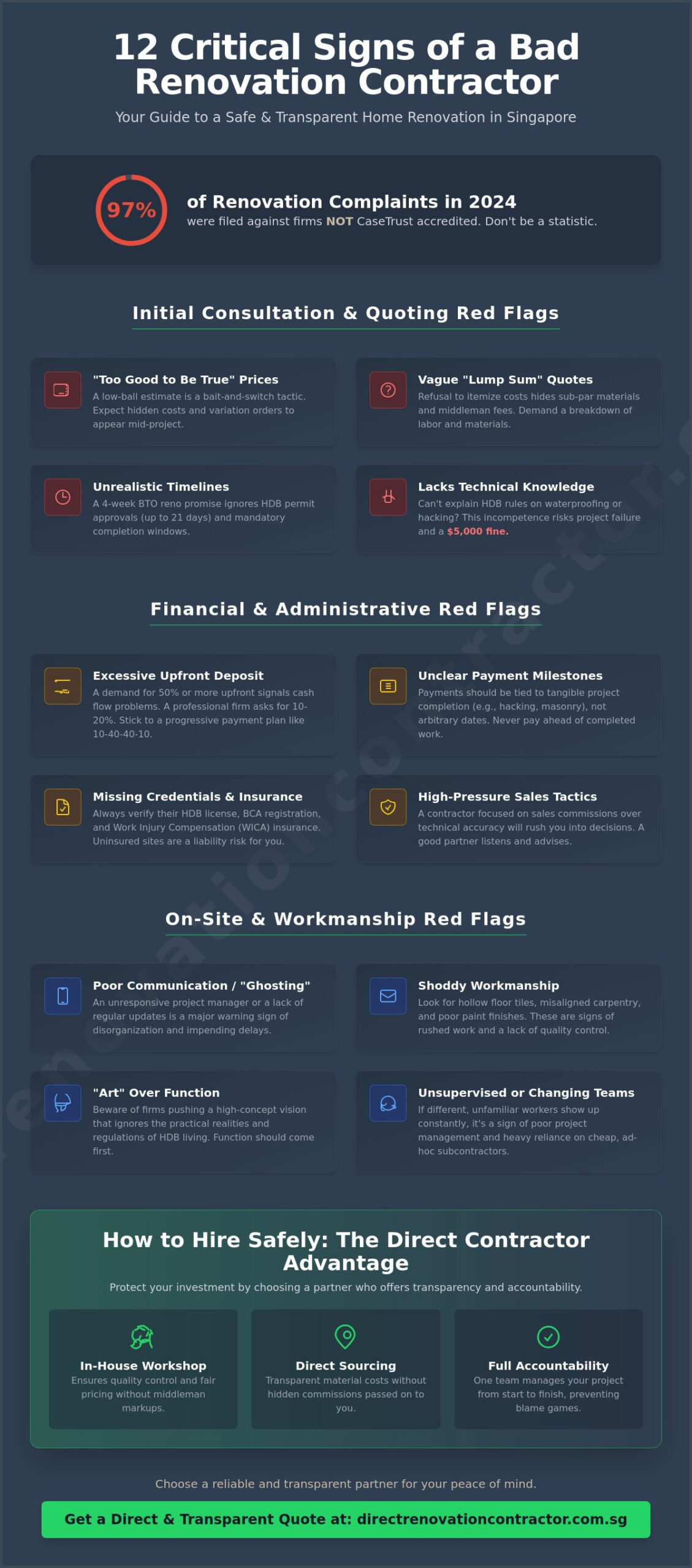
Did you know that 97% of renovation complaints in 2024 were filed against firms that were not CaseTrust accredited? While prepayment losses in Singapore dropped by 73.8% in 2025, many homeowners still struggle with the anxiety of hidden markups and poor workmanship. It’s frustrating to deal with contractors who prioritize sales commissions over technical accuracy. You deserve a transparent partner who understands the practicalities of HDB regulations and the value of direct sourcing.
This guide identifies twelve critical signs of a bad renovation contractor to help you avoid expensive rectifications and project delays. We’ll show you how to spot red flags early, such as vague quotes that mask middleman fees or a lack of knowledge regarding mandatory BCA registrations. You’ll gain a clear checklist to screen for reliability, ensuring you choose a partner focused on functional results rather than high-concept artistic visions. We’ll cover everything from permit timelines to the risks of unauthorized works that could lead to a $5,000 fine.
Key Takeaways
- Learn to spot low-ball estimates and vague material descriptions early to prevent unexpected cost variations during your project.
- Protect your funds by identifying the signs of a bad renovation contractor, including demands for excessive down payments or missing HDB credentials.
- Catch poor workmanship before final payment by learning how to inspect technical details like hollow floor tiles and misaligned carpentry.
- Discover how engaging a direct contractor with their own workshop removes hidden intermediary commissions and improves overall accountability.
- Monitor communication patterns and on-site staffing to avoid the common “ghosting” trap that leads to frustrating renovation delays.
Initial Red Flags: Warning Signs During the First Consultation
The first consultation is more than just a chemistry check. It’s a technical vetting process. Many homeowners fall for a polished sales pitch, but the earliest signs of a bad renovation contractor often hide in the fine print of their initial estimate. If a firm offers a “too good to be true” price that sits significantly below the market average, they aren’t saving you money. They’re likely setting the stage for future variations. These hidden costs appear halfway through the project when you’re already committed. A direct contractor with their own carpentry workshop can offer fair pricing because they’ve removed the middleman, but a bad contractor uses low-balling as a bait-and-switch tactic.
Technical incompetence is another immediate red flag. In 2026, HDB regulations are stricter than ever. If your contractor can’t explain the three-year waterproofing restriction on new BTO toilet floors or seems confused about the 50mm maximum thickness for floor finishes, they lack the expertise to manage your site. Understanding what a general contractor does involves recognizing their responsibility to uphold safety and permit requirements. If they shrug off questions about load-bearing walls or HDB hacking permits, you’re looking at potential fines of up to $5,000 for unauthorized works.
The Vague Quotation Trap
A professional quote should be a transparent roadmap, not a guessing game. Avoid any contractor who provides “lump sum” pricing for major works like kitchen cabinet carpentry or tiling and masonry. This lack of detail is one of the clearest signs of a bad renovation contractor. You need an itemized breakdown that specifies material supply and labor costs separately. If they refuse to name specific laminate brands or tile types, they’re likely planning to use sub-par materials to protect their profit margins. Demand clarity on every line item to ensure you aren’t paying a hidden middleman commission.
Unrealistic Promises on Timeline
Desperation often leads to impossible promises. If a contractor claims they can finish a full BTO renovation in four weeks, they’re lying. Standard HDB approvals for basic works take 2-5 working days, while structural modifications can take up to 21 days. A reliable partner understands these lead times and won’t give you “verbal-only” guarantees. They’ll provide a logical schedule that accounts for HDB’s restricted noisy work hours and the mandatory completion windows. Remember, approved renovations must be completed within three months for new blocks and just one month for existing ones.
Administrative and Financial Red Flags
Financial transparency is the backbone of a successful project. One of the most glaring signs of a bad renovation contractor is a demand for a high upfront deposit. In Singapore, a professional firm typically asks for 10% to 20% to secure the project slot and begin administrative work. If a contractor asks for 50% before a single hammer hits a wall, they likely have cash flow issues. They might even be using your funds to finish a previous client’s project. This “robbing Peter to pay Paul” model puts your home at risk of being abandoned. According to official government statistics, the high volume of consumer complaints often stems from these poor financial practices and a lack of accountability within the industry.
Verifying a contractor’s administrative health is just as important as checking their portfolio. A reliable partner will always provide a clear payment milestone schedule tied to physical progress, not just calendar dates. They should also carry valid insurance for public liability and Work Injury Compensation (WICA). If a worker is injured on your site and the contractor isn’t covered, you could face legal complications. For homeowners seeking a transparent partner, choosing a direct renovation contractor ensures your payments go toward actual material supply and labor rather than hidden markups.
The Deposit and Payment Milestone Red Flag
Standard Singapore renovation payment structures usually follow a 10-40-40-10 or 20-30-40-10 model. You pay the final 10% only after the joint inspection and rectification of any defects. Any contractor who pressures you to pay large sums ahead of schedule is a major red flag. This behavior often signals that the business is struggling to pay its own suppliers or sub-contractors for previous jobs. Never release the next tranche of payment until the current stage of work, such as hacking or masonry, is fully completed and inspected.
Regulatory Non-Compliance
In Singapore, it’s mandatory to engage a contractor from the Housing & Development Board’s Directory of Renovation Contractors (DRC) for all HDB works. This applies even for minor tasks that don’t require a permit. If a contractor isn’t on this list, they’re operating illegally in public housing. You should also verify their BCA Builder’s License, which must be renewed every three years. Skipping these checks is risky. Homeowners who carry out unauthorized works or hire unregistered contractors can be fined up to $5,000. Always insist on a formal contract that includes clear Terms & Conditions regarding delays and dispute resolution.
Workmanship Red Flags: Signs of Shoddy Execution
Technical skill is where the talk ends and the results begin. While a sales representative might promise high-end results, the physical site tells a different story. Shoddy execution isn’t just an aesthetic issue; it often points to deeper structural problems that will cost you thousands to rectify later. Poor technical execution is often the precursor to a project being abandoned, contributing to the millions in prepayment losses reported by CASE each year. Identifying these signs of a bad renovation contractor during the early stages of installation allows you to halt work before the damage becomes irreversible.
Electrical and painting works are frequently rushed by contractors looking to cut corners. Check your Distribution Board (DB) box once the wiring is installed. A professional setup is organized and clearly labeled; a bird’s nest of tangled wires is a fire hazard and a sign of amateur labor. Similarly, look at your ceiling under bright light. Visible brush marks or “patchy” uneven coats suggest the contractor is diluting the paint or skipping the necessary primer. These shortcuts indicate a lack of technical discipline on your site.
Identifying Poor Carpentry Work
Carpentry is often the most expensive component of a Singapore home makeover. You should inspect the internal PVC finishes of your kitchen cabinets and wardrobes immediately upon delivery. If you see visible glue marks along the edges or peeling laminates, the contractor is likely using low-grade adhesives or rushed assembly methods. Check the hinges; they should be soft-closing and aligned so the doors sit perfectly straight. Flush finishing refers to the seamless alignment of two adjacent surfaces, such as a cabinet door and its frame, where no edge protrudes or recedes. If your carpentry lacks this precision, it’s one of the clear signs of a bad renovation contractor who isn’t managing their workshop quality control.
Masonry and Tiling Warning Signs
Masonry errors are permanent and expensive to fix. Use a tapping rod or a coin to perform the “hollow tile” test across your new flooring. A hollow sound indicates insufficient cement bonding, which leads to tiles cracking or popping up over time. Pay close attention to the grout lines. They should be consistent in width and color. Uneven spacing is a sign of rushed labor and a failure to use tile spacers. Most importantly, ensure your contractor respects the three-year HDB waterproofing restriction for new flats. If they suggest hacking these areas anyway, they’re ignoring regulations that protect you from future leaks and legal liabilities.
Operational Red Flags During the Renovation Process
Once the first payment is made, the operational reality of your project begins. This stage is where many homeowners encounter the “ghosting” effect. If your contractor stops answering calls or takes days to reply to simple WhatsApp messages, you’re seeing one of the major signs of a bad renovation contractor. This unresponsiveness usually happens because the firm lacks direct control over their labor. They’re often acting as a middleman, waiting for sub-contractors to provide updates they don’t have. A direct contractor with their own team doesn’t have this issue because they manage the schedule personally. They know exactly who is on-site and what progress has been made without needing to call a third party.
Frequent changes in on-site personnel are another warning. If you see different workers every week, it suggests the contractor is struggling to pay their vendors or is hiring ad-hoc labor. As of June 1, 2025, all firms hiring foreign workers must be registered with the BCA Contractor Registration System (CRS). A contractor who ignores these regulatory standards puts your project at risk of a sudden stop-work order. Without consistent site supervision, technical mistakes in electrical wiring or plumbing installation become inevitable. You shouldn’t have to be the one spotting errors that a professional project manager should have caught during daily checks.
Poor Site Management
A cluttered, dangerous site isn’t just an eyesore. It’s a violation of HDB and MCST guidelines. If your contractor fails to protect existing flooring or leaves debris in common corridors, they’re showing a lack of respect for your property and the law. These are classic signs of a bad renovation contractor who cuts corners on safety and cleanliness to save on labor costs. Remember, noisy works are strictly limited to 9:00 am to 5:00 pm on weekdays. A contractor who pushes these boundaries risks getting you fined up to $5,000 for unauthorized or non-compliant works. If they’re juggling too many projects, your site will often sit empty for days while they prioritize other clients.
Communication Breakdowns
Watch out for constant “misunderstandings” regarding 3D drawings or material choices. A professional should provide weekly progress photos and direct answers about material origins. If they avoid telling you where your kitchen cabinet carpentry is being fabricated, they’re likely hiding a markup from a third-party workshop. Transparency is non-negotiable. You deserve to know exactly what you’re paying for and where it’s coming from. To ensure your project stays on track without these operational headaches, consider working with a direct renovation contractor who manages every phase in-house, from hacking and demolition to final painting services.
How to Hire Safely: The Direct Contractor Advantage
Avoiding the signs of a bad renovation contractor requires a shift in how you approach the hiring process. Instead of focusing on flashy showroom presentations, prioritize technical transparency and direct accountability. The most reliable way to secure fair pricing and quality workmanship is to engage a direct renovation contractor. By working with the people who actually perform the manual labor, you remove the layers of miscommunication that plague middleman-heavy projects. This model ensures your budget is spent on actual material supply and skilled labor rather than sales commissions or administrative overhead.
Transparency builds trust. A professional contractor should be able to explain the specifics of their process, from how they handle HDB hacking permits to the way they manage electrical wiring and installation. When you cut out the intermediaries, you gain a partner who is more interested in the structural integrity of your home than in selling a lifestyle. This pragmatic approach is especially important for complex tasks like plumbing and sanitary works or window and grille installation, where technical accuracy is non-negotiable for safety and compliance.
Cutting Out the Middleman
Many homeowners are unaware that Interior Designers (IDs) often add a 20% to 30% markup on top of the actual contractor fees. This is essentially a coordination fee for services you can manage yourself by talking directly to the tradespeople. When you work with a direct firm, you eliminate these undisclosed markups. You also benefit from clearer communication; there’s no “game of telephone” between you, an ID, and the actual carpenter or tiler. For a detailed look at how this impacts your budget, refer to our Direct Renovation Contractor Singapore comparison guide. This direct line of communication is the best defense against the signs of a bad renovation contractor who hides behind vague project management roles.
Vetting Your Contractor the Right Way
Don’t rely solely on 3D renders or past portfolios. A legitimate contractor should have their own factory or workshop for kitchen cabinet carpentry and wardrobes. Ask to visit their facility; a contractor who refuses is likely outsourcing their work to a third party, which increases costs and reduces quality control. You should also request a site visit to a current project. Look for the following during your visit:
- Organized site management with proper floor protection in place.
- Consistent workers rather than ad-hoc, daily-rated labor.
- Clean masonry grout lines and flush carpentry finishes.
- Clear labeling on electrical DB boxes.
Asking these technical questions early filters out unreliable firms and ensures you choose a partner committed to functional results. Ready to start your project with a transparent, direct partner? View our transparent HDB renovation packages here and see the difference that direct sourcing makes for your home.
Secure Your Renovation with Technical Transparency
Identifying the signs of a bad renovation contractor early saves you from the financial and emotional stress of a stalled project. By prioritizing technical vetting over flashy design presentations, you ensure your home is built on a foundation of structural integrity and fair pricing. A professional partner always provides itemized quotes, respects HDB regulatory timelines, and maintains a clean, supervised work site. These standards are non-negotiable for a successful outcome. You shouldn’t have to settle for vague promises or hidden costs when your property is on the line.
Choosing a direct partner eliminates the hidden markups often associated with intermediaries. As an HDB registered contractor with our own in-house carpentry workshop, we prioritize direct-to-homeowner pricing and technical accuracy. We provide a streamlined process with transparent payment milestones, ensuring you only pay for completed work stages. Get a Transparent, Direct Quote for Your Renovation Today and experience a straightforward, honest approach to your home makeover. Your ideal home is within reach when you partner with experts who value technical skill and financial honesty as much as you do.
Frequently Asked Questions
How do I know if a renovation contractor is HDB registered?
You can verify a contractor’s status by searching the HDB Directory of Renovation Contractors (DRC) on the official HDB website. This database lists all firms authorized to perform works in public housing. Engaging a registered contractor is mandatory to ensure compliance with structural and safety standards. Always ask for their registration number and double-check it against the live directory to avoid hiring an unregistered firm that could lead to a $5,000 fine.
Is it a red flag if a contractor asks for cash payments?
Yes, demanding cash-only payments is a major red flag that indicates a lack of financial transparency. Professional firms prefer bank transfers or cheques that provide a clear audit trail for both parties. Cash payments make it difficult to prove that a transaction occurred if a dispute arises. It’s often one of the early signs of a bad renovation contractor who may be trying to avoid tax obligations or hide a fragile cash flow from authorities.
What is a reasonable down payment for a renovation in Singapore?
A standard down payment in Singapore ranges from 10% to 20% of the total contract value. This initial sum covers administrative costs and the booking of labor slots. You should never pay 50% or more upfront. High initial demands often signal that a contractor is using your funds to cover debts from previous projects. Stick to a milestone-based payment schedule where funds are released only after specific work stages, like hacking or masonry, are completed.
How can I tell if my floor tiles are hollow?
You can identify hollow tiles by performing a simple “tap test” using a metal rod or a large coin. Gently tap the center and corners of several tiles across your floor. A solid tile will produce a dull thud, while a hollow tile sounds sharp and echoing. This indicates that the cement screed hasn’t bonded properly to the tile. If you find multiple hollow spots, it’s a sign of rushed masonry work that will eventually lead to cracked or “popping” tiles.
What should I do if my contractor stops responding mid-way?
If communication breaks down, you should immediately send a formal letter of demand or a final notice via registered mail. Document every attempt you’ve made to contact them, including call logs and WhatsApp timestamps. If they remain uncontactable, you can file a report with the Consumers Association of Singapore (CASE) or take the matter to the Small Claims Tribunal for claims up to $20,000. These steps are necessary to protect your legal rights and recover any prepayment losses.
Can I fire my contractor if the workmanship is bad?
You can terminate a contractor for poor workmanship, but you must follow the termination clauses outlined in your signed agreement. Start by issuing a formal notice of defects and providing a reasonable timeframe for them to rectify the issues. If they fail to improve the quality of work, document the poor results with photos and videos before officially ending the contract. This documentation is vital if the contractor disputes the termination in court or through mediation.
Why do some contractors offer much lower quotes than others?
Lower quotes are often the result of “bait-and-switch” tactics where the contractor uses cheap material substitutes or excludes essential works. Some firms offer a low-ball estimate just to secure your deposit, knowing they will charge for “additional variations” later. Direct contractors can offer competitive pricing by removing middleman markups, but if a price seems impossibly low compared to the market average, it’s likely one of the tactical signs of a bad renovation contractor looking to cut corners.
Does CaseTrust accreditation actually matter for homeowners?
CaseTrust accreditation is a significant safeguard because it requires businesses to protect your prepayments through a bond. In 2024, 97% of renovation complaints involved non-CaseTrust accredited firms. Choosing an accredited contractor ensures you have access to a clear dispute resolution mechanism and that the company adheres to ethical sales practices. It provides a layer of security for your investment that unaccredited firms simply cannot offer.