
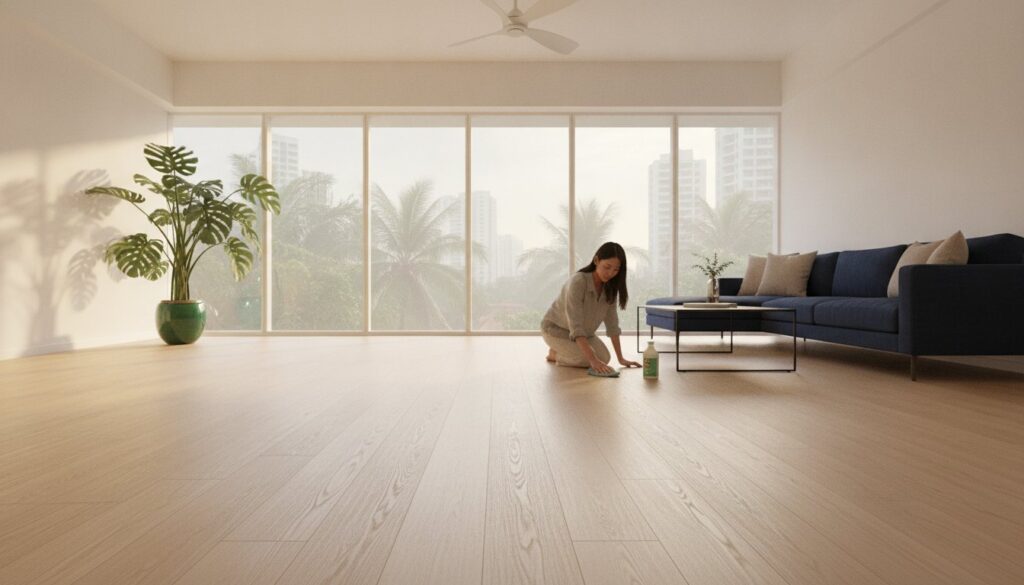
In Singapore, the real enemy of your floor isn’t just heavy foot traffic, it’s the 80 percent average humidity that quietly works to compromise the adhesive bond under your feet. While many homeowners assume these floors are indestructible, maintaining vinyl flooring requires a specific approach to handle the local climate and prevent premature warping or “popping.” You’ve likely felt that familiar anxiety when moving furniture or choosing a floor cleaner, wondering if you’re accidentally shortening the life of your renovation.
It’s a valid concern because your flooring should last 15 to 25 years, not just until the next repainting job. We understand you want a home that looks professional without the high maintenance costs or confusing chemical lists. This guide shares the practical secrets to preserving your vinyl floors against moisture and scratches while avoiding expensive replacement fees. We’ll walk you through a straightforward, low-cost cleaning routine and show you exactly how to handle stubborn stains without damaging the 0.5mm wear layer that keeps your home looking sharp.
Key Takeaways
- Understand how Singapore’s 80% humidity impacts floor expansion and learn the technical steps to prevent planks from popping.
- Master a 4-step cleaning routine using pH-neutral solutions to protect your vinyl’s UV coating from harsh chemical damage.
- Discover the “tennis ball” trick and other non-abrasive methods for maintaining vinyl flooring without scratching the surface.
- Learn why silicone caps and entrance mats are more effective than standard felt pads for protecting high-traffic HDB flooring.
- Get a contractor’s perspective on identifying terminal damage to decide when to replace a single plank versus the whole room.
Why Maintaining Vinyl Flooring is Critical in the Singapore Climate
For most homeowners, the concept of maintaining vinyl flooring starts and ends with a quick mop. In a professional context, maintenance is much more technical. It involves preserving the transparent wear layer while protecting the adhesive bond from environmental stressors. In Singapore, these stressors are constant. While modern vinyl is durable, it isn’t a “set and forget” product. Without a proper routine, the structural integrity of the floor can fail long before the material itself wears out.
The “Singapore Factor” is a primary concern for any renovation. Our local humidity levels often exceed 80 percent, which creates a high-moisture environment that affects how materials behave. Although vinyl is synthetic, the planks still experience minute levels of expansion and contraction. Constant fluctuations in moisture and temperature can stress the click-lock joints or the glue used in older installations. This is why understanding the history of materials, such as the development of Vinyl composition tile (VCT), helps us realize that modern luxury vinyl requires specific environmental management to stay stable.
There is also a common misconception that “waterproof” means “indestructible.” While the planks won’t rot like natural timber, water that seeps into the click-lock system can sit underneath the floor. This trapped moisture leads to mold growth or “popping” where the planks lift from the subfloor. Proper care can extend the lifespan of your floor from a mere 10 years to over 25 years in a standard HDB flat. This represents a significant economic saving by avoiding the labor costs and material fees of a full replacement.
Understanding the Anatomy of Your Vinyl Plank
Every plank consists of layers designed for specific functions. The top UV coating prevents the decorative film from fading, which is a common issue in condos with large, west-facing windows. Beneath that is the wear layer. For high-traffic areas like your living room, we recommend a minimum 0.5mm wear layer. The core of the plank is usually Stone Plastic Composite (SPC) or Wood Plastic Composite (WPC). SPC is the preferred choice for Singapore because its rigid core handles our heat and humidity with much better dimensional stability than softer alternatives.
The Hidden Threat: Moisture and Adhesive Failure
Excessive mopping is the fastest way to ruin a vinyl floor. When you use too much water, it travels to the edges of the room and into the joints. This causes “cupping” or “peaking,” where the edges of the planks start to curl upward. We often see this in HDB resale flats where previous owners used heavy-duty wet mops daily. Maintaining vinyl flooring requires a dry environment. A clean floor is useless if the adhesive bond underneath has degraded due to moisture, leading to hollow sounds when you walk across the room.
The 4-Step Professional Cleaning Routine for Singapore Homes
Establishing a consistent routine is the most effective way of maintaining vinyl flooring in a busy HDB or condo. You don’t need expensive machinery or specialized industrial chemicals. You need a process that addresses the two biggest threats to your floor’s integrity: abrasive grit and standing water. We’ve refined this four-step process through years of observing how different maintenance habits affect floor longevity in the local climate.
Step one is frequency-based dry cleaning. Dust and sand act like microscopic sandpaper under your feet. We recommend a daily sweep or vacuum to remove these particles before they can leave micro-scratches on the wear layer. Step two involves selecting a pH-neutral cleaner. Many generic floor cleaners are too acidic or alkaline. These chemicals eventually strip away the UV coating, leaving your floor looking dull and unprotected. If the label doesn’t explicitly state it’s pH-neutral, don’t use it.
Step three is the “damp, not wet” mopping technique. Your mop should feel barely moist to the touch. This prevents excess liquid from seeping into the click-lock joints. Finally, step four is active drying. In Singapore’s humidity, letting a floor air dry often means moisture sits in the grooves for too long. Use a dry microfibre cloth or a high-speed fan to clear the moisture immediately after mopping. This simple step prevents the “popping” issues common in humid residential units.
Equipment Checklist: What a Direct Contractor Recommends
When we handle vinyl flooring installation, we always advise clients on their tool selection. Use a soft-bristle broom or a vacuum cleaner. If you use a vacuum, you must disable the beater bar. The rotating brush is designed for carpets and will scratch the vinyl surface. Microfibre mops are superior to traditional string mops because they trap dirt more efficiently with less water. Avoid steam mops entirely. The high-heat steam can penetrate the layers and melt the adhesive bond, leading to permanent warping and adhesive failure.
DIY Cleaning Solutions: Safe vs. Dangerous
There is a common myth that apple cider vinegar is the best natural cleaner. While it’s effective for some surfaces, its acidity can break down the finish on your vinyl over time. Stick to dedicated pH-neutral cleaners found at local hardware stores. Avoid “mop and shine” products at all costs. These create a waxy buildup that attracts more dirt and becomes nearly impossible to remove without professional stripping. If you are starting a new HDB renovation project, choosing the right materials from the start makes this maintenance much easier.
Tackling Stubborn Stains and Scratches Without Damage
Accidents are inevitable in a busy household, but they don’t have to result in permanent damage. When it comes to maintaining vinyl flooring, your most effective tool is speed. We follow a strict 5-minute rule for all liquid spills. While the planks themselves are waterproof, the joints are not. If coffee, wine, or soy sauce sits on the floor for more than five minutes, it can seep into the click-lock system. Once liquid gets underneath, it can cause the edges to swell or trigger mold growth that is impossible to clean without lifting the planks.
For rubber scuff marks from shoes or furniture, skip the heavy chemicals. The most effective professional secret is actually a clean tennis ball. Rubbing the felt surface of a tennis ball over a scuff mark provides just enough friction to lift the rubber without compromising the UV coating. If the scuff is more stubborn, a small amount of jojoba oil on a microfibre cloth will usually do the trick. Always wipe away any oily residue immediately to prevent a slip hazard.
Common Stain Removal Hacks That Actually Work
Kitchen stains like dried food or turmeric require a different approach. We recommend a baking soda paste using a 2:1 ratio of baking soda to water. Apply the paste to the stain and let it sit for exactly 15 minutes. This draws out the pigment without the need for abrasive scrubbing. For ink, permanent markers, or makeup stains, use a small amount of rubbing alcohol on a cotton ball. You must perform a spot-test in a hidden corner or inside a wardrobe first. Some lower-quality vinyl films react poorly to alcohol, so verification is a mandatory step before treating a central area of your living room.
Managing Surface Scratches
If you discover a scratch that has penetrated the wear layer, a simple cleaning won’t fix it. For minor surface scratches, you can use specialized vinyl floor repair kits. These kits typically include wax sticks or resin fillers that you can color-match to your wood grain. This is a common task for home renovation enthusiasts who want to keep their floors looking new without calling in a contractor.
One thing you should never do is apply traditional floor wax to modern luxury vinyl. These floors have a factory-applied urethane finish that wax cannot bond to. Applying wax only creates a sticky, dull film that attracts dust. If a plank is deeply gouged or burnt, the only professional solution is a plank replacement. This is why we always leave our clients with at least one extra box of planks after an installation. It ensures that a single accident doesn’t force you to replace the entire room’s flooring.
Preventative Strategies for High-Traffic Singapore Flats
Preventative care is the most cost-effective part of maintaining vinyl flooring in a busy Singapore flat. While cleaning routines are essential, stopping damage before it occurs saves you from premature replacement fees. The most effective tool in your arsenal is a high-quality entrance mat. A proper mat can trap up to 80 percent of outdoor grit and moisture before it ever touches your vinyl. In high-traffic HDB corridors, this grit acts like sandpaper, grinding down the wear layer with every step you take.
Sunlight management is another critical factor for a successful hdb renovation in singapore. Direct UV exposure from the afternoon sun can cause the decorative film on your planks to fade or expand unevenly. We recommend using UV-rated curtains or window films in west-facing rooms to maintain a stable temperature. Additionally, if you have pets, keep their claws trimmed. Even a high-quality 0.5mm wear layer can be gouged by a large dog’s claws during a sudden sprint across the living room.
The Danger of Rubber-Backed Mats
Most homeowners buy cheap rubber-backed mats without realizing the chemical risk. In Singapore’s heat and humidity, a reaction called antioxidant transfer occurs between the rubber and the vinyl. This leads to permanent yellowing or dark staining that no amount of scrubbing can remove. This is a chemical change, not a surface stain. We recommend choosing mats with woven backings, cotton rugs, or non-staining felt backers. Check your “Welcome” mats today; if the backing feels like soft, grippy rubber, it is likely damaging your floor.
Furniture Management in the Modern Home
The “Lift, Don’t Drag” rule is non-negotiable for protecting your investment. Dragging a heavy sofa or a custom piece from a carpenter singapore can gouge the vinyl surface instantly. Instead of basic felt pads that eventually flatten and trap abrasive hair, we suggest using heavy-duty silicone caps. These provide better weight distribution and don’t lose their grip over time. For home offices, replace standard hard plastic wheels on chairs with soft rubber or silicone casters. This prevents the circular wear patterns often seen under desks in older HDB flats.
When to Repair vs. Replace: The Direct Contractor’s Perspective
Every floor eventually reaches a point where routine maintenance is no longer sufficient. Identifying “terminal damage” is the first step in deciding whether to continue maintaining vinyl flooring or invest in a full replacement. Terminal damage typically includes widespread adhesive failure, deep structural warping across multiple rooms, or a wear layer that has completely thinned out, exposing the decorative film. If you are seeing these signs across more than 30 percent of your floor area, localized repairs are usually a waste of resources.
The cost-benefit analysis of replacing a single plank versus the entire room depends heavily on your supply of spare materials. If you have original planks from your initial installation, a professional can swap out damaged sections for a small labor fee. However, if you lack spares, finding an exact color match is nearly impossible due to batch variations and natural UV fading. For commercial tenants, we recommend a pre-reinstatement check three months before your lease ends. Identifying these issues early allows you to perform targeted repairs and avoid heavy deposit deductions from landlords.
When repairs are necessary, hiring a direct renovation contractor singapore typically saves you 20 to 30 percent on the total bill. By working directly with the team performing the labor, you avoid the intermediary commissions and project management markups added by design firms. We prioritize functional results and financial transparency, ensuring you pay only for the technical skill and materials required to restore your floor’s integrity.
Repairing Common Vinyl Issues
Many common issues don’t require a full teardown. “Gapping,” where planks drift apart to leave visible cracks, can often be fixed with a floor gap fixer tool. This suction-based device allows you to pull planks back into their click-lock positions without lifting the entire floor. “Bubbling” is more serious; it usually indicates moisture trapped in the subfloor. This requires lifting the affected area to dry the subfloor and address the source of the leak. If you have spare planks, we can safely remove the damaged piece and click in a new one, provided the surrounding tongue-and-groove joints remain intact.
Planning for Your Next Flooring Project
Protecting Your Flooring Investment for the Long Term
Maintaining vinyl flooring in Singapore is a matter of technical discipline rather than expensive chemicals. By managing the 80 percent humidity levels and sticking to a pH-neutral cleaning routine, you can prevent the adhesive failure and warping that often leads to premature replacement. Remember that your choice of preventative tools, like silicone furniture caps and woven entrance mats, acts as the first line of defense against the abrasive grit found in HDB corridors. These small, daily habits ensure your floor remains a functional and aesthetic asset for decades.
If your existing floor shows signs of terminal damage or you’re planning a new renovation, we provide expert workmanship tailored to Singapore’s unique climate. We offer direct-to-homeowner pricing with no ID markups, specializing in HDB and Condo flooring works. Get a Direct Quote for Vinyl Flooring Installation or Repairs to ensure your project is handled with technical competence and financial transparency. Your home deserves a durable foundation that stands up to the local environment. With the right care and professional installation, your floors will look sharp and stay stable for years to come.
Frequently Asked Questions
Can I use a steam mop on my vinyl flooring in Singapore?
No, you shouldn’t use a steam mop on vinyl floors. The pressurized high-temperature steam can penetrate the click-lock joints and dissolve the adhesive bond or damage the core layer. This leads to permanent warping and bubbling that no amount of maintaining vinyl flooring can fix once the structural integrity is lost. Stick to damp microfibre mopping for safety.
How do I remove yellow stains caused by rubber mats on vinyl?
Yellow stains from rubber mats are often permanent because they represent a chemical change in the vinyl called antioxidant transfer. You can try a specialized vinyl floor deep cleaner or a baking soda paste, but if the stain has settled deep into the wear layer, it won’t come out. The only professional solution for deep chemical yellowing is to replace the affected planks.
Is it okay to use Magiclean or similar floor wipes on vinyl?
Yes, Magiclean or similar dry and wet floor wipes are generally safe for daily maintenance in Singapore homes. Ensure the wet wipes are pH-neutral and don’t leave a soapy residue that attracts more dirt. These wipes are convenient for picking up surface dust, but they shouldn’t replace a thorough damp mop with a proper microfibre cloth for monthly deep cleaning.
What is the best pH-neutral cleaner available in Singapore supermarkets?
Look for brands like Bona, Method, or specialized multi-surface cleaners that explicitly state they’re pH-neutral on the label. Avoid any product containing bleach, ammonia, or high concentrations of vinegar. In local supermarkets, checking the fine print for “Safe for Luxury Vinyl” or “Urethane Safe” is the most reliable way to avoid stripping your floor’s factory-applied UV coating.
How often should I deep clean my vinyl floors in a high-traffic HDB?
We recommend a deep clean once every month for high-traffic HDB living rooms and kitchens. This involves a thorough damp mop with a dedicated pH-neutral cleaner to remove built-up oils or grime that daily sweeping misses. Maintaining vinyl flooring effectively relies more on daily grit removal than frequent heavy mopping, which can actually introduce too much moisture into the joints.
Can I use apple cider vinegar to clean my vinyl floors?
No, you should avoid using apple cider vinegar as a regular cleaner for your vinyl floors. While some DIY guides suggest it as a natural alternative, the acidity of the vinegar can gradually break down the protective UV coating. Over time, this leaves the floor looking dull and more susceptible to scratches and stains that are difficult to remove.
What should I do if my vinyl floor starts to warp or pop up?
If your floor starts to warp or pop up, you should first check for moisture issues in the subfloor. This usually indicates that water has seeped into the joints or that high humidity has caused excessive expansion. You’ll likely need to lift the affected planks, dry the area completely, and replace the damaged pieces with original spares to ensure a flush fit.
Will sunlight through my balcony window damage the vinyl colour?
Yes, direct sunlight through balcony windows will eventually fade the decorative film of your vinyl planks. The UV rays break down the pigments in the design layer over several years. To prevent this, use UV-rated curtains or solar window films to block the harsh afternoon sun, especially in west-facing condo units where the heat is most intense.