
Hiring an interior designer to add a room in your home often adds a 20% to 30% markup to the actual trade costs. When you are calculating the cost to build a partition wall in condo units, you’re usually paying for coordination fees rather than just the labor and materials. Most homeowners don’t realize they can bypass these intermediaries to get the same structural quality for a fraction of the price. Building a wall is a technical trade job, not a design project, and you deserve transparency before the first stud is installed.
It’s frustrating to deal with hidden markups or the fear that your new wall will offer zero privacy because of poor soundproofing. You want a solid, fire-rated addition that passes MCST inspection without the typical renovation headache. This 2026 guide breaks down the industry average rates for materials like acoustic drywall and tempered glass, ensuring you aren’t overpaying. We’ll walk you through the essential MCST approval steps and show you how to achieve a high-quality finish that looks like part of the original unit. By the end of this article, you’ll have a clear roadmap to expand your living space with total financial clarity.
Key Takeaways
- Save 20% to 30% on your project by hiring a direct contractor and eliminating the middleman markups typical of interior design firms.
- Compare the performance of drywall and glass options to ensure your new room meets your requirements for soundproofing and natural light.
- Follow our streamlined checklist for MCST renovation permits and fire safety compliance to ensure your project stays within condo by-laws.
- Understand the total cost to build a partition wall in condo units by accounting for material rates, labor, and necessary electrical relocations.
- Identify strategic ways to use partition walls to create “flexi-rooms” that can increase your property’s rental yield or functional living space.
Why Build a Partition Wall? Maximising Your Condo Space in 2026
Singapore condo units are shrinking, but our lifestyle needs are growing. Whether you’re working from home or preparing for a new family member, you need functional zones that your original floor plan might not provide. Partition walls offer a non-structural solution to redefine these spaces without the mess of a full-scale renovation. By skipping the interior designer and working directly with a specialist, you keep the cost to build a partition wall in condo projects manageable while ensuring the work meets local technical standards.
Many modern condos use “dumbbell” layouts where bedrooms flank the living area. This design often leads to privacy issues, as bedroom doors open directly into the common space. A targeted divider can create a private corridor, solving the “fishbowl” feel of these units. It provides a physical and acoustic barrier that makes the home feel more organised and private.
You don’t need a mood board or 3D renders to build a wall. You need technical competence. Hiring a direct contractor means you pay for the actual manual labor and materials. You aren’t subsidising an interior designer’s office rent or marketing budget. Direct communication with the people doing the masonry and carpentry ensures that your requirements for soundproofing and fire safety are met without being lost in translation.
Common Condo Partitioning Scenarios
Converting a dining nook into a nursery or study is a popular choice for young families. You can also split a large master suite to create a walk-in wardrobe, which adds a touch of luxury without a full renovation. In units where the front door opens directly into the living room, a small foyer partition creates a sense of arrival and hides your living space from neighbours walking along the common corridor.
Impact on Property Value and Rentability
An extra room often moves your unit into a different search category on property portals. A “2+1” unit typically attracts more interest than a standard 2-bedroom. However, you must balance this with light flow. If your partition creates a “dark corner” without ventilation, it could hurt your resale value. We focus on making the partition look like part of the original unit, ensuring seamless aesthetics that don’t look like an afterthought. Understanding the cost to build a partition wall in condo projects allows you to weigh these improvements against your long-term property goals.
Material Options: Drywall vs. Glass vs. AAC Blocks
Choosing the right material is the first technical decision that defines the final cost to build a partition wall in condo units. While aesthetics drive the initial choice, the structural performance and acoustic properties of the material determine the long-term comfort of the new space. In Singapore’s high-rise environment, weight and fire safety are non-negotiable factors that influence which materials are viable for your specific floor plan.
Acoustics are a primary concern for most homeowners. Standard drywall can feel hollow if not properly insulated. We use high-density Rockwool insulation inside the wall cavity to dampen sound transmission. This turns a basic divider into a functional room that offers genuine privacy for home offices or nurseries. If you’re comparing material samples, always ask about the Sound Transmission Class (STC) rating to ensure the wall meets your expectations for peace and quiet.
Drywall: The Practical Homeowner’s Choice
Gypsum board mounted on galvanised steel studs is the industry standard for a reason. It’s lightweight, which means it won’t exceed the floor slab’s loading capacity. Installation is fast, typically taking only a few days from framing to the final skim coat. For walls near “wet areas” like kitchens or balcony entrances, we use moisture-resistant green boards to prevent mould and warping. One major advantage of drywall is its “reversibility.” If you decide to sell your unit later and the buyer prefers the original open layout, removing a drywall partition is a straightforward process that leaves minimal damage to the existing flooring and ceiling.
Glass and AAC: Premium Subdivisions
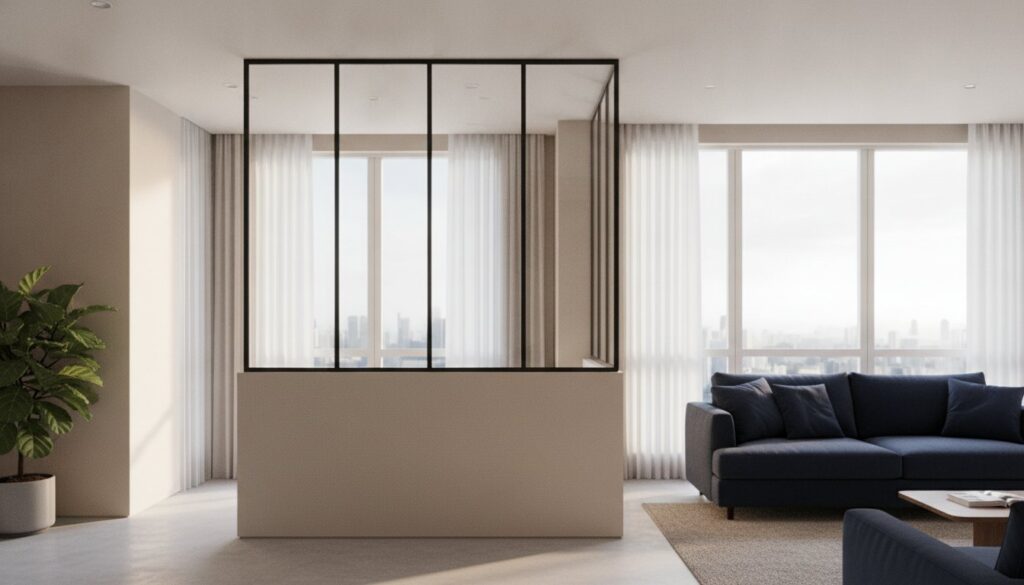
Glass partitions are the best solution for deep units where natural light is limited. Using tempered glass with slim aluminium frames provides a modern look while keeping the space feeling airy. For those who insist on a “solid” feel similar to a brick wall, Autoclaved Aerated Concrete (AAC) blocks are an option. AAC blocks offer superior fire resistance and a masonry-like finish, but they are significantly heavier than drywall. Before opting for AAC, you must consult BCA’s guidelines and requirements to ensure your condo’s structural slab can support the additional dead load. If you’re unsure which material fits your specific layout, consulting a direct renovation contractor can clarify the technical constraints of your unit. We focus on providing honest advice on whether your floor slab can handle a solid block wall or if a reinforced drywall system is a safer, more cost-effective alternative.
Calculating the Cost: What You Are Really Paying For
The total cost to build a partition wall in condo units involves more than just the surface area of the gypsum boards. It’s a multi-trade process. A wall that isn’t properly integrated into the existing electrical and carpentry framework will always look like an afterthought. To get a high-quality result, you need to account for the technical layering that happens before and after the metal studs are erected. We focus on structural integrity and seamless aesthetics, ensuring the addition looks like part of the original unit.
Electrical wiring and installation are the most critical “invisible” costs. If you’re creating a study, you’ll need at least two power points and a data port. In a condo, this often involves tapping into existing circuits hidden behind false ceilings or within floor conduits. It isn’t just about pulling a wire; it’s about maintaining the integrity of your unit’s electrical load and ensuring all new points are positioned for maximum utility. Lighting adjustments are also necessary. If your new wall cuts across an existing downlight, that fixture must be relocated or replaced to ensure both sides of the partition are properly illuminated without creating dark spots.
Carpentry and masonry integration also play a massive role in the final look. Most Singapore condos feature specific skirting profiles and ceiling cornices. A professional contractor doesn’t just butt the wall against these features; they “scribe” the materials or replace sections of skirting to create a continuous line. This masonry work ensures the wall looks solid and permanent. If you have vinyl or timber flooring, the partition must be installed in a way that doesn’t compromise the floor’s expansion gaps, preventing future warping or buckling. Finally, high-quality painting services with professional-grade emulsion ensure the new surface matches your existing walls perfectly.
The Hidden Ancillary Costs
- Door Installation: Whether you choose a space-saving sliding door or a standard timber swing door, the frame must be integrated during the framing phase. This includes the cost of the door leaf, hardware, and professional alignment.
- Floor Protection: Condo flooring like marble or engineered timber is expensive to repair. We lay down heavy-duty protection sheets and corrugated boards before any materials are moved into the unit.
- Debris Removal and Haulage: Condo management has strict rules about waste disposal. This involves manual haulage to designated areas and coordination with external waste management services to ensure no debris is left in common corridors.
Direct Contractor vs. Interior Designer Pricing
When you hire an interior designer, you’re often paying a 20% to 30% coordination fee. This markup is added to every trade, from the partition specialist to the electrician. By working with a direct contractor, you remove this layer. You get transparent material costs and direct communication with the installers actually doing the work. It’s important to avoid “lump sum” quotes that don’t itemise these components. A transparent breakdown protects you from hidden fees and ensures you’re only paying for the work performed in your unit. Understanding the true cost to build a partition wall in condo projects means looking past the initial headline figure and checking for these essential trade inclusions.
Navigating MCST Approvals and Condo Rules
Every condominium in Singapore operates under its own set of by-laws managed by the Management Corporation Strata Title (MCST). Unlike HDB flats where regulations are relatively uniform, condo rules regarding structural additions can vary significantly between developments. This administrative layer is a critical factor in the total cost to build a partition wall in condo units, as it involves specific timelines, permit fees, and compliance standards that must be met before any materials arrive on site.
The approval process typically begins with a formal renovation application. You must submit a scaled floor plan clearly marking the location of the new partition, along with a detailed work schedule. Most MCSTs require at least 7 to 14 working days to review these documents. During this time, they check if your proposed wall interferes with the building’s fire safety systems. For example, a new partition cannot block existing fire sprinklers or smoke detectors. If the new room created lacks its own sprinkler coverage, you will need to engage a licensed fire engineer to extend the system, which is a technical requirement often overlooked in initial budgeting.
Working hour restrictions are another practical hurdle. Most condos only allow noisy works between 9:00 AM and 5:00 PM on weekdays, with a total ban on weekends and public holidays. This condensed schedule means your contractor must be highly efficient with labor to avoid project overruns. We coordinate these logistics directly with your building management to ensure all insurance documents and worker details are submitted correctly, preventing any last-minute stop-work orders.
The Professional Engineer (PE) Endorsement
In newer condo developments or when using heavier materials like AAC blocks, the MCST may require a Professional Engineer (PE) to certify that the new wall is non-load-bearing. This endorsement ensures the additional weight doesn’t compromise the structural integrity of the floor slab. While drywall partitions rarely require this, it’s essential to check your specific condo’s by-laws early. If your project involves complex alterations, our team at Direct Renovation Contractor Singapore can help you navigate these technical submissions to ensure full compliance with both MCST and SCDF fire safety requirements.
Protecting Your Deposit
Condo managements typically collect a renovation deposit ranging from $1,000 to $3,000 before work starts. This deposit is only refunded if the common property remains undamaged. We prevent disputes by installing heavy-duty protection on lift interiors and common corridors before moving any metal studs or gypsum boards. Common reasons for withheld deposits include debris left in the bin center or scratches on the lobby floor. We conduct a thorough site cleanup and joint inspection with the building supervisor upon completion to ensure your deposit is returned in full. Managing these administrative details is just as important as the construction itself for a successful, stress-free project.
Why Choose a Direct Renovation Contractor for Your Partition
Building a new room in your home is a structural trade task that requires technical skill rather than artistic flair. When you research the cost to build a partition wall in condo units, you’ll quickly see that the price varies significantly between interior designers and direct contractors. Choosing a direct contractor means you speak directly to the masonry and carpentry specialists who execute the work. This eliminates the “telephone game” where technical requirements like soundproofing density or electrical point placement get lost between a salesperson and the site supervisor. You’re dealing with the people who actually handle the metal studs and gypsum boards, ensuring your specifications are met with technical precision.
Cost transparency is our badge of honor. We don’t charge you for 3D renders, mood boards, or “design consultancy” fees that often hide a 20% to 30% markup. Instead, you pay for the actual labor and materials required to deliver a solid, fire-rated wall. Our team at Direct Renovation Contractor Singapore focuses on the structural integrity and technical finishing of your project. This pragmatic approach ensures your budget goes toward high-quality Rockwool insulation and professional-grade skim coating rather than intermediary commissions. We believe in providing a straightforward financial model where every dollar spent is visible on the unit’s walls.
The Direct Renovation Model
Our business model is built on eliminating the middleman. By sourcing materials directly and employing our own skilled tradespeople, we pass the savings on to you. We’re deeply familiar with the nuances of local residential classifications and have extensive experience meeting the strict MCST requirements of Singapore’s leading developments. If you’re looking to maximize your unit’s potential beyond just a single wall, explore our condo renovation packages for comprehensive space-saving solutions. We ensure that every addition looks like an original part of the unit’s architecture, which is vital for maintaining your property’s resale value.
Getting Started with Your Project
We follow a process-oriented rhythm to ensure your project stays on track and within budget. This logical sequence removes the anxiety typically associated with home improvements by providing a clear roadmap from assessment to completion.
- Step 1: Site Measurement and Material Selection. We visit your unit to assess the floor slab capacity and measure the dimensions. You’ll choose between drywall, glass, or AAC blocks based on your acoustic and lighting needs, receiving technical advice on which material fits your specific layout.
- Step 2: Transparent Quotation. You’ll receive an itemized breakdown of the cost to build a partition wall in condo project. This includes everything from metal studs and Rockwool to electrical relocation and debris removal. We reject undisclosed fees, ensuring the price we quote is the price you pay.
- Step 3: Execution and Cleanup. Our team handles the installation with professional floor protection and strict adherence to condo working hours. We conclude with a thorough site cleanup and a joint inspection to ensure the finish meets our high standards of workmanship.
By focusing on technical competence and straightforward communication, we deliver functional results that stand the test of time. Our “straight-talker” approach builds trust because we’re more interested in the structural integrity of your home than in selling a lifestyle. Reach out today for a no-nonsense assessment of your space and a transparent quote that respects your budget.
Secure Your Condo’s Functional Future Today
Adding a new room shouldn’t be a financial mystery. By choosing the right materials and navigating the MCST approval process with a technical mindset, you ensure your home remains both functional and compliant. We’ve shown how bypassing the interior designer’s typical markup allows you to invest more into the actual quality of your wall. This covers everything from high-density soundproofing to seamless masonry finishing that matches your original unit perfectly.
When you understand the true cost to build a partition wall in condo units, you’re better equipped to make decisions that increase your property’s functional value. We specialise in direct-to-owner pricing with no hidden commissions or intermediary fees. Our team brings the technical expertise needed for strict MCST compliance and professional workmanship using high-quality, fire-rated materials that stand the test of time.
Ready to redefine your living space without the unnecessary overhead? Get a Direct Quote for Your Condo Partition Wall and see how straightforward a renovation can be. Let’s build a space that fits your lifestyle perfectly.
Frequently Asked Questions
Do I need a permit to build a partition wall in my condo?
Yes, you must obtain a renovation permit from your condo’s Management Corporation Strata Title (MCST) before any work begins. While non-load-bearing walls typically don’t require Building and Construction Authority (BCA) approval, your MCST needs to verify that the installation doesn’t interfere with the building’s fire safety systems or common property. We handle the technical documentation to ensure your application is processed without delays.
Is a drywall partition soundproof enough for a bedroom?
Standard drywall is often too thin for bedroom privacy, but we solve this by installing high-density Rockwool insulation within the wall cavity. This technical addition creates an acoustic barrier that effectively dampens speech and television noise. When calculating the cost to build a partition wall in condo units, investing in proper insulation is the most effective way to ensure the new room feels like a permanent, private space.
How long does it take to install a partition wall in a condo?
The actual installation typically takes between three to five working days once you’ve secured the MCST permit. This timeframe includes the framing of metal studs, board installation, and the application of multiple skim coats to achieve a seamless finish. Painting usually requires one additional day to ensure the coats dry properly in Singapore’s humid climate, resulting in a wall that looks original to the unit.
Can I build a partition wall over existing marble or parquet flooring?
Yes, it’s possible to install a partition without damaging your existing high-end flooring. We use a “dry” installation method where the bottom track is secured with minimal fixings or specialized adhesives that can be reversed if you ever remove the wall. We also apply heavy-duty corrugated board protection across your marble or timber surfaces to prevent any scratches or impact damage during the construction phase.
What happens if I build a partition without MCST approval?
Building without a permit can lead to immediate stop-work orders and the forfeiture of your renovation deposit, which often ranges from $1,000 to $3,000. The MCST has the legal authority to compel you to demolish the wall and restore the unit to its original condition at your own expense. It’s always safer and more cost-effective to follow the official approval route from the start.
Can a partition wall support heavy items like a wall-mounted TV?
Yes, but you must inform us during the framing stage so we can install internal plywood reinforcement. Standard gypsum board isn’t designed to hold the weight of heavy TV brackets or large kitchen cabinets. By adding a 12mm or 15mm plywood backing behind the drywall, we create a reinforced mounting point that allows you to hang heavy items with total security.
What is the difference between a partition wall and a load-bearing wall?
A load-bearing wall is a structural element that supports the weight of the building, while a partition wall is a non-structural divider used to separate spaces. You cannot hack or modify load-bearing walls without risking structural failure. Partition walls are lightweight additions that give you the flexibility to change your floor plan without affecting the building’s integrity or safety.
Will adding a partition wall affect my condo’s fire safety certification?
Adding a partition wall can compromise fire safety if it blocks existing smoke detectors or prevents fire sprinklers from covering the new room. Every enclosed space created must comply with Singapore Civil Defence Force (SCDF) regulations regarding fire protection and ventilation. We review your unit’s fire protection layout to ensure the cost to build a partition wall in condo projects includes any necessary adjustments to keep your home fully certified.