
A single unauthorized wall hacking can lead to a S$5,000 fine and serious structural issues. Most homeowners worry about these penalties or hiring a contractor who cuts corners, which is why understanding the official HDB protocols is vital. You don’t want your renovation stalled because of a paperwork error or a contractor who isn’t properly registered. Utilizing the hdb e-service for renovation permits correctly is the most direct way to ensure your project is legal, safe, and stays within your budget.
We’ll walk you through the exact steps to secure your approval without the stress. You’ll learn which specific works like hacking or window replacement require a permit, how to verify a contractor via the Directory of Renovation Contractors, and the strict 2026 deadlines for completing your works. This guide provides a clear, process-oriented roadmap to help you avoid delays and ensure your flat remains a safe, compliant home for years to come.
Key Takeaways
- Identify which specific modifications, such as hacking non-structural walls or masonry flooring works, strictly require official approval to avoid legal penalties.
- Learn how to navigate the hdb e-service for renovation permits to ensure your contractor submits accurate, scaled floor plans for a smoother approval process.
- Understand the mandatory 2026 timelines for completing renovations and the specific hours permitted for noisy works like drilling and demolition.
- Avoid common permit rejection triggers by verifying your contractor’s registration and ensuring no structural or load-bearing elements are compromised.
- Discover the financial benefits of working with a direct contractor to eliminate middleman commissions and ensure transparent pricing for all permit-related submissions.
Understanding the HDB E-Service for Renovation Permits
The Housing & Development Board (HDB) oversees all public housing in Singapore, and their digital portal is the only legal way to manage flat modifications. The hdb e-service for renovation permits acts as a centralized hub where every major change to your home is recorded and vetted. It isn’t just a bureaucratic hurdle. It’s a safety system designed to maintain the structural integrity of high-rise blocks. When you hack a wall or change floor finishes, you’re affecting the building’s load-bearing capacity and waterproofing. The e-service ensures that a qualified professional reviews these plans before a single hammer is swung.
Homeowners access this system through the My HDBPage portal using their Singpass. This secure login links your identity to your specific property, providing a transparent record of all approved works. It also connects you directly to the Directory of Renovation Contractors (DRC). Only contractors listed here are authorized to perform works in HDB flats. By using this official channel, you eliminate the risk of hiring “fly-by-night” operators who might compromise your home’s safety or leave you with heavy fines for unauthorized works. This transparency is the foundation of a cost-effective renovation because it prevents expensive remedial works later.
Key Functions of the My HDBPage Portal
The portal serves three main purposes for the pragmatic homeowner. First, it’s where you apply for new permits, whether you’re moving into a fresh BTO or updating a resale unit. Second, it allows for real-time tracking. You don’t need to call your contractor every day for updates; the status of your application is visible online. Finally, it provides a history of past renovations. If you’ve bought a resale flat, you can see exactly what the previous owners changed, which is invaluable for planning your own plumbing or electrical layout. This visibility prevents you from accidentally damaging concealed pipes or wires installed during previous works.
Who Can Submit the Application?
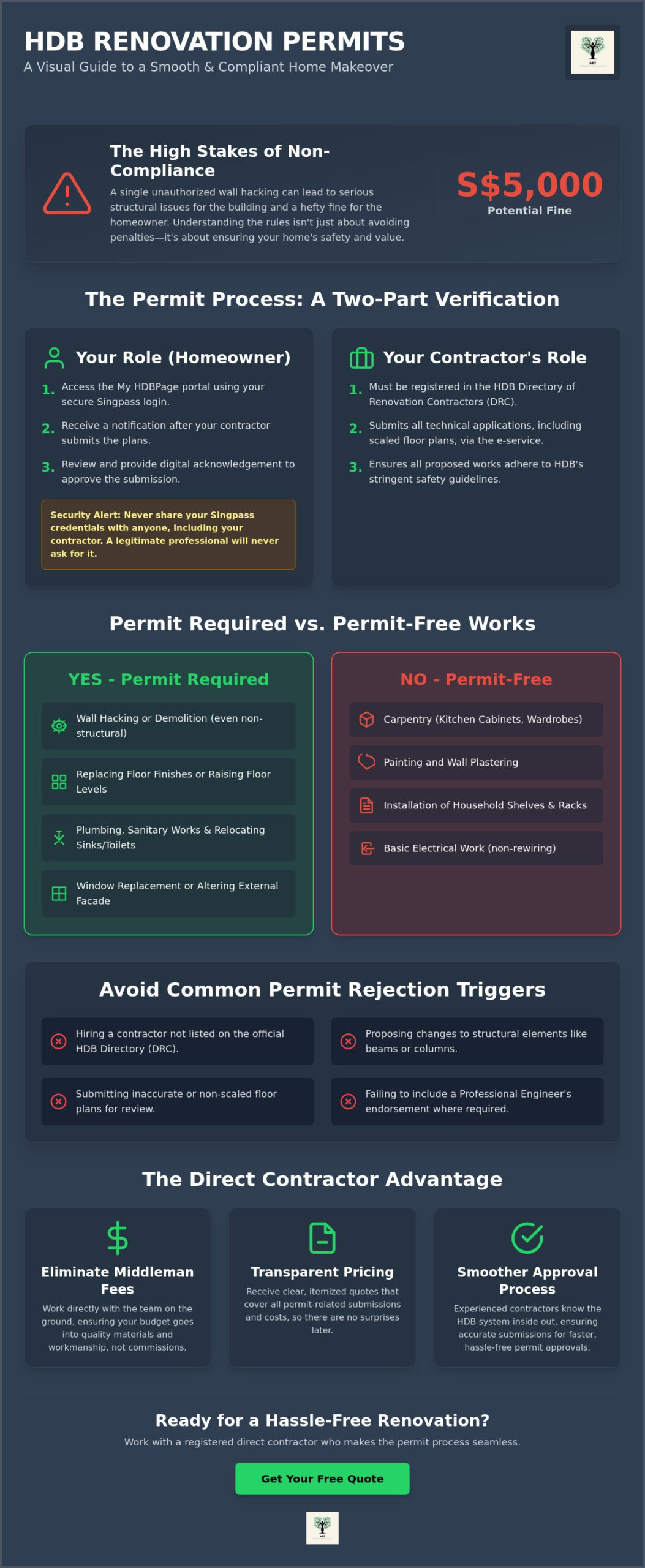
While you manage the portal, you don’t actually submit the technical application yourself. That’s the contractor’s job. An HDB-registered contractor must log in using their corporate digital identity to file the paperwork. Once they’ve submitted the details, you’ll receive a notification to provide digital acknowledgment. This two-step verification protects you by ensuring you’ve seen and agreed to the scope of work. Never share your Singpass credentials with a contractor. If they ask for your login to “save time,” it’s a major red flag. Legitimate professionals follow the official process to keep everything transparent and legal. This direct involvement ensures that your hdb e-service for renovation permits application is accurate and reflects the actual work being done on-site.
Which Renovation Works Require an HDB Permit?
Not every modification in your home requires a green light from the authorities, but crossing the line into structural changes without approval is a recipe for heavy fines. Any work that alters the weight distribution or safety of the block must be declared. For example, hacking or demolishing internal non-structural walls is a major modification that requires a permit. Even though these walls aren’t load-bearing, their removal changes the flat’s layout and must be documented to ensure the building’s stability remains intact.
Masonry works are another critical area. If you’re replacing floor finishes or raising floor levels with cement and sand screed, you must obtain a permit. This is because excessive weight on the floor slab can cause structural stress. Similarly, relocating sinks, toilet bowls, or any major plumbing and sanitary works requires official oversight. These changes affect the common discharge pipes of the entire block. If you’re unsure about your specific floor plan, our team can provide a direct site assessment to identify which works need permits before you submit anything through the hdb e-service for renovation permits.
External modifications are strictly regulated to maintain safety and estate uniformity. Replacing windows or changing the external facade of the flat is never a “DIY” decision. These works must meet specific safety standards to prevent falling objects. Additionally, installing heavy wall-mounted fixtures that could affect the block’s safety may require a professional engineer’s endorsement and a formal permit application.
Permit-Exempt Works You Can Do Freely
Many aesthetic upgrades don’t require you to wait for HDB approval. Basic carpentry, such as building wardrobes and kitchen cabinets Singapore, is completely exempt. You can also proceed with internal painting and minor electrical wiring replacements without a permit. If you want new floors without the masonry hassle, laying vinyl flooring over existing tiles is allowed, provided it doesn’t exceed the permitted floor thickness and weight. These works still need to follow HDB’s general guidelines, even if no formal permit is filed via the hdb e-service for renovation permits.
The 3-Year Restriction Rule for BTO Flats
Step-by-Step Guide to Using the HDB Renovation E-Service
The permit process moves in a logical sequence. It begins long before anyone logs into a computer. You must first finalize your floor plan and scope of work with your contractor. This document acts as the blueprint for the entire application. Once the scope is set, your contractor logs into the hdb e-service for renovation permits using their corporate digital identity. They are responsible for filling in the technical details, including the specific dates for noisy works and the registration numbers of any specialized workers involved in the project.
After the contractor uploads the required floor plans, the system generates a notification. You’ll receive an SMS or email asking you to acknowledge the application. This is a critical security step. It ensures you’ve seen exactly what the contractor is proposing to do to your flat. Only after you click “Acknowledge” on My HDBPage does the HDB begin their review. Approval can take up to three weeks, so plan your timeline accordingly. When approval is granted, you must print the “Notice of Renovation” and display it outside your flat from the start of the project until its completion.
Managing Your Floor Plan Uploads
Accuracy is the most important factor during the upload stage. You should always use the latest HDB-purchased floor plan rather than a generic one from a property listing. Your contractor needs to clearly mark “to be demolished” walls with dotted lines and “to be constructed” walls with solid red lines. These technical submission standards ensure that the HDB officer understands your home renovation plans immediately. If the drawings lack scale or clarity, expect an immediate rejection and a reset of the three-week waiting period. Clear drawings prevent back-and-forth communication and keep your project on schedule.
The Acknowledgement Process for Homeowners
Many homeowners assume the contractor handles everything, but the process stalls if you don’t log into My HDBPage. Once you’re in, review the contractor’s submission carefully. Verify that the listed scope matches your signed contract. Look for common mistakes, such as incorrect flat addresses or missing descriptions of hacking works. If the details don’t match what you discussed, don’t click “Acknowledge.” Ask your contractor to amend the submission first. This step is your final chance to catch errors before they become legal records on the hdb e-service for renovation permits. Your digital signature confirms you’re aware of the works and the regulations surrounding them.
Common Reasons for Permit Delays and Rejections
Getting a rejection on the hdb e-service for renovation permits is more than just a minor inconvenience. It resets your three-week waiting period and can push back your move-in date by a month or more. Most delays happen because the submitted floor plans are incomplete or lack scale. HDB requires technical drawings that are clearly legible. If your contractor submits a blurry photo of a hand-drawn sketch, the system will flag it immediately. Accuracy in these early stages prevents the frustration of multiple re-submissions and keeps your project on track.
Proposing to hack structural walls or load-bearing columns is strictly prohibited. These elements are the backbone of the entire HDB block. If your plan includes any modification to these areas, the application won’t just be delayed; it will be rejected outright. You might even face a formal investigation. For specific structural modifications that are allowed, you must engage a Qualified Person (QP), such as a professional engineer, to endorse the plans before they are uploaded to the portal. Skipping this step is a guaranteed way to stall your renovation.
Structural Integrity and Prohibited Works
You can identify structural walls on your floor plan by looking for thick, bold lines. In some older layouts, these might be specially highlighted. Hacking these walls is a serious violation that leads to immediate rejection and fines of up to S$5,000. Beyond walls, HDB also regulates the weight of materials used in your home. Proposing heavy masonry loads or floor screed that exceeds the permitted thickness will trigger a safety alert. We ensure all our hdb registered contractor submissions stay within these strict weight and structural limits to protect the building’s lifespan.
Administrative and Contractor Errors
Sometimes the issue isn’t your floor plan, but the person submitting it. If your contractor has an expired or suspended HDB registration status, they cannot access the hdb e-service for renovation permits. Always verify their standing in the Directory of Renovation Contractors before you sign any contract or pay a deposit. Administrative errors, like expired insurance policies or insufficient security bonds, are also common culprits for delays. These technical details should be handled behind the scenes, but a lapse here will halt your permit approval.
If HDB technical officers provide feedback after the first review, it’s usually about specific technical requirements or missing details. A direct contractor who understands the nuances of local regulations can address these queries in hours rather than days. If you want to avoid these common pitfalls and ensure a smooth approval, speak with our technical experts to review your floor plan before the official submission.
Why a Direct Renovation Contractor is the Smart Choice for Permits
Engaging an Interior Design (ID) firm often places a middleman between you and the technical execution of your home. When it comes to using the hdb e-service for renovation permits, this gap can lead to communication breakdowns. A direct contractor is the person actually logging into the portal and assuming legal responsibility for the structural changes. This direct line ensures that what’s discussed on-site is exactly what’s submitted to HDB. You won’t deal with a game of “telephone” where a designer misinterprets technical hacking requirements, which often leads to permit rejections or site errors.
Pragmatic homeowners also benefit from total financial transparency. Many ID packages include hidden “permit management fees” or administrative charges for filing paperwork. We reject these undisclosed commissions. Filing for a permit is a standard part of our professional service, not an opportunity to add markups. By working directly with the team performing the masonry and hacking, you gain access to technical expertise built on years of on-site experience. This ensures your application is realistic and compliant from the first submission, as we understand the practical limits of HDB structures better than someone focused solely on aesthetics.
Saving Costs on HDB BTO and Resale Packages
Choosing a direct model is the most effective way to manage your budget for hdb renovation in singapore. Traditional firms often add a 20 to 30 percent markup to cover their overheads and designer commissions. We eliminate these intermediaries, providing factory-direct carpentry and masonry services. Whether you’re hacking walls in an old resale flat or installing cabinets in a new BTO, you pay for the actual labor and materials. This straightforward approach allows you to allocate more of your budget to high-quality finishes and durable hardware rather than paying for a middleman’s office rent.
Seamless Permit Management with Direct Renovation Contractor Singapore
Our process handles every technicality of the hdb e-service for renovation permits so you can focus on your move. We manage the floor plan marking, the digital submission, and the coordination with HDB officers if technical clarifications are needed. Once approved, we ensure your “Notice of Renovation” is prominently displayed outside your unit. This prevents unnecessary friction with the Town Council or neighbors. This level of direct accountability means any site inspection by HDB is met with a team that knows every detail of the approved permit. If you’re ready for a transparent, no-nonsense renovation, contact us for a direct quote and let our experts handle the paperwork for you.
Secure Your Renovation Approval with Confidence
Securing a renovation permit shouldn’t be a source of anxiety. By identifying which works require official oversight and understanding your role in the digital acknowledgement process, you’ve already cleared the biggest hurdles. The hdb e-service for renovation permits is your primary tool for ensuring your home makeover remains legal and structurally sound. You’ll avoid common delays and rejections by keeping your floor plans accurate and choosing a partner who understands the nuances of local building codes.
We operate as an HDB Registered Contractor with a proven track record of successful permit approvals. Our business model prioritizes direct-to-homeowner pricing, so you never have to worry about hidden interior design commissions or middleman markups. We bring specialized expertise in HDB BTO and Resale structural guidelines to ensure your project meets every regulatory standard from day one. This straightforward approach protects your investment and keeps your timeline predictable.
Get a Direct, Transparent Quote for Your HDB Renovation Today and take the first step toward a stress-free home transformation. Your ideal living space is well within reach when you have a technical expert handling the paperwork and the workmanship with total honesty.
Frequently Asked Questions
How long does it take for an HDB renovation permit to be approved?
Approval typically takes up to three weeks from the date your contractor submits the application. This duration allows HDB technical officers to review your floor plans and ensure the proposed works don’t compromise the building’s structural integrity. You should factor this three-week window into your project timeline to avoid scheduling conflicts with your workers or material deliveries.
Can I start my renovation before the permit is officially approved?
No, you cannot commence any work that requires a permit until you receive official written approval from HDB. Starting hacking or masonry works prematurely is considered an unauthorized renovation and can lead to heavy fines. You must also display the “Notice of Renovation” outside your flat once the permit is granted and before any site activity begins to remain compliant.
What happens if my contractor performs work without an HDB permit?
Carrying out unauthorized works can lead to a fine of up to S$5,000 and other legal penalties for the homeowner. HDB may also require you to reinstate the flat to its original condition at your own expense, which can double your renovation costs. This is why verifying that your contractor has used the hdb e-service for renovation permits correctly is a vital safety step for every project.
Do I need a permit to change the tiles in my HDB toilet?
You don’t need a permit to lay new finishes over existing tiles, but hacking them requires official approval. For new BTO flats, there is a strict three-year restriction on replacing bathroom wall and floor finishes to protect the waterproofing membrane. After this period, any hacking or replacement of floor finishes with masonry must be approved through the official portal to prevent future leakage issues.
How much does it cost to apply for an HDB renovation permit via the e-service?
HDB doesn’t charge any fees for the application of a renovation permit through their digital portal. While the government service is free, some interior design firms may charge administrative fees for preparing technical drawings and handling the submission. Working with a direct contractor often eliminates these unnecessary middleman markups, as the submission is typically included as part of our professional service.
Is a permit required for installing an air-conditioning unit in an HDB flat?
A renovation permit isn’t required for installing a standard air-conditioning unit, but the work must be done by a BCA-trained installer. The installer is responsible for submitting an installation report to HDB via the electronic service within 14 days of completion. You must ensure the condensing unit is mounted on an approved stainless steel bracket to maintain safety and prevent falling hazards.
What are the legal renovation hours for HDB flats in 2026?
General renovation work is permitted between 9:00 AM and 6:00 PM on weekdays and Saturdays. However, noisy works like drilling or demolition are strictly limited to weekdays between 9:00 AM and 5:00 PM. No work is allowed on Sundays, public holidays, or the eves of major public holidays. Following these hours helps you avoid complaints and potential stop-work orders from the Town Council.
Can I apply for the renovation permit myself without a contractor?
No, you cannot submit the application yourself; it must be filed by an HDB-registered contractor. The hdb e-service for renovation permits requires a corporate digital identity for login that only registered businesses possess. Your role is to review the submission and provide digital acknowledgment via My HDBPage using your Singpass once the contractor has uploaded the necessary technical details and floor plans.