
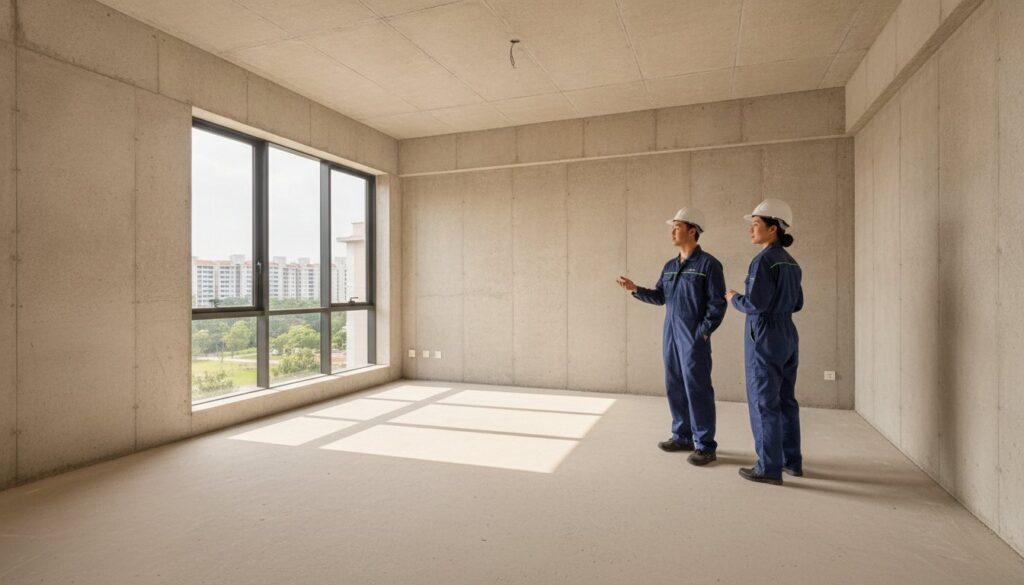
Hacking isn’t just about swinging a sledgehammer; it’s a precision engineering task that determines the structural integrity of your entire home. One wrong move on a load-bearing wall can lead to five-figure fines or, worse, safety risks for the whole building. If you’re planning a renovation in 2026, securing Professional Hacking and Disposal Services in Singapore is the first step to ensuring your project starts on a solid, legal foundation. Most homeowners feel overwhelmed by the complex HDB and MCST permit requirements, worrying that a simple layout change might trigger a regulatory nightmare or hidden disposal fees.
We understand that you want a clean, masonry-ready site without the 20-30% markups typically charged by interior design firms. This article will help you master the technical, legal, and financial aspects of hacking and disposal to ensure a safe, permit-compliant, and cost-effective renovation. You’ll learn how to navigate current 2026 HDB timelines, avoid the common pitfalls of debris clearance, and leverage the direct contractor model to save significantly on your project costs. We’ll guide you through the process of turning a cluttered space into a blank canvas ready for your new carpentry and flooring.
Key Takeaways
- Navigate 2026 HDB and MCST permit regulations to ensure your hacking works are legal and safe, avoiding costly structural mistakes.
- Save 20-30% on your renovation foundation by hiring a direct contractor and eliminating the common “ID tax” and intermediary commissions.
- Learn the technical requirements of Professional Hacking and Disposal Services in Singapore, including how to properly strip out kitchens and bathrooms.
- Understand the logistical process of transporting tonnes of debris from high-rise units to NEA-compliant disposal grounds efficiently.
- Prepare a clean, masonry-ready site that allows for seamless flooring installation and carpentry work in the next stage of your project.
Understanding Professional Hacking and Disposal in Singapore
Professional hacking and disposal services in Singapore form the physical starting point of your home transformation. In 2026, homeowners increasingly realize that a successful renovation depends on how well the existing structures are cleared. It isn’t just about demolition; it’s about preparing a clean slate so that your masonry and carpentry teams can work on level surfaces. Skipping professional help or hiring unlicensed workers can lead to severe structural damage or heavy legal penalties from authorities like HDB or BCA. Hiring unlicensed workers often results in several critical issues:
- Accidental damage to load-bearing columns or beams
- Punctured concealed plumbing or gas pipes
- Heavy fines for improper disposal of construction debris
- Significant delays in obtaining subsequent renovation permits
Hacking vs. Dismantling: Choosing the Right Approach
It’s vital to distinguish between hacking and dismantling to manage your timeline and budget effectively. Hacking is a destructive process used for removing floor tiles, wall tiles, and non-load-bearing partition walls. This usually requires heavy machinery and creates significant noise and dust. Once the old surfaces are cleared, you can discover DIY Floorboards to explore high-quality flooring options for your new space. Dismantling, on the other hand, is the systematic removal of items like built-in wardrobes, kitchen cabinets, and false ceilings. Many homeowners don’t realize that dismantling requires a different set of tools to avoid damaging the underlying wall or floor structure.
Choosing the wrong method can cause unnecessary damage to the subfloor or adjacent walls. We always schedule hacking before any electrical or plumbing works begin. This sequence ensures that new pipes and wires aren’t damaged by falling debris or heavy vibrations during the demolition phase. It’s a pragmatic approach that saves you from expensive repairs later in the project.
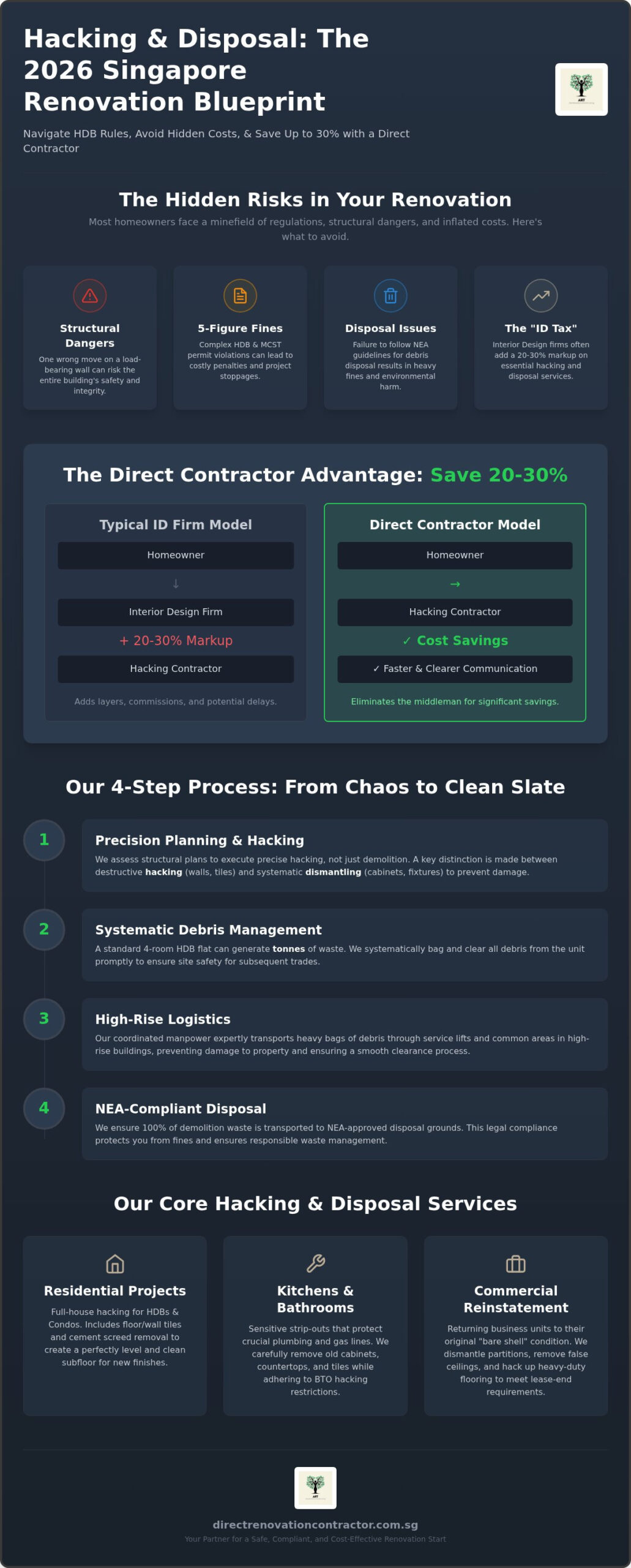
Hacking and disposal are inseparable in Singapore. You can’t hack a wall and leave the debris behind. A standard 4-room HDB flat can generate several tonnes of demolition waste, which must be bagged and transported out of the unit. Managing this logistics chain is a major challenge in a high-rise environment. It requires coordinated manpower to move heavy bags through service lifts and into disposal trucks without damaging common property.
Professional services ensure that all concrete chunks and bulky carpentry waste are cleared according to NEA standards. This isn’t just about cleanliness; it’s about site safety. A site filled with debris is a hazard for subsequent trade contractors. By removing the waste immediately, we create a safe, accessible environment for your tilers and carpenters to begin their work. Utilizing Professional Hacking and Disposal Services in Singapore through a direct contractor model ensures you don’t pay “ID markups” for these labor-intensive tasks, keeping your renovation costs transparent and manageable.
Core Hacking Services for Residential and Commercial Properties
Full-house hacking for resale HDB flats and older condominiums is more than just clearing space. It involves the systematic removal of old cement screed to level the subfloor, which is essential for a flat finish when installing new tiles or vinyl. When you engage Professional Hacking and Disposal Services in Singapore, you’re paying for the technical skill to remove homogeneous or ceramic tiles without damaging the structural slab beneath. Our team focuses on creating a clean foundation, ensuring that your next phase of renovation proceeds without structural hiccups.
Commercial reinstatement is equally critical for business owners in 2026. When a lease ends, landlords typically expect the unit returned to its original “bare shell” condition. This involves dismantling glass partitions, removing false ceilings, and hacking up heavy-duty floor finishes. All these works must comply with the Building Control Act, ensuring that the demolition doesn’t affect the building’s fire safety or structural integrity. We handle the entire process, from hacking to the final disposal of office debris.
Kitchen and Bathroom Hacking Nuances
Kitchen strip-outs require a cautious approach. We focus on removing heavy cabinets and stone countertops while keeping gas pipes and main water inlets intact. Bathroom hacking is even more sensitive. In BTO flats, you can’t hack bathroom tiles for the first three years from completion to protect the waterproofing warranty. For older resale units, we hack down to the concrete slab, ensuring a fresh surface for our tiling and masonry works. We also handle the careful removal of WCs, basins, and glass shower screens to prevent site injuries and facilitate a faster turnaround.
Wall Hacking and Partition Removal
Creating an open-concept layout often involves removing non-load-bearing brick walls. We identify these using your original floor plans before any work starts to ensure we never touch structural elements. For modern office refreshes, we dismantle drywall partitions and false ceilings to reveal the industrial look many firms prefer in 2026. We also clear away old feature walls and heavy TV consoles that are no longer in style. This creates a versatile space that’s ready for a modern redesign without the clutter or weight of previous renovations.
Navigating Permits, BCA Regulations, and PE Endorsements
Hacking without a permit is a fast track to a $5,000 fine and forced reinstatement costs that can reach $30,000. In 2026, HDB and MCST authorities have increased site inspections to ensure structural integrity remains intact. You must identify load-bearing walls before any hammer hits the surface. These are typically marked with thick, solid black lines on your floor plan. Hacking these structural elements is strictly prohibited because it compromises the safety of the entire building block. Engaging Professional Hacking and Disposal Services in Singapore ensures that your project remains within legal boundaries from day one.
If your intended layout involves hacking near structural beams or columns, a Professional Engineer (PE) endorsement becomes mandatory. The PE conducts a technical assessment to ensure your renovation won’t cause structural distress to the unit or your neighbors. This endorsement usually carries a fee of approximately $1,500 or more, depending on the complexity. We coordinate directly with these professionals to streamline the approval process. Safety compliance also extends to your neighbors; all noisy works like drilling and hacking must only occur between 9:00 AM and 5:00 PM on weekdays. Hacking is never permitted on weekends or public holidays in 2026.
HDB Hacking Permits: A Step-by-Step Overview
Only HDB-registered contractors are authorized to apply for these permits via the online APEX portal. You can’t do this as a homeowner. Once we submit the application, processing times in 2026 typically take up to 3 weeks, though simpler scopes often clear within 10 working days. After the permit is issued, it must be displayed clearly at your unit entrance throughout the duration of the works. For BTO flats, you have a 3-month window to complete all renovations. Resale units have a tighter deadline of just 1 month. Post-hacking, HDB officers may conduct inspections to verify that only approved walls were removed.
Condo Renovation Rules and MCST Coordination
Private estates operate under Management Corporation Strata Title (MCST) rules, which are often stricter than HDB guidelines. Most condos require a renovation deposit to protect common areas like lift lobbies and corridors from damage during the transport of heavy debris. We handle the logistical coordination, ensuring all pathways are padded and protected before work begins. If you’re managing a project in a restricted space, our Singapore Small Condo Interior Design: The 2026 Guide provides essential tips on navigating these tight regulatory and physical environments. We ensure all debris is cleared daily to meet MCST cleanliness standards and avoid any forfeiture of your renovation deposit.
The Professional Disposal Process: From Site to Landfill
Hacking is only half the battle. Once the walls come down and the tiles are chipped away, you’re left with several tonnes of waste that needs to leave your property. Professional Hacking and Disposal Services in Singapore include the heavy lifting required to move this debris from a high-rise unit down to ground level. We distinguish between construction debris, like concrete and tile shards, and bulky waste, such as old wardrobes or sofa sets. Construction debris is significantly heavier and must be bagged properly to prevent leakage and dust in common areas. Using a professional service ensures that the weight is managed without damaging your property or the building’s infrastructure.
Legal disposal is a non-negotiable requirement in 2026. Dumping construction waste in HDB bin centers or public areas can lead to heavy fines from the National Environment Agency (NEA). We transport all waste to NEA-approved dumping grounds. This ensures that your renovation doesn’t result in legal trouble for you or the building management. We also sort materials where possible, separating wood and metal to support local recycling efforts. This pragmatic approach to waste management keeps your site organized and reduces the environmental footprint of your renovation.
Debris Management and Haulage Logistics
Moving tonnes of waste through a shared residential building requires care. We use heavy-duty protective coverings for lift interiors and corridor floors to prevent scratches or cracks. Our team utilizes specialized trolley systems to move bags efficiently, coordinating with disposal trucks to minimize the time the waste sits at the loading bay. For a standard full-house hacking of a 4-room flat, the disposal process typically takes 1 to 2 days of intensive haulage. This timeline ensures the site is cleared quickly so your tilers and carpenters can begin their work on schedule.
Commercial Reinstatement and Bulk Clearance
Commercial projects present unique disposal challenges. Reinstatement often involves clearing entire floors of office furniture, modular workstations, and electronic waste. We restore these spaces to a “bare shell” condition as required by most 2026 commercial lease agreements. This includes the removal of specialized wiring and server racks. If you’re planning a move, our guide on Choosing the Right Office Renovation Company offers deeper insights into managing these complex transitions.
Don’t risk fines or site delays with improper waste management. You can book our Hacking and Demolition Works to get your site cleared and ready for the next phase of construction.
The Direct Contractor Advantage for Hacking and Disposal
Choosing a direct contractor for your renovation isn’t just about cutting costs; it’s about technical clarity. In the traditional model, interior designers act as intermediaries, often adding a 20-30% markup on labor-intensive tasks like hacking and disposal. This “ID Tax” rarely adds value to the actual demolition work. By engaging Professional Hacking and Disposal Services in Singapore directly, you eliminate these commissions. You pay for the actual labor, equipment, and haulage fees required to clear your site. This transparency ensures that your budget goes toward quality workmanship rather than middleman fees, a principle shared by reputable international firms like Sharp Reno that specialize in high-quality residential renovations.
Direct communication with the people doing the work prevents technical errors. When you speak directly to our hacking crew, you ensure that specific instructions regarding tile removal or partition dismantling aren’t lost in translation. We provide a one-stop execution model where the team that hacks your unit is the same one handling the subsequent masonry and carpentry. This creates a seamless transition between phases. There’s no finger-pointing between different sub-contractors if a floor isn’t leveled correctly or if a pipe is damaged. We take full responsibility for the site from the first hammer strike to the final debris clearance.
The rise of the savvy DIY renovator in Singapore has changed the industry landscape. In 2026, more homeowners are taking charge of their own project management. They use professional 3D drawings from independent drafters and then hire specialized contractors for each trade. This approach offers significantly better control over the final result and the total expenditure. If you’re weighing your options, our Direct Renovation Contractor Singapore: The 2026 Comparison Guide breaks down the financial benefits of this model. You get the same high-quality finish without the inflated project management fees typically bundled into ID packages.
Ensuring Quality Workmanship and Accountability
Accountability is the biggest advantage of the direct model. We don’t “pass the buck” to a designer when challenges arise on-site. Our seasoned hacking crew understands the structural nuances of local HDB and condo blocks, ensuring that every non-load-bearing wall is removed safely and efficiently. This technical expertise is vital for maintaining the structural integrity of your home. For a deeper look at how to structure your project, refer to our Home Renovation in Singapore: A Practical Guide to Planning and Execution. We focus on delivering a clean, masonry-ready foundation that allows your renovation to proceed without unexpected delays or hidden costs.
Laying the Foundation for Your 2026 Renovation
Starting your renovation with a clean slate is about more than just clearing walls. It’s about technical precision and legal peace of mind. We’ve discussed how navigating HDB and MCST permits in 2026 requires a thorough understanding of structural integrity and Professional Engineer endorsements. By choosing Professional Hacking and Disposal Services in Singapore, you ensure that every tile removed and every partition dismantled follows strict safety protocols. This pragmatic approach protects your investment and keeps your project on schedule for the masonry and carpentry phases that follow.
Bypassing the traditional interior design markup is the smartest way to manage your 2026 budget. As an HDB Registered Contractor, we provide direct-to-homeowner services with zero middleman markups. We specialize in both residential hacking and commercial reinstatement, ensuring your site is ready for its next transformation without hidden fees or logistical headaches. Accountability starts here. Get a Transparent, Direct Quote for Hacking and Disposal Today and take the first step toward a successful, cost-effective home makeover. Your blank canvas is just one hammer strike away.
Frequently Asked Questions
Do I need a permit for all hacking works in Singapore?
Yes, you need an HDB permit for hacking walls or floor finishes in residential units. Simple dismantling of carpentry doesn’t always require one, but any work involving impact machinery or structural changes does. In 2026, HDB requires all hacking applications to be submitted via the online APEX portal by a licensed contractor. Failing to secure a permit can result in a $5,000 fine and a mandatory order to reinstate the wall.
How long does the hacking and disposal process typically take for an HDB flat?
The actual hacking phase for a standard 4-room HDB flat typically takes between 1 to 3 days. Once the demolition is complete, the haulage and debris clearance usually require another 1 to 2 days of intensive labor. You should also factor in the 2026 permit processing time, which can take up to three weeks. Coordinating these steps efficiently ensures your site is ready for masonry work within a single week.
What is the difference between a load-bearing wall and a partition wall?
Load-bearing walls are essential for the building’s structural integrity and are marked with thick, solid black lines on your floor plan. You’re strictly prohibited from hacking these. Partition walls are non-structural dividers made of brick or drywall. While these can be removed to create open-concept layouts, you still need Professional Hacking and Disposal Services in Singapore to ensure the removal doesn’t damage concealed electrical conduits or water pipes.
Can I hack my bathroom tiles without affecting the waterproofing?
No, hacking bathroom tiles will always compromise the existing waterproofing layer. It’s impossible to chip away tiles without puncturing the membrane beneath. If you’re renovating an older resale unit, we hack down to the concrete slab and apply a fresh waterproofing system before any new tiling begins. For BTO flats, remember that hacking bathroom tiles is restricted for the first three years from completion to protect the original warranty.
Is debris disposal included in the hacking quotation?
Transparent quotations from direct contractors should always include both hacking labor and debris disposal fees. Some low-cost providers might quote for hacking only, leaving you with tonnes of waste that bin centers won’t accept. Our Professional Hacking and Disposal Services in Singapore cover the entire logistics chain, including the supply of bags, manual haulage to the ground floor, and transportation to NEA-approved dumping grounds. This prevents unexpected clearance costs.
What happens if the hacking works cause damage to my neighbour’s property?
If hacking causes damage to a neighbor’s property, the HDB-registered contractor is held accountable under the terms of their license. Professional crews use specialized tools to minimize vibrations and follow strict working hours to reduce disturbance. We also perform a pre-renovation site survey to document existing conditions. If cracks occur due to the work, the contractor’s public liability insurance typically covers the repairs, ensuring you aren’t personally liable for the financial burden.
Do I need a Professional Engineer (PE) for hacking a non-load-bearing wall?
A Professional Engineer is usually not required for standard non-load-bearing walls in HDB flats. However, you will need a PE endorsement if you’re hacking in a condominium where the MCST requires structural clearance for any major layout changes. In some resale cases where the hacking is dangerously close to a main structural column, HDB may also request a PE assessment to ensure the safety of the block before issuing a permit.
Can professional hacking services help with commercial reinstatement?
Yes, professional hacking teams specialize in commercial reinstatement to restore office spaces to their original bare shell condition. This involves more than just wall removal; it includes dismantling glass partitions, false ceilings, and heavy-duty floor finishes. We also handle the disposal of bulky office furniture and electronic waste. This service is essential for business owners in 2026 who need to hand back their units to landlords according to strict lease requirements.