
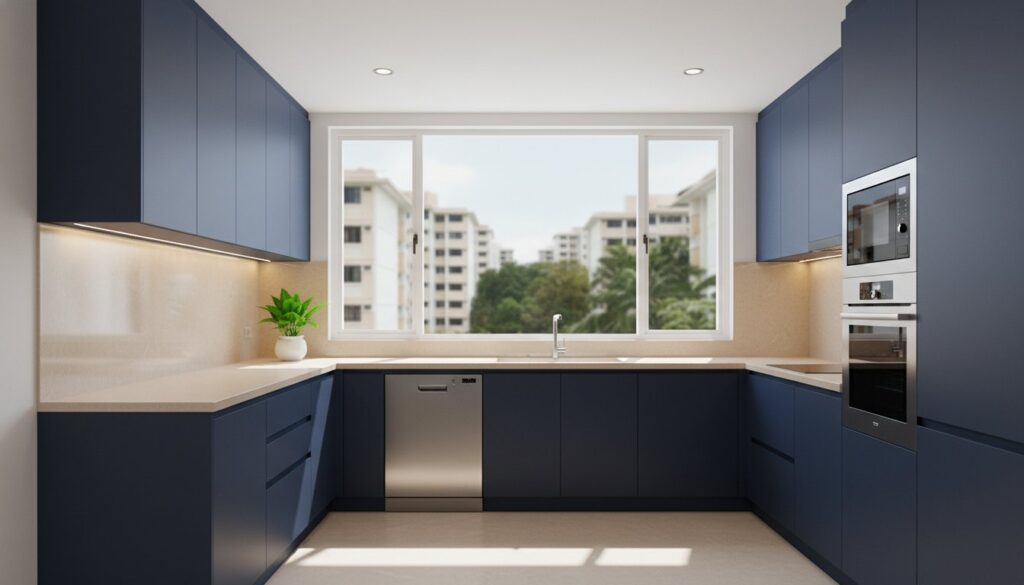
What if the 20% to 30% price gap between your renovation quotes has nothing to do with material quality and everything to do with hidden middleman markups? Most Singaporean homeowners feel a justified sense of anxiety when reviewing renovation contracts, as it is often difficult to distinguish between genuine craftsmanship and expensive sales talk. You deserve a kitchen that handles heavy daily use without the stress of failing an HDB plumbing inspection or overpaying for carpentry.
This guide provides a transparent, technical roadmap for your hdb kitchen renovation by focusing on structural integrity and cost efficiency. You will learn the specific durability differences between materials like Quartz and Kompacplus, the exact requirements for HDB hacking permits, and how to optimize your layout for a better workflow. We break down the entire process from initial site measurement to final handover. Our goal is to ensure you achieve a functional, durable kitchen at honest factory-direct pricing while avoiding the common pitfalls of the traditional interior design model.
Key Takeaways
- Optimize your hdb kitchen renovation by balancing heavy-duty cooking needs with modern layout designs tailored for both BTO and resale footprints.
- Master the “Linear Foot” pricing logic to accurately budget for custom carpentry, which remains the most significant investment in any kitchen project.
- Identify where the typical 20-30% interior designer markup is hidden and learn how to secure direct factory pricing by cutting out the middleman.
- Ensure full compliance with Singapore housing laws by understanding mandatory hacking permits and the strict technical restrictions regarding structural beams.
- Learn how to streamline your project using professional 3D drawings and direct-to-owner support to maintain high workmanship standards without the extra cost.
Optimising Your HDB Kitchen Layout for 2026 Lifestyles
Your kitchen is the engine room of your home. It isn’t just a place for aesthetic cabinetry; it’s a high-traffic zone that must withstand heavy-duty cooking. In 2026, Singaporean homeowners are moving away from purely decorative designs toward functional spaces that handle high-heat stir-frying and daily meal prep. Whether you’re renovating a brand-new BTO or a 30-year-old resale flat, your layout is the most critical decision you’ll make. It dictates the flow of your daily life and directly impacts your final renovation bill.
The Housing and Development Board (HDB) provides specific footprints that vary between housing types. Newer 4-room BTO kitchens typically average about 7 to 9 square metres, making every centimetre vital. This compact reality makes the “Work Triangle” (the distance between your sink, stove, and fridge) essential. An efficient triangle reduces unnecessary steps and prevents bottlenecks. As a direct contractor, we see many owners overlook this, resulting in a hdb kitchen renovation that looks good but feels cramped during actual use.
Layout decisions should always come before you pick your tiles or laminate colours. This is because your floor plan determines the extent of hacking, masonry, and plumbing work required. Moving a sink away from the original drainage point requires floor hacking and new piping, which can add S$600 to S$1,500 to your costs. Similarly, relocating a gas stove requires City Energy pipe works. Planning your layout around existing utility points is the most transparent way to keep your budget under control without sacrificing quality.
Galley and L-Shaped Layouts for Small HDB Kitchens
Galley kitchens are the professional chef’s choice for narrow 3-room and 4-room BTO units. Two parallel counters provide massive prep space and keep everything within arm’s reach. However, it can feel tight if two people cook at once. L-shaped configurations are better for households that want a small dining nook. They maximize corner space, though they require specialized “LeMans” or “Lazy Susan” hardware to make deep corner cabinets accessible. We recommend L-shapes for resale units where the kitchen footprint is often more square than rectangular.
Open Concept vs. Wet and Dry Kitchen Configurations
Open-concept designs are still a top request for hdb kitchen renovation projects in 2026 because they make small flats feel significantly larger. If you do heavy Asian cooking with grease and fumes, a completely open layout often leads to oily residue on your living room furniture. A pragmatic solution is the “Wet and Dry” configuration. We often install glass partitions or aluminium bi-fold doors. This setup maintains the visual flow of an open kitchen while effectively blocking smells and grease during heavy cooking sessions.
The Essentials of HDB Kitchen Carpentry and Materials
Custom carpentry represents the largest portion of your budget, often accounting for 60% to 70% of the total cost of an hdb kitchen renovation. Direct contractors use a “per foot run” (pfr) pricing logic to calculate these costs. This measurement applies separately to your base cabinets and your wall-mounted top cabinets. Unlike off-the-shelf furniture, custom carpentry allows you to maximize every centimeter of your HDB floor plan, ensuring no dead corners or wasted gaps between the cabinet and the ceiling.
The structural integrity of your kitchen depends on the core material. We use solid plywood for all cabinet carcasses because it’s far superior to the chipboard or MDF used in mass-market retail sets. Plywood consists of multiple layers of wood veneer glued together, which prevents warping and holds screws more securely. For the interior, “coloured PVC” has replaced basic white PVC as the premium standard for 2026. Coloured PVC provides a more high-end, unified look and is significantly better at hiding the inevitable scuffs and stains that occur inside a busy pantry.
Countertop Showdown: Quartz, Kompacplus, and Sintered Stone
- Quartz: This is the reliable all-rounder. It’s an engineered stone that’s non-porous, meaning it won’t soak up beetroot juice or soy sauce stains. It’s highly scratch-resistant and requires zero sealing.
- Kompacplus: These 6mm thick panels are incredibly dense and waterproof. They’re the go-to choice for homeowners following Singapore home design trends that lean toward slim, wood-effect profiles. You get the warmth of timber without the risk of termites or rot.
- Sintered Stone: Created under extreme pressure and heat, this material is almost indestructible. It can withstand temperatures over 300 degrees Celsius, so you can place a hot wok directly on the surface without causing a thermal shock crack.
Cabinet Hardware and Finishing Touches
When planning an hdb kitchen renovation, you shouldn’t overlook the moving parts. Soft-closing hinges and drawer runners, specifically from reputable brands like Blum, are essential. These mechanisms prevent the daily wear and tear caused by slamming, which eventually loosens the screws in the plywood. They ensure your heavy pot drawers glide smoothly even when loaded with 30kg of cookware.
For the exterior finish, ABS (Acrylonitrile Butadiene Styrene) trimming is a technical requirement for the Singaporean climate. We apply this thick, impact-resistant plastic edging to every cabinet door. It seals the laminate edges, preventing them from “popping” or peeling due to the 80% average humidity levels in local kitchens. When selecting your laminates, remember that matte surfaces are excellent for hiding fingerprints, while high-gloss finishes make small BTO kitchens feel larger by reflecting light. If you’re ready to select your materials, you can view our direct carpentry packages to see how these options fit your specific layout.
Direct Contractor vs. Interior Designer: The Cost Breakdown
Choosing between an Interior Designer (ID) and a direct contractor is the most significant financial decision for your hdb kitchen renovation. Most ID firms apply a markup ranging from 20% to 30% on every service provided. This fee covers their project management, office rent, and marketing costs. It’s rarely listed as a “markup” on the invoice; instead, it’s hidden within inflated unit prices for hacking, masonry, and electrical works.
Working with a direct renovation contractor singapore provides immediate price transparency. You pay the actual cost of labor and materials without the middleman surcharge. A major portion of these savings comes from factory-direct carpentry. When you engage a contractor with their own workshop, you eliminate the 15% to 20% retail overhead typically found in designer showrooms. You’re paying for the wood and the craftsman’s time, not the designer’s gallery lighting.
Consider the difference between a bundled hdb renovation package and an ala-carte contractor quote. Packages often look attractive but use “buffer pricing” to cover unforeseen costs. An ala-carte quote from a builder is based on precise site measurements. If your kitchen layout only requires 15 feet of cabinets, you don’t pay for a “standard 20-foot package” price. This granular approach ensures you only spend on the actual footprint of your home.
What You Gain by Going Direct
- Direct Communication: You speak directly with the people performing the masonry and carpentry. This reduces the risk of “lost in translation” errors that happen when a designer relays instructions to a site foreman.
- Material Freedom: You aren’t forced into “preferred vendor” lists. You can source your own tiles from local suppliers and buy appliances from any retailer without paying a coordination fee.
- Budget Reallocation: The S$5,000 to S$8,000 saved on ID markups can be reallocated to higher-quality items, such as sintered stone countertops or heavy-duty soft-close drawer runners.
Managing the “Design Gap” Without an ID
Many homeowners worry about losing the “look” without a designer. You can bridge this gap by using 3D drawings to communicate your vision. While a contractor focuses on structural integrity, providing them with a clear visual reference ensures the final product matches your expectations. Seasoned builders offer practical space planning advice based on years of physical installation. They’ll tell you if a kitchen island is technically feasible or if the plumbing prevents a specific sink placement. Technical drawings and site measurements are the backbone of a successful hdb kitchen renovation, preventing costly installation errors before the first tile is laid.
HDB Regulations, Permits, and Technical Requirements
You can’t skip the paperwork for a successful hdb kitchen renovation. HDB mandates that homeowners hire an hdb registered contractor for all hacking activities. This isn’t just a formality; it’s a legal requirement to ensure the structural integrity of your block remains intact. Hacking permits typically take 3 to 7 working days for approval. We handle the submission process, ensuring that no structural beams or load-bearing walls are touched. Removing these elements is strictly prohibited and can result in heavy fines or safety hazards for the entire building.
Timeline management is the backbone of a smooth project. We follow a logical sequence to keep the site organized and safe:
- Site Protection: Laying down corrugated sheets or plastic protection from the lift lobby to your unit.
- Hacking: This takes 2 to 4 days. We clear all debris immediately to keep the workspace efficient.
- Masonry and Tiling: This phase lasts 7 to 10 days, allowing for proper curing of cement.
- Carpentry: Final installation happens about 14 days after the final site measurement is confirmed.
If your renovation involves moving a gas hob, you must coordinate with City Energy. Only their authorized technicians can relocate or terminate gas pipes. We schedule these appointments to coincide with our carpentry installation to prevent unnecessary downtime.
Masonry and Plumbing Essentials
Waterproofing is a non-negotiable step. HDB requires a 24-hour water ponding test after the waterproofing membrane is applied to ensure no leaks reach the unit below. We also pay close attention to floor traps and drainage gradients. A 1:100 slope is necessary to prevent stagnant water. For flooring, we recommend homogeneous tiles. These are the industry standard for hdb kitchen renovation projects because they feature a water absorption rate of less than 0.5%, making them incredibly durable and easy to maintain.
Electrical and Gas Safety in the Kitchen
Planning your electrical load happens before the first cabinet is installed. Heavy appliances like ovens and induction hobs often require dedicated 15A or 20A circuits. All new wiring must be certified by a Licensed Electrical Worker (LEW) to meet EMA safety standards. We also enforce strict safety gaps; a minimum distance of 200mm is maintained between gas hobs and side cabinets to prevent fire hazards. This pragmatic approach ensures your kitchen isn’t just beautiful, but also safe for daily use.
Streamlining Your Project with Direct Renovation Contractor
Choosing a direct-to-owner model is the most effective way to secure high-quality workmanship without paying for unnecessary middleman markups. Traditional interior design firms often add a 15% to 30% premium on top of sub-contractor fees to cover their showroom overheads and sales commissions. We operate differently. By working directly with us, you gain access to factory-direct pricing for your hdb kitchen renovation. We focus on the technical realities of construction, ensuring your budget goes into the actual materials and labor rather than marketing fluff.
Our team supports various types of homeowners, from those who want a full-service experience to savvy DIY renovators. If you prefer to manage your own project timeline, we provide professional 3D drawings and a vetted list of sub-contractors to assist your journey. We bring specialized expertise to both hdb resale renovation packages and new BTO fit-outs. Our core strength lies in technical execution. We don’t just “oversee” the work; we execute the masonry, carpentry, and electrical installations with a focus on HDB compliance and structural integrity.
From 3D Design to Site Execution
Visualizing a layout is the first step toward a functional space. We provide professional drafting services that allow you to see the exact placement of your hob, hood, and cabinetry before hacking begins. This eliminates guesswork and prevents costly mid-project changes. Because we maintain our own industrial base in Paya Ubi, all carpentry fabrication happens locally. This allows for tighter quality control and faster adjustments compared to contractors who outsource fabrication overseas. Our goal is a seamless handover where the final result matches the technical drawings, delivered with a focus on defect-free workmanship.
Ready to Start Your Kitchen Transformation?
The first step in any successful hdb kitchen renovation is a detailed site walk-through. We don’t provide quotes based on floor plans alone. A physical inspection allows us to identify structural constraints like existing gas pipes, waste points, or beam heights that might impact your cabinet design. This honesty upfront prevents “hidden costs” from appearing halfway through the build. We provide every client with a transparent, itemised quote that breaks down costs by material and labor units.
When planning your renovation, it’s vital to prioritize the “bones” of the kitchen. While trendy backsplashes look good on social media, the longevity of your kitchen depends on high-grade waterproofing, durable masonry bases, and solid cabinet carcasses. Investing in these foundational elements ensures your kitchen remains functional and sturdy for at least a decade. If you’re ready for a straightforward, no-nonsense approach to your home improvement project, contact our team to schedule a site measurement.
Take Control of Your 2026 HDB Kitchen Project
A successful hdb kitchen renovation requires technical precision and strict adherence to HDB’s 2026 renovation guidelines. You’ve seen how choosing a direct contractor eliminates the 20% to 30% markups often found in interior design packages. By partnering with an HDB Registered Contractor, you ensure all hacking and masonry work complies with structural safety standards. Our in-house carpentry fabrication provides custom cabinets built to your exact specifications, cutting out the middleman and their added fees. We focus on transparent factory-direct pricing to keep your project within budget from the first site measurement to the final handover.
Managing a renovation doesn’t have to be a headache. When you deal directly with the builder, you get better quality control and clear communication. It’s about getting functional results without the unnecessary fluff or hidden charges. Your home deserves a workspace that’s as efficient as it is durable.
Get a Transparent Direct Contractor Quote for Your HDB Kitchen
We look forward to helping you build a kitchen that stands the test of time.
Frequently Asked Questions
How much does a typical HDB kitchen renovation cost in 2026?
A standard hdb kitchen renovation in 2026 typically costs between S$12,000 and S$22,000 for a 4-room flat. This price range covers essential works like hacking, masonry, and new carpentry. You save approximately 20% to 30% by working directly with us, as we eliminate the middleman markups often added by interior design firms for project management.
Do I need an HDB permit to change my kitchen cabinets?
You don’t need an HDB permit to replace or install kitchen cabinets alone. Permits are strictly required for structural changes such as hacking walls, replacing floor tiles, or changing the kitchen entrance. Since we’re direct contractors, we’ll tell you exactly which parts of your project require official approval and handle the application process for you.
Can I move the location of my kitchen sink or stove in an HDB flat?
You can move your kitchen sink or stove, provided the new layout complies with existing plumbing and gas safety codes. Sinks must remain within a reasonable distance of the main discharge pipe to maintain a 1:40 gradient for proper drainage. For stoves, any relocation of gas pipes must be carried out by a Licensed Gas Fitter from City Energy.
How long does a full HDB kitchen renovation usually take?
A full hdb kitchen renovation usually takes between 3 and 5 weeks from hacking to final handover. The first week focuses on hacking and masonry, while the second week involves tiling and plumbing. Carpentry installation and countertop fitting occur in the final 10 days. We provide a clear work schedule so you can track our progress daily.
Is it better to use quartz or granite for an HDB kitchen countertop?
Quartz is the superior choice for most HDB kitchens because it’s non-porous and doesn’t require periodic sealing. While granite is a natural stone, it can stain if spills aren’t cleaned immediately. 90% of our homeowners choose quartz because it stands up to heavy cooking and remains stain-resistant against local spices and sauces without extra maintenance.
What is the difference between a direct contractor and an interior designer?
A direct contractor manages the actual construction and fabrication, while an interior designer focuses on aesthetics and charges a management fee. By hiring us, you’re communicating directly with the people building your cabinets and laying your tiles. This leads to clearer technical communication and significant cost savings since there are no hidden design commissions in our quotes.
Can I hack the wall between my kitchen and living room?
You can hack the wall if it’s a non-structural partition wall, but you must first obtain an HDB permit. We check your flat’s original floor plan to identify load-bearing walls, which are marked by thick black lines and cannot be removed. Our team handles the permit submission and ensures the hacking is done according to HDB’s strict safety standards.
Does the renovation contractor handle the gas pipe relocation?
Renovation contractors aren’t legally allowed to touch gas pipes; only a Licensed Gas Fitter (LGF) can do this. We coordinate the timing with a qualified LGF to ensure your gas pipes are moved safely during the renovation process. This ensures your kitchen remains compliant with Singapore’s safety regulations and prevents any delays in your carpentry installation.