
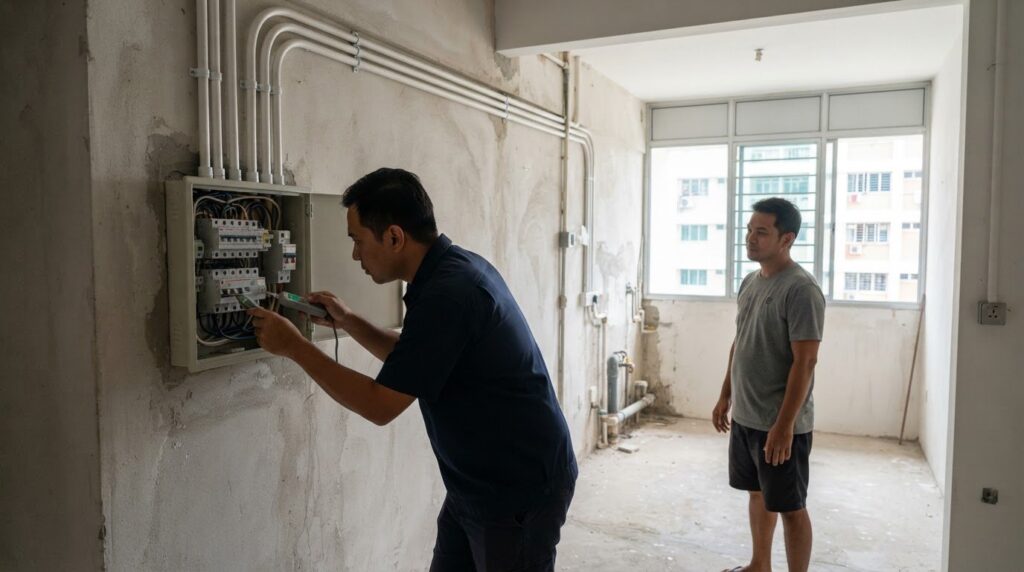
For HDB renovation in Singapore, everything you need to know before you start includes choosing a suitable contractor and understanding which works need approval. Flat owners must engage contractors from HDB’s Directory of Renovation Contractors under the Housing & Development (Renovation Control) Rules 2006. An interior design firm typically manages the project, while a direct contractor focuses on carrying out renovation works.
Air-conditioning deserves early attention. Installation can affect your flat’s electrical load, and the right setup depends on the existing electrical capacity and the units planned. This guide explains how interior designers and direct contractors differ, which HDB permits may apply, and how to prepare for unexpected costs. It also covers air-conditioner installation and electrical loading, helping you plan the work in a practical order before renovation begins.
Key Takeaways
- Understand how an ID firm’s project coordination differs from a direct contractor’s renovation work, and why HDB’s Directory of Renovation Contractors matters.
- Identify which renovation works may need an HDB permit and plan approvals before work begins.
- Build a contingency into your renovation budget so unexpected work is less likely to derail your plans.
- Plan air-conditioning around your flat’s electrical capacity and the requirements for installation.
1. ID firm vs direct contractor – what is the difference?
An interior designer (ID) typically plans and coordinates renovation work. A direct contractor focuses on carrying out specific work, such as tiling, electrical installation or bathroom fitting. Choose based on the coordination your project needs. Before starting an HDB renovation in Singapore, define the work and decide who will coordinate each trade.
HDB flat owners must engage contractors from HDB’s Directory of Renovation Contractors under the Housing & Development (Renovation Control) Rules 2006. This applies whether you appoint an ID firm or arrange work directly. Before appointing a contractor, check that they are listed in the directory. HDB renovation contractors should also be licensed.
Ask for a written scope that identifies each trade, material, installation area and project stage. For example, a bathroom scope should list tiling, plumbing and sanitary fittings separately. This makes the budget easier to track and clarifies what is included. A useful HDB renovation guide for Singapore should also explain how changes to the scope will be recorded.
HDB’s renovation guidelines apply to flat owners and contractors, and owners remain responsible for ensuring the work follows them. Hacking or altering walls requires an HDB permit before work begins. Contractor registration does not make restricted structural work permissible. Window installation or replacement must be carried out by a BCA-approved window contractor listed in HDB’s directory.
To reduce scam risks, cost overruns and defects, engage a contractor listed in HDB’s directory, document the scope and record changes before work proceeds. Set out payment stages clearly, then inspect completed work against the agreed scope before handover. These steps turn everything you need to know before starting an HDB renovation in Singapore into a practical plan.
2. HDB renovation permits and APEX applications
HDB renovation rules require flat owners to obtain every required permit before renovation work begins. For works needing approval, submit the application through HDB’s APEX process before scheduling contractors. Simple permit applications typically take 3-7 working days, so include approval time in your project timeline.
Hacking or altering walls requires an HDB permit. A permit is also required to change bathroom or toilet floor and wall finishes in a newly built BTO flat after its initial three-year waiting period. Other work may not need approval, so classify each task before ordering materials or setting installation dates.
What are the HDB renovation rules and permit requirements in Singapore? The flat owner is responsible for ensuring contractors follow HDB’s renovation guidelines and technical requirements. Obtain required permits before work starts, and keep the approved scope aligned with the work on site.
What renovation work is prohibited in HDB flats? Work requiring a permit cannot proceed without approval, and renovation work is not allowed on Sundays or public holidays. Hacking or changing a wall without the required permit is also prohibited.
What should you know about hacking walls, flooring and wet-area renovations? Wall hacking or alteration requires a permit. Newly built BTO flats have a three-year waiting period before toilet or bathroom wall and floor finishes can be changed. After that period, changing those finishes or extending the space requires a permit.
Renovation work is generally limited to designated days and hours. Noisy work has narrower hours: Monday to Friday, 9am to 5pm. Plan hacking and other noisy tasks within that window, and arrange quieter work or furniture delivery around it.
Permit validity also affects scheduling. HDB permits last three months for BTO flats and one month for resale flats. Renovation work must be completed within three months of approval for new flats and one month for existing flats. Account for these limits when setting the start date and scheduling each trade.
3. Budgeting for unexpected renovation expenses
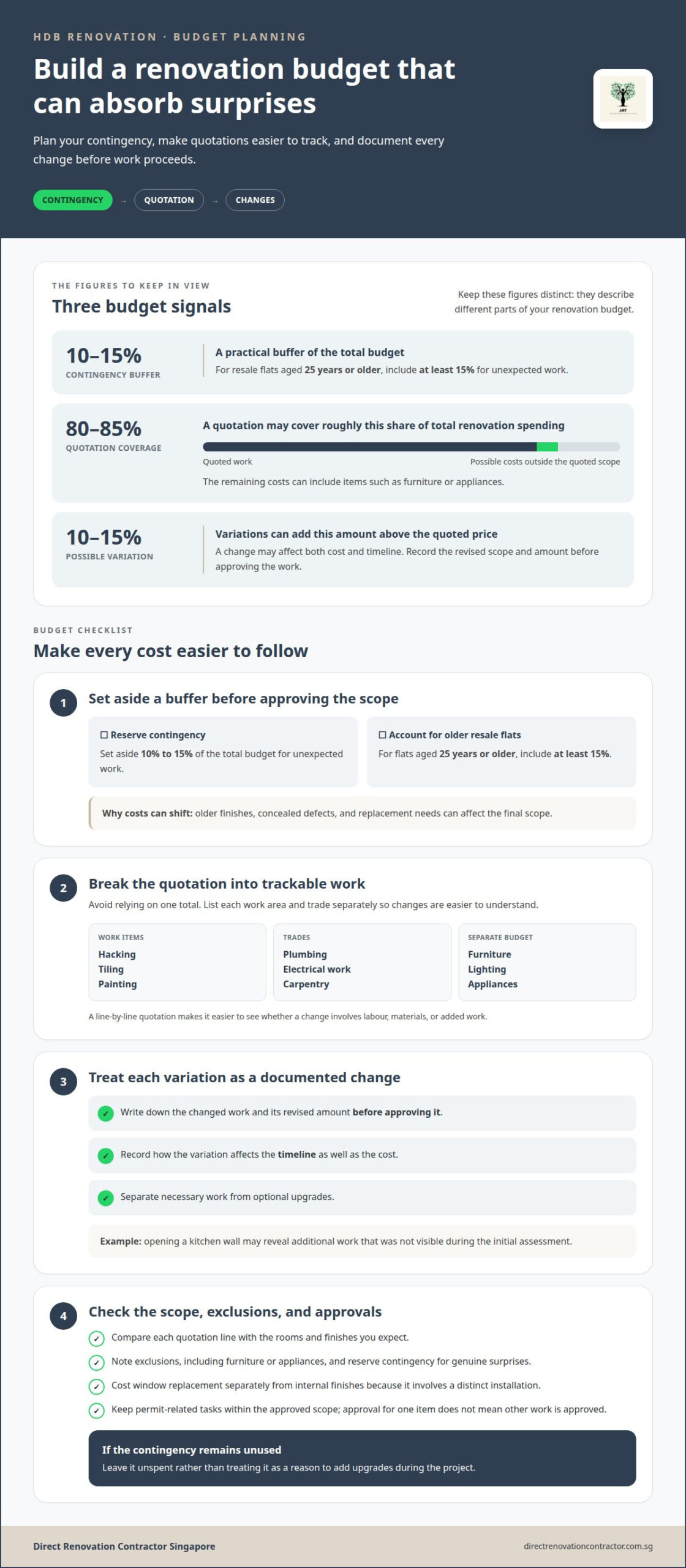
Set aside a contingency before approving the renovation scope. A practical HDB renovation buffer is 10% to 15% of the total budget. For resale flats aged 25 years or older, include at least 15% for unexpected work. Resale HDB renovation costs in Singapore can be affected by older finishes, concealed defects and replacement needs.
Separate the quotation by work area and trade rather than relying on a single total. List hacking, tiling, plumbing, electrical work, carpentry and painting as distinct items. This makes it easier to see whether a change involves labour, materials or added work. Keep furniture, lighting and appliances in a separate budget.
A quotation may cover roughly 80% to 85% of total renovation spending. The remaining costs can include items outside the approved work scope, such as furniture or appliance purchases. Treat each variation as a change to cost and timeline. Record its scope and revised amount before approving the work.
Renovation variations can add 10% to 15% above the quoted price. For example, opening up a kitchen wall may reveal additional work that was not visible during the initial assessment. That does not make every variation avoidable, but a written change record helps homeowners distinguish necessary work from optional upgrades.
Use HDB renovation guidelines to plan regulated work, then keep permit-related tasks within the approved scope. Cost a window replacement separately from internal finishes because it involves a distinct installation. Do not treat approval for one item as approval for other work. Scope changes may affect both costs and scheduling.
Before work starts, compare each quotation line with the rooms and finishes you expect. Note exclusions, such as furniture or appliances, and reserve contingency funds for genuine surprises. If the contingency remains unused, leave it unspent rather than treating it as a reason to add upgrades during the project.
4. Air-conditioner installation and electrical loading
Air-conditioning is an electrical-load decision, not just an equipment choice. In HDB flats built after 1 January 1994, installation may not need an HDB permit if the flat can safely handle a higher electrical load. The key condition is the existing electrical capacity, not the renovation style or age of the interior designer’s drawings.
Use a BCA-trained air-conditioner installer for installation in an HDB flat. Plan the air-conditioning layout before carpentry, ceiling work or hacking begins. This helps prevent pipes from being routed through finished surfaces or units from being placed where cabinets restrict access. For example, confirm the kitchen and bedroom layouts before deciding where pipes and electrical connections should run.
Electrical loading depends on the proposed air-conditioning setup and the flat’s existing wiring. A home with several units may place different demands on its electrical system than one with fewer units. The installer should assess the planned arrangement and the electrical capacity needed for safe operation. A permit exemption does not mean every existing flat can support any setup.
Include electrical work in the renovation scope from the outset. If the planned installation requires wiring changes, coordinate them before interior finishes conceal cable routes. The same sequencing matters if hacking changes room layouts or kitchen carpentry affects access to electrical points. Clear drawings help the electrical trade and air-conditioning installer follow the same plan.
For homeowners, the practical takeaway is to settle the air-conditioning layout and electrical assessment before finalising carpentry and finishes. That reduces the risk of reworking completed surfaces and helps the project team coordinate installation in the right order. Plan your renovation’s electrical work alongside the air-conditioning layout, rather than treating it as a last-stage decision.
Direct Renovation Contractor Singapore: HDB BTO Renovation Packages
Direct Renovation Contractor Singapore offers HDB BTO Renovation Packages for homeowners planning work in a new flat. For a resale flat, its HDB Resale Renovation Packages provide a relevant starting point. These options suit homeowners who want to arrange renovation work directly with contractors rather than through an interior design firm.
Consider the relevant package when you’re ready to scope the work, taking permits, budget contingencies and electrical requirements into account. A clear scope connects your chosen work to the approvals and project sequence discussed above. Direct Renovation Contractor Singapore also offers Condo Renovation Packages and Landed Property Renovation.
Contact Direct Renovation Contractor Singapore to discuss your HDB renovation plans.
Turn your renovation plans into a clear brief
Before committing to a renovation scope, decide how you want each room to function day to day. A kitchen planned around regular cooking needs different storage and appliance choices from one used mainly for quick meals. Write down your priorities, then separate essential work from changes you can defer.
That brief gives your project a practical starting point and helps keep decisions consistent as material choices, room layouts and trade requirements take shape. Before starting an HDB renovation in Singapore, turn your priorities into a defined scope that fits your flat and household.
Direct Renovation Contractor Singapore can help you move from planning to renovation work. Share the flat type, your priorities and the work you want to include to start a focused discussion. Contact Direct Renovation Contractor Singapore to discuss your renovation plans and take the next step with clarity.
Frequently Asked Questions
ID firm vs direct contractor: what is the difference?
An interior design firm typically plans and coordinates a renovation, while a direct contractor carries out the renovation work. The distinction matters if you want one party to coordinate several trades or prefer to arrange work by scope. For an HDB flat, use a contractor listed in HDB’s Directory of Renovation Contractors. Confirm who is responsible for coordination, approvals and each trade in your project documents.
Should I use a renovation loan or personal loan for HDB renovations?
A renovation loan is designed for renovation expenses, while a personal loan can offer different borrowing limits and repayment terms. In Singapore, renovation loans may be capped at six times monthly income or around S$30,000, whichever is lower, and typically have a maximum tenure of five years. Personal loans may offer longer tenures, but compare the total repayment and interest, not only the monthly instalment.
Why does resale renovation cost significantly more?
Resale work can involve removing or replacing existing finishes and addressing repairs that a new BTO flat may not need. The final scope depends on the flat’s condition and your choices, such as retaining usable flooring or replacing bathroom fittings. Base the budget on the work actually required, not just the flat type, and list repairs separately from optional upgrades in the quotation.
Which HDB renovations require a permit, and how do you apply?
Wall hacking or alteration requires an HDB permit. For a newly built BTO flat, changing toilet or bathroom wall and floor finishes after the three-year waiting period also requires a permit. Submit the relevant application through HDB’s APEX process before work starts. Include the proposed work in the application and schedule contractors only after the required approval is granted.
How do renovation costs compare for BTO and resale HDB flats?
Resale renovations typically cost 20% to 40% more than equivalent BTO renovations, mainly because resale scopes can include replacement and repair work. Actual scope and finish choices affect the total.
How do I check whether an HDB renovation contractor is licensed and registered?
Look up the contractor in HDB’s Directory of Renovation Contractors before engaging them. HDB flat owners must use a contractor listed in the directory for renovation work, and HDB renovation contractors should be licensed. For window installation or replacement, also ensure the work is assigned to a BCA-approved window contractor listed in HDB’s directory.