
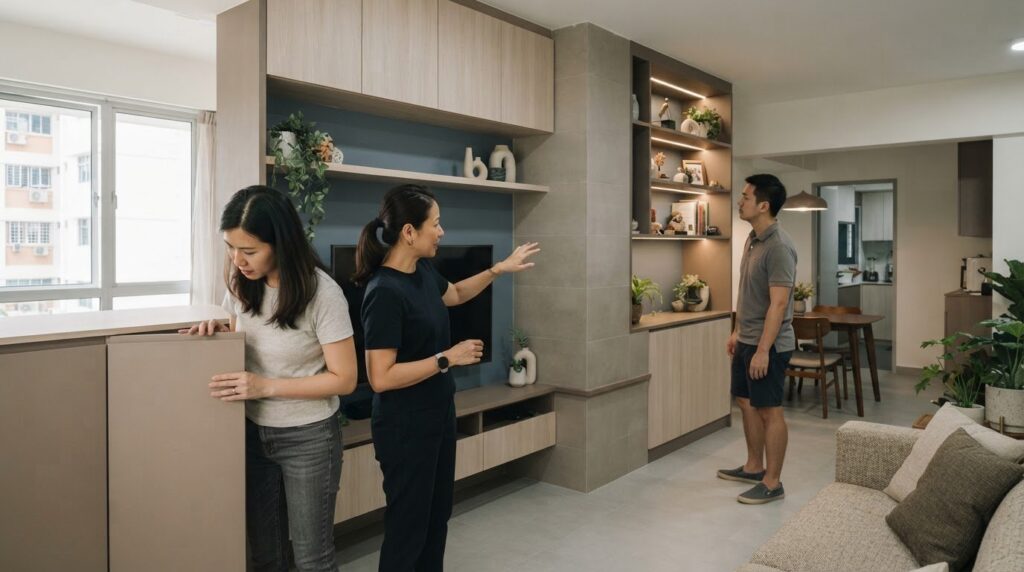
Interior designer fees in Singapore vary by charging model. Some designers charge by the hour or as a percentage of the renovation budget, so compare what each quote includes, not just its headline figure.
Choosing a designer can feel like a balancing act: you want work that fits your home and budget, without surprises in the schedule or final bill. This guide to interior design in Singapore explains how to choose the right interior designer for your home, from defining your needs to reviewing credentials, relevant experience and verified reviews.
You’ll also learn how to assess portfolios, understand fee structures and compare itemised quotations. Directories and reviews can help you build a shortlist, but a listing alone won’t show how a firm handles a project. We’ll explain how to weigh candidates against your scope, timeline and priorities.
Key Takeaways
- Compare fee structures and itemised quotes so you can see what the proposed scope covers, not just the headline cost.
- Set your renovation priorities, budget limits and timeline before discussing proposals.
- Use completed projects to assess a designer’s experience with your home type and the quality of their workmanship.
- Use directories and verified reviews to build a shortlist, then look for consistent feedback about communication and project delivery.
How much do interior designers charge in Singapore?
For interior design in Singapore, choosing the right interior designer for your home also means understanding what each fee covers.
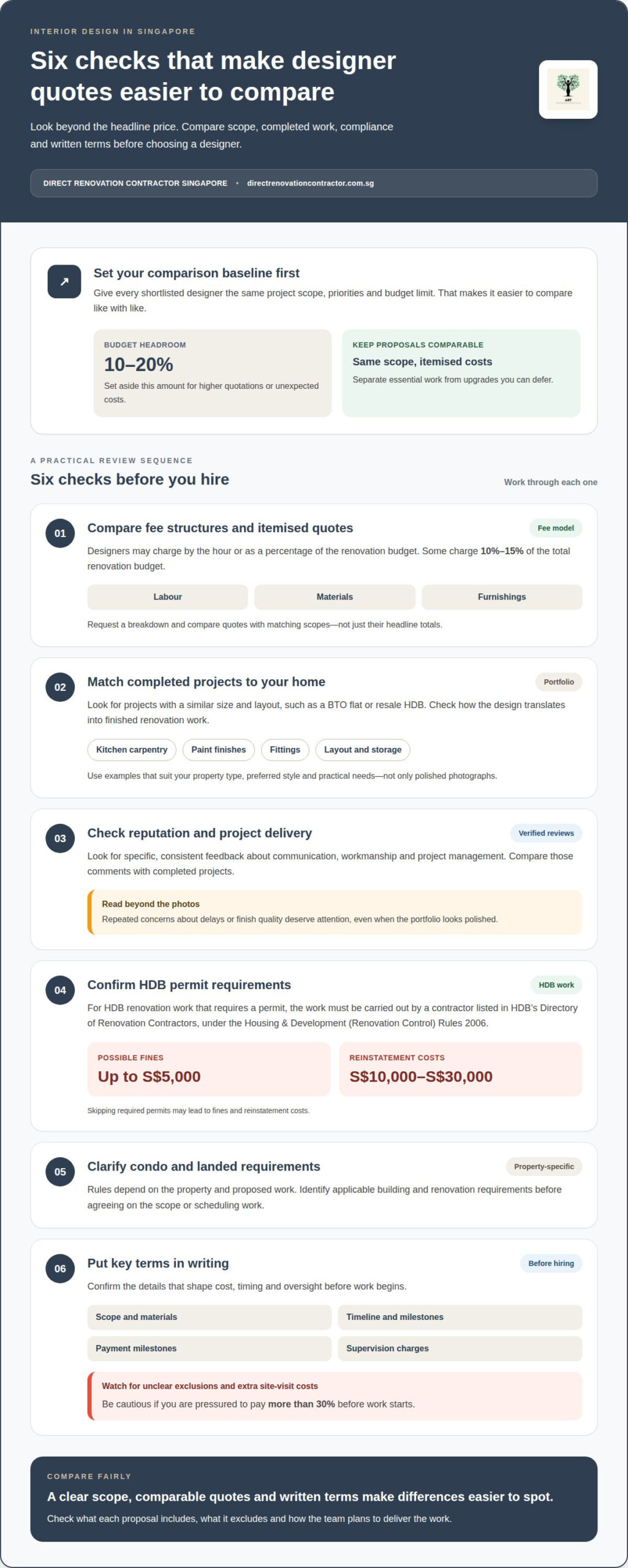
- Compare the fee structure and quote. Some charge 10% to 15% of the total renovation budget. Request an itemised breakdown of labour, materials, and furnishings, then compare quotes with matching scopes.
- Match completed projects to your home. Review portfolio examples with a similar size and layout, such as a BTO flat or resale HDB. Look closely at kitchen carpentry, paint finishes, and fittings. These details show how the designer’s preferred style translates into completed renovation work.
- Check reputation and project delivery. As you choose the right interior designer for your home in Singapore, read verified reviews for specific comments about communication, workmanship, and project management. Compare those comments with completed projects. A polished photograph matters less if reviews repeatedly raise concerns about delays or finish quality.
- Know the HDB permit requirement. HDB renovation work requiring a permit must be carried out by a contractor listed in HDB’s Directory of Renovation Contractors under the Housing & Development (Renovation Control) Rules 2006. Skipping required permits may lead to fines of up to S$5,000 and reinstatement costs of S$10,000-S$30,000.
- Clarify condo and landed requirements. Rules depend on the property and proposed work. Identify applicable building and renovation requirements before agreeing on the scope or scheduling work.
- Check key terms before hiring. Confirm the scope, materials, timeline, payment milestones, and supervision charges in writing. Watch for unclear exclusions, extra site-visit costs, or pressure to pay more than 30% before work starts.
Clarifying home renovation needs, style, budget, and timeline
Define your priorities before requesting proposals. A clear brief helps designers price the same scope and plan the work.
-
Filter Designers by Home Type and Budget
Shortlist designers with relevant experience in your property type, such as an HDB flat, condo or landed home. Compare their project examples with your preferred style and practical needs, including storage, kitchen use and furniture. A portfolio should show work suited to your layout, not just attractive finishes.
Use comparable projects to judge budget fit. Treat any planning ranges as broad guides, since scope and finish choices affect the quotation.
-
Set a Renovation Budget with Headroom
Set a firm spending limit, then leave 10 to 20 percent headroom for higher quotations or unexpected costs. Separate essential work, such as rewiring or kitchen storage, from upgrades you can defer. This makes trade-offs clearer when a proposed layout or material choice pushes the project beyond your target.
Ask each shortlisted designer to price the same scope and list exclusions. Compare labour, materials, furnishings and payment milestones line by line. A low total can hide omitted work, while vague allowances make final costs harder to manage. Be cautious about pressure to commit before you understand the quotation.
-
Review Project Examples and Timelines
Request examples that resemble your home’s layout and renovation scope, with budgets where available. Compare the original plan with the completed work, then note which style choices affected cost or coordination. A timeline should identify design decisions, material selection, site work and handover milestones.
There is no single typical renovation duration for every Singapore home. The schedule depends on the scope, property requirements, material decisions, and how quickly approvals and coordination proceed. Set your intended start date early and clarify how changes affect milestones. For HDB projects, compare your needs with relevant HDB renovation packages.
Checking designer credentials, experience, and home-type specialisation
- Match experience to your property. Ask whether the designer regularly handles HDB flats, condominiums, or landed homes. Each property type brings different layouts and renovation considerations. Review completed projects similar to yours, not just the most polished photographs. Check whether the designer can explain practical choices, such as storage planning or kitchen workflow, in terms of your household’s needs.
- Check credentials and relevant requirements. For HDB work requiring a permit, confirm the contractor is listed in HDB’s Directory of Renovation Contractors. Ask which HDB or BCA licensing requirements apply to the work. You can also look for BizSAFE Level 3: this indicates a trained Risk Management Champion and a documented Risk Management Plan. CaseTrust renovation accreditation covers ethical practices and dispute resolution.
- Test whether the designer listens to your brief. Bring a clear list of needs, preferred materials, and limits. Notice whether the designer reflects your vision accurately or pushes unrelated upgrades. Ask how the team will communicate changes and track completion. A showroom visit can help you compare finishes in person, but it should support decisions, not replace a written scope. Repeatedly ignoring your priorities is a red flag.
- Review reputation and quotation details. Read testimonials and online reviews for specific examples of communication, workmanship, and follow-through. Ask about the contractors involved and how long they have worked together. For tiles or vinyl, compare the quoted rate per square foot and whether GST is included. Check that product descriptions and installation scope are clear, so the client can compare like with like. Keep the written quotation with your project records.
Singapore interior designer directories and verified reviews
Directories can help you discover firms; reviews and completed projects help you judge their fit. Use both to build a shortlist for your project.
- Use directories to create an initial shortlist. Singapore has over 1,000 registered interior design firms, so start with filters that matter: property type, location, project scope, and preferred style. Treat a directory profile as a starting point, not proof of workmanship. Shortlist firms showing relevant HDB, condo, or landed projects, then compare those examples with your own layout and renovation needs.
- Read reviews for specific project details. Look for comments describing communication, carpentry quality, schedule changes, and how issues were handled. A review mentioning resale HDB storage or kitchen installation gives more useful context than a general compliment. Renovation-company feedback on Renotalk and homeowner discussions in Facebook groups can add perspectives, but compare recurring details rather than relying on one post.
- Check whether reviews connect to real work. Compare a reviewer’s described scope with the firm’s portfolio. For example, feedback about wardrobe carpentry is more relevant if the portfolio shows completed wardrobes and clear project details. Note whether several reviews mention similar strengths or concerns. Give greater weight to consistent, specific accounts than brief comments without project context.
- Cross-check the shortlist before requesting proposals. Speak with 3-4 shortlisted firms, then request proposals from the top 2-3 candidates. Ask each to explain how its experience matches your home type and scope. Compare the written details with reviews and completed projects, including how contractors handled changes and handover. This cross-check helps separate an attractive online profile from evidence relevant to your dream home.
For a resale project where practical carpentry matters, explore resale renovation and carpentry work as you refine your shortlist.
Direct Renovation Contractor Singapore
Direct Renovation Contractor Singapore is a practical option if you want renovation work without a middleman interior designer. Its direct-contractor approach includes 3D drawings and a curated list of direct contractors and material suppliers, helping you plan and manage the project. This suits homeowners who have a clear brief and want to stay involved in decisions, rather than seeking full-service interior design consultancy.
Choose the package that matches your home type and renovation needs, whether it’s an HDB BTO, HDB resale flat, condo or landed property. Direct Renovation Contractor Singapore focuses on renovation scope and execution, helping you plan decisions about layout, materials and work priorities.
If this direct renovation approach suits your plans, contact Direct Renovation Contractor Singapore to discuss your home and project needs.
Take the Next Step with a Clear Renovation Plan
Choosing the right interior designer for your home in Singapore ultimately means finding an approach that fits how you want to manage the work. If you prefer a direct renovation route, consider whether the scope, communication and decision-making process suit your needs before proceeding.
Direct Renovation Contractor Singapore offers HDB BTO, HDB Resale and Condo Renovation Packages. These provide a starting point for discussing renovation requirements for different property types. Bring your priorities and project scope to the conversation so the next steps focus on the work your home needs.
A renovation plan should make the scope and responsibilities clear before work begins. If a direct contractor approach fits your plans, contact Direct Renovation Contractor Singapore to discuss your project. A well-defined starting point can help you move ahead with greater clarity and confidence.
Frequently Asked Questions
Is it worth paying for an interior designer?
A designer can be worthwhile when your renovation needs coordinated planning, detailed drawings and hands-on project management. For example, combining a kitchen alteration, storage carpentry and lighting changes creates decisions that affect one another. A designer can coordinate these elements, while a homeowner with a small, clearly defined scope may prefer to manage selections and trades directly. Compare the service with your project’s complexity and the time you can commit.
What is the difference between an interior decorator and a designer?
An interior decorator generally focuses on a room’s appearance, such as colours, soft furnishings and furniture placement. An interior designer may also plan layouts, specify materials, prepare drawings and coordinate renovation work. Roles vary between firms, so compare actual deliverables rather than relying on the job title. For example, ask whether the proposal includes technical drawings or only styling recommendations.
What is the minimum budget for design?
There isn’t one minimum budget that applies to every design project. These figures describe different charging approaches. Before choosing one, define whether you need layout planning, drawings, material selection or ongoing site supervision.
What is the typical cost for an interior design?
Design fees may be separate from construction charges or calculated as a percentage of the renovation budget. Ask for an itemised quotation showing design work, labour, materials and furnishings, so you can see what the total covers and compare equivalent scopes.
How much do interior designers charge in Singapore for HDB, condo, and landed homes?
Fees depend more on scope and charging model than on property type alone. HDB and condo renovation totals commonly vary with the amount of hacking, carpentry and finish upgrades. Landed projects depend on their specific work scope, so assess a detailed quotation rather than assuming a flat fee based on property type.
How can I verify an interior design firm’s credentials and track record in Singapore?
Match the firm’s name on its written proposal with its directory profile, accreditation details and completed-project records. For HDB renovation work requiring permits, the contractor must be listed in HDB’s Directory of Renovation Contractors. Then compare portfolio examples with review details, such as property type and work completed. A written agreement should identify scope, materials, timeline, payment milestones and warranty terms.