
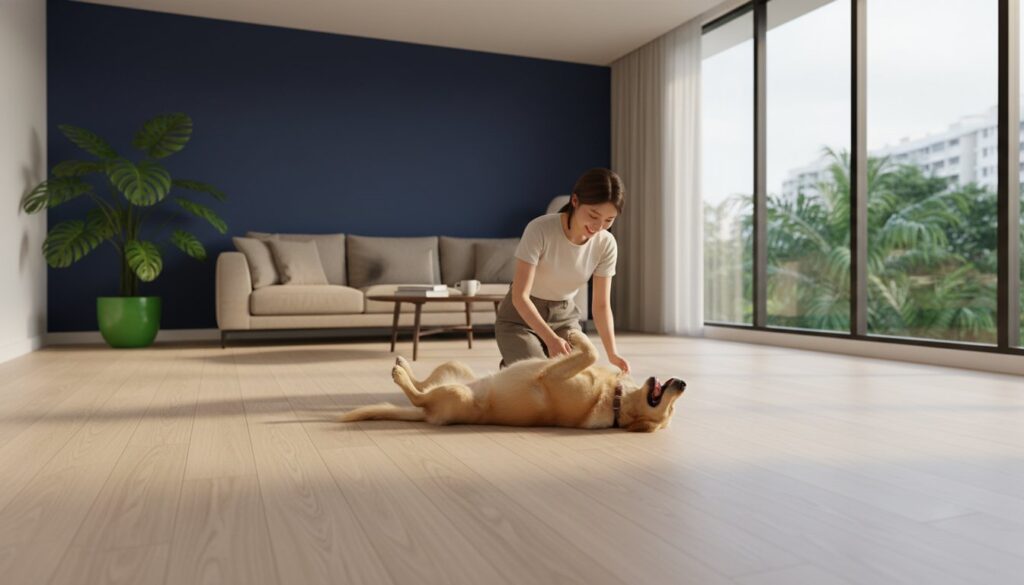
Why are you paying a 30% Interior Designer markup for a floor that your dog might scratch within a week? It’s a common frustration for the 40% of Singaporean households who own pets. You want a home that looks polished, but you’re tired of worrying about deep claw marks, urine seeping into joints, or slippery surfaces that cause your older pets to slide. You shouldn’t have to choose between a beautiful interior and a functional space for your animals.
This 2026 guide explores the most durable pet-friendly flooring options singapore has to offer, focusing on materials that survive the “zoomies” while remaining easy to sanitize. We’ll show you how to achieve a scratch-proof, slip-resistant finish while sticking to a strict budget by working directly with the installers. We’ll preview the best-performing materials like SPC vinyl, explain the latest HDB flooring thickness regulations, and demonstrate how cutting out the middleman puts thousands of dollars back into your pocket.
Key Takeaways
- Compare the durability and moisture resistance of SPC vinyl versus porcelain tiles to find the right fit for your pet’s activity level and your home’s humidity.
- Learn how to interpret slip-resistance ratings from R9 to R11 to protect your pet’s joint health and prevent indoor slipping accidents.
- Navigate technical HDB requirements, such as the 50mm thickness rule and noise insulation standards, to avoid compliance issues during your renovation.
- Save significantly on premium pet-friendly flooring options singapore by sourcing materials directly from contractors and bypassing unnecessary interior designer commissions.
Why Choosing Pet-Friendly Flooring is Essential for Singapore Homes
Pet-friendly flooring isn’t just a design choice; it’s a technical necessity for modern Singaporean households. With nearly 40% of local homes sharing space with a dog or cat, the floor is the most heavily used surface in the property. Selecting the right pet-friendly flooring options singapore involves more than just picking a color. You need a material that withstands mechanical impact from claws, resists moisture from accidents, and provides enough traction to prevent injuries. A floor that fails in any of these areas will quickly become a liability rather than an asset.
The tropical climate in Singapore makes this decision even more critical. Our high humidity levels mean that any liquid trapped in floor joints stays there. It doesn’t evaporate; it festers. This leads to warped planks, bubbling, and foul odors that penetrate the subfloor. By choosing the right material now, you avoid the heavy costs of hacking and demolition works five years down the road. Savvy homeowners are increasingly ditching the high markups of Interior Designers to work directly with flooring specialists. This shift allows for a focus on technical durability and financial transparency rather than just aesthetic “fluff.”
The Reality of Pet Damage in HDB and Condo Units
Pets don’t just walk; they sprint, jump, and skid across the room. These high-energy movements create micro-scratches on softer surfaces like traditional parquet or low-grade laminates. Moisture is another major concern for apartment dwellers. When urine or water spills sit in the seams of your floor, the core material can swell and fail. For those seeking a completely non-porous solution, Sheet vinyl flooring and modern SPC vinyl provide an excellent moisture barrier. These materials ensure that liquids stay on the surface where they can be easily wiped away, preventing long-term odor retention in your living space.
Cooling Benefits for Pets in Our Tropical Climate
In our sweltering heat, the floor is where your pet goes to regulate their body temperature. You’ve likely seen your dog or cat “splooting,” lying flat on their belly with legs extended to stay cool. Porcelain and ceramic tiles remain the top choice for thermal relief, staying noticeably cooler than vinyl in un-airconditioned HDB living rooms. While vinyl is a versatile and durable option, it doesn’t offer the same heat dissipation as masonry-based materials. If you have long-haired breeds or want to keep your utility bills low by using less air-conditioning, the temperature of your floor is a vital factor for your pet’s daily comfort.
Comparing the Top 3 Pet-Friendly Flooring Materials in 2026
Choosing the right surface requires balancing technical performance against your renovation budget. While many showrooms push high-concept designs, a pragmatic homeowner looks at scratch resistance, moisture protection, and installation complexity. In the current market, three materials dominate the discussion for pet-friendly flooring options singapore, each offering distinct advantages for different household setups.
Vinyl (SPC) Flooring: The Direct Contractor’s Top Recommendation
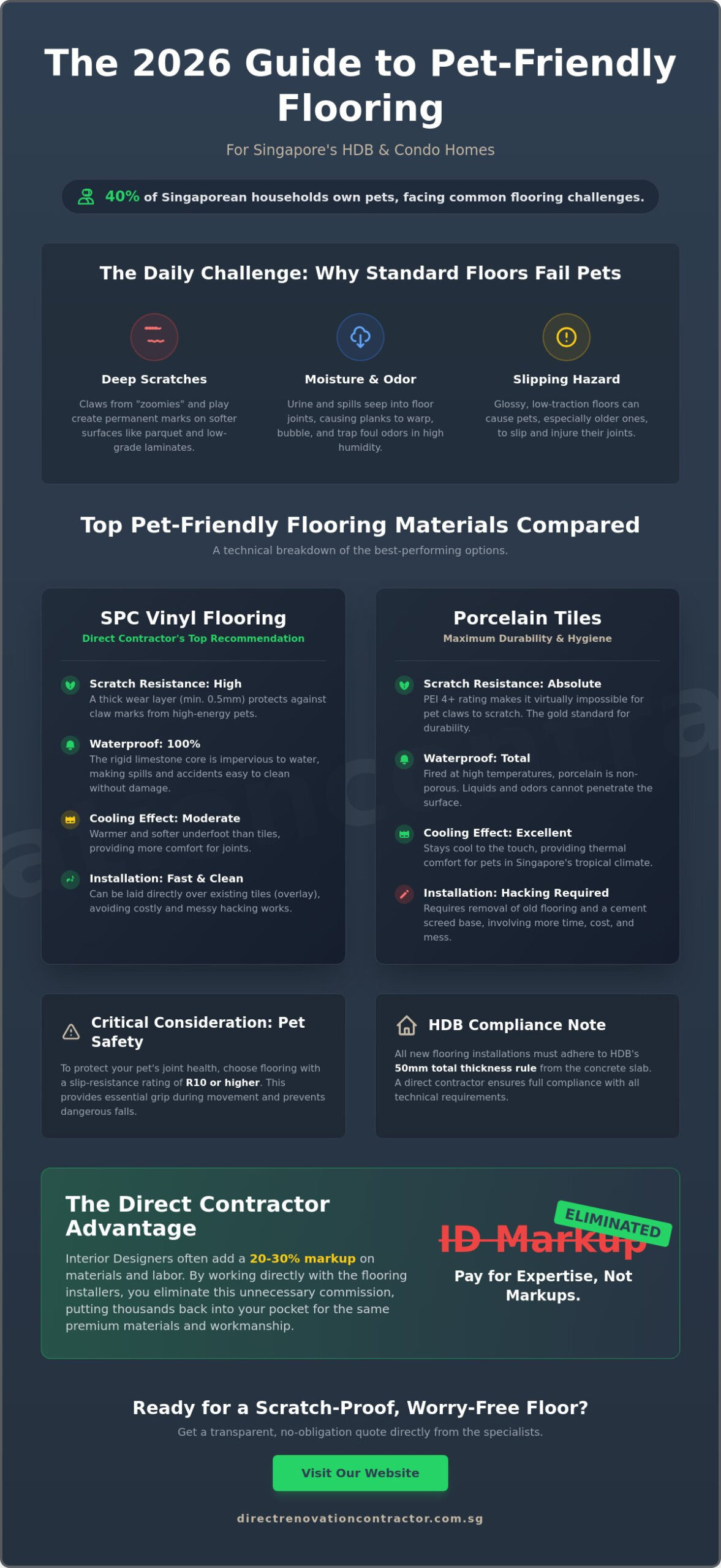
Stone Plastic Composite (SPC) vinyl has become the industry standard for HDB and condo owners with pets. Unlike older laminate versions that rely on wood fibers, SPC features a rigid limestone core. This makes it 100% waterproof and incredibly stable in Singapore’s fluctuating humidity. If you have a large, high-energy dog, you must insist on a wear layer of at least 0.5mm. This transparent top layer is what actually resists the mechanical force of a pet’s claws.
One of the biggest financial advantages of Vinyl Flooring Installation is the ability to overlay the material directly onto existing tiles. This avoids the mess and expense of hacking and demolition works. It’s a fast, technical solution that delivers a fresh look without the typical ID coordination fees. We often recommend this for BTO owners who want to protect their provided flooring without violating HDB’s three-year restriction on hacking wet areas.
Porcelain Tiles: Maximum Durability for High-Traffic Areas
Porcelain tiles remain the “gold standard” for hygiene and absolute scratch resistance. On the Porcelain Enamel Institute (PEI) scale, most high-quality porcelain used in Singapore falls between PEI 3 and 5. For a home with multiple pets, a PEI 4 rating ensures the surface won’t dull or scratch even under heavy traffic. Because porcelain is fired at higher temperatures than ceramic, it’s denser and virtually non-porous. This means urine accidents won’t soak into the material, preventing permanent stains and lingering odors.
The trade-off for this durability is the labor-intensive nature of the work. Professional Tiling and Masonry Works require skilled labor for screeding and precise leveling. Unlike vinyl overlays, tiles require a permanent commitment and a higher upfront investment in manual labor. However, for owners of senior pets who need a floor that can be bleached or steam-cleaned daily, tiles are the most resilient choice.
Beyond Scratches: Prioritising Traction and Joint Health
Most homeowners focus solely on whether their floor can survive their dog. However, a truly functional home prioritises whether the dog can survive the floor. Overly smooth surfaces create an “ice skating” effect. When paws can’t find purchase, pets compensate by tensing their muscles and overextending their joints. This leads to chronic muscle fatigue, ligament damage, and accelerated hip dysplasia. Choosing from the available pet-friendly flooring options singapore requires a technical look at traction, not just scratch resistance.
Slip resistance is measured using R-ratings, ranging from R9 to R13. For a standard residential living room with pets, you should aim for a minimum of R10. An R9 rating is often too slick for high-speed “zoomies,” while R11 and above are typically reserved for wet areas or commercial ramps. Finding the middle ground is essential. You need enough grip for your pet’s paws to hold steady, but not so much texture that the floor becomes impossible to mop. Matte and honed finishes are almost always superior to high-gloss surfaces in this regard.
The Dangers of Slippery Floors for Older Dogs
Senior pets, particularly larger breeds like Golden Retrievers or Labradors, face significant risks on polished surfaces. As they lose muscle mass and joint stability, a single slip on a polished marble or high-gloss tile floor can result in a debilitating injury. Chronic slipping forces their bodies into unnatural positions just to stay upright. If you’re renovating a resale HDB or condo for an older pet, avoid the temptation of “hotel-style” polished stone. A simple way to test a sample is the “wet thumb” test. If your thumb slides effortlessly across the surface with a bit of water, your pet’s paws will do the same.
Textured Finishes: The Secret to Hiding Scratches
Visual longevity is just as important as structural integrity. This is where Embossed-in-Register (EIR) technology in vinyl flooring becomes a game-changer. EIR aligns the surface texture with the printed wood grain image. This creates a realistic feel and, more importantly, a complex surface that hides micro-abrasions. Unlike smooth, flat surfaces that highlight every tiny claw mark under sunlight, textured finishes mask these imperfections. Natural slate-look tiles or wood-grain vinyl planks provide the necessary friction for joint health while keeping the floor looking new for years. When you skip the design-heavy firms and go direct to the source for Vinyl Flooring Installation or tiling, you can specify these high-traction textures without paying a premium for the “recommendation.”
Installation and HDB Regulations for Pet Owners
Installing new floors in a Singapore flat isn’t just about the finish; it’s about compliance. HDB maintains strict guidelines to ensure structural integrity and neighborly harmony. For instance, the total thickness of your floor finish and screed must not exceed 50mm. If you’re moving into a new BTO flat, remember the three-year restriction: you aren’t allowed to replace floor tiles in wet areas like bathrooms to protect the waterproofing membrane. However, you can still explore pet-friendly flooring options singapore by laying new finishes over existing tiles using approved adhesives.
Managing a renovation with pets requires logistics planning. Hacking and demolition works are loud and dusty, which can cause significant stress for animals. If you’re opting for a live-in renovation, we recommend boarding your pets or keeping them in a separate, sound-proofed zone. A direct contractor handles the HDB permit applications for you, typically taking 7 to 14 days for approval, so don’t wait until the last minute to finalize your material choices.
Noise Mitigation for Downstairs Neighbours
If your dog has a habit of “zoomie-ing” at 11 PM, your downstairs neighbors will notice. HDB requires a minimum sound insulation level for new flooring to reduce noise transmission. When installing vinyl or laminate, using a high-quality acoustic underlayment is vital. These specialized foam or rubber layers dampen the “click-clack” sound of claws hitting the floor. It’s a technical requirement that also serves as a peace-keeping measure in high-density living. For a deeper dive into these regulations, see our Home Renovation Singapore guide for more on current HDB rules.
The 5-Step Installation Process with a Direct Contractor
Working with a direct contractor ensures that technical execution takes priority over aesthetic fluff. Our process follows a logical sequence to ensure your floor lasts as long as the 25-year lifespan of premium vinyl.
- Site Measurement and Leveling: We assess the existing sub-floor. For vinyl, the surface must be perfectly level to prevent the “hollow” sound or joint popping.
- Direct Material Sourcing: You select your pet-friendly flooring options singapore directly from our wholesale partners, bypassing ID markups.
- Sub-floor Preparation: We install a moisture barrier and the required acoustic underlayment to meet HDB standards.
- Actual Laying: Planks or tiles are installed with precision, ensuring tight joints that prevent urine seepage.
- Skirting Installation: We finish the perimeter with durable skirting to protect your walls from pet-related wear and tear.
By cutting out the middleman, you gain direct access to the craftsmen doing the work. This transparency ensures that the materials used are exactly what you paid for, without undisclosed commissions. If you’re ready to upgrade your home with durable, pet-proof surfaces, explore our HDB BTO Renovation Packages for straightforward pricing and professional installation.
Saving on Pet-Friendly Flooring: The Direct Contractor Advantage
Choosing the right pet-friendly flooring options singapore is only half the battle. The other half is ensuring you don’t overpay for the installation. In the local renovation industry, hiring an Interior Designer typically adds a 15-30% premium to your total bill. On a standard $60,000 renovation, this “coordination fee” or markup can range between $9,000 and $18,000. By working directly with a contractor, you eliminate these undisclosed commissions and referral fees. You pay for the material and the manual labor, ensuring every dollar spent goes directly into the quality of your home.
Direct contractors bring a level of technical competence that design-heavy firms often lack. We understand the nuances of sub-floor moisture levels and HDB screed requirements because we are the ones on-site during the execution phase. This hands-on involvement ensures that your floor doesn’t just look good in a 3D render but remains structurally sound for years. When you source materials through a direct contractor, you access wholesale prices for premium vinyl and porcelain tiles that are otherwise marked up by showrooms and intermediaries.
Cutting Out the Middleman in Your Flooring Project
A typical flooring job for a 4-room HDB flat involves significant material and labor costs. When you use an intermediary, you’re often paying a percentage on top of both. Direct communication with the site supervisor prevents the common installation errors that happen when instructions are passed through multiple parties. You get clear, technical answers about floor leveling and moisture barriers without the “creative” filter. For a detailed breakdown of how this model saves you money, compare costs with our Direct Renovation Contractor Singapore guide.
Custom Carpentry and Flooring Integration
If you’re planning a full home makeover, the sequence of work is vital. We always recommend completing your Vinyl Flooring Installation before starting on your kitchen cabinets or wardrobes. This ensures that your built-in furniture sits on a level surface and allows the flooring to run underneath the cabinets, providing a cleaner finish and better moisture protection.
Managing the transition between different zones, such as moving from kitchen tiles to living room vinyl, requires precise masonry skills. A direct contractor ensures these joints are flush and secure, which is essential for preventing your pet from tripping or catching their claws on uneven edges. To see how we integrate these elements, learn more about Custom Carpentry in Singapore. By coordinating your flooring and carpentry through a single direct source, you maintain financial transparency and ensure that the technical requirements of your pet-friendly flooring options singapore are met across the entire property.
Secure Your Home’s Future with Durable Pet-Proof Floors
Investing in the right surface ensures your home remains hygienic and scratch-proof for years to come. You now understand why technical specs like R-ratings for traction and the 50mm HDB thickness rule matter more than just picking a trendy color. Choosing the right pet-friendly flooring options singapore involves balancing your pet’s joint health with long-term material durability. Whether you opt for the cooling properties of porcelain tiles or the resilient overlay of SPC vinyl, the priority remains technical excellence and cost efficiency.
By working directly with our site supervisors, you bypass the 15-30% markups typically charged by design firms. We provide transparent quotes with zero undisclosed commissions, ensuring you get premium workmanship at fair, direct-to-owner pricing. Our team of expert HDB and Condo flooring installers is ready to help you plan a renovation that survives the “zoomies” without breaking your budget. Get a Direct, No-Markup Quote for Your Pet-Friendly Flooring Today and start building a home that both you and your pets will enjoy for decades.
Frequently Asked Questions
Is vinyl flooring really 100% waterproof for pet accidents?
SPC vinyl is technically waterproof because its core consists of a stone-plastic composite that doesn’t absorb liquids. While the planks themselves won’t swell or rot, you shouldn’t let urine sit on the floor indefinitely. Liquid can eventually seep into the click-lock joints and reach the sub-floor, leading to persistent odors. For pet-friendly flooring options singapore, we recommend prompt cleanup to maintain the structural integrity of the installation and prevent sub-floor contamination.
Can my cat’s claws scratch porcelain tiles?
Porcelain tiles are virtually impossible for a cat or dog to scratch under normal residential conditions. On the Mohs scale of mineral hardness, porcelain ranks significantly higher than animal claws. Unlike wood or low-grade laminates, the surface remains pristine even with high-energy pets. This makes tiling and masonry works a superior long-term investment for owners who prioritize absolute scratch resistance and hygiene over the softer feel of other materials.
Do I need to hack my existing HDB tiles to install pet-friendly vinyl?
You don’t need to hack existing tiles if they’re in good condition and reasonably level. Most homeowners choose to overlay vinyl flooring directly on top of the original HDB tiles to save on hacking and demolition works. This method is faster and significantly reduces renovation dust. However, if the existing tiles are popping or uneven, a direct contractor will advise on necessary leveling or localized repairs before the overlay begins.
What is the most slip-resistant flooring for older dogs in Singapore?
Matte porcelain tiles with an R10 slip-resistance rating provide the best grip for senior pets. These surfaces offer enough friction for paws to hold steady without being too abrasive to clean. While some pet-friendly flooring options singapore focus only on durability, prioritizing a textured or matte finish is essential for preventing joint strain and hip dysplasia in older dogs who struggle to stay upright on polished surfaces.
How do I remove pet urine smells from vinyl floor joints?
Is laminate flooring a good option for homes with multiple pets?
Laminate flooring is usually a poor choice for multi-pet households in our tropical climate. Its core is made of compressed wood fibers that swell and bubble when exposed to moisture from accidents or spilled water bowls. Once the core expands, the damage is irreversible and often requires a full floor replacement. Vinyl or tiles are much more pragmatic choices because they don’t react to moisture or the high humidity levels found in Singapore.
How much can I save by hiring a direct flooring contractor instead of an ID?
Homeowners typically save between 15% and 30% on their flooring project by skipping the interior designer. When you work with a direct contractor, you aren’t paying for design concepts or undisclosed intermediary commissions. You receive a transparent quote that reflects the actual cost of materials and manual labor. This allows you to reallocate those savings into higher-quality, more durable materials that offer better long-term value for your property.
Are there specific HDB rules for installing thicker pet-friendly flooring?
HDB regulations state that the total thickness of floor finishes and screed must not exceed 50mm. This is a critical technical requirement to prevent excessive weight on the building’s structure. If you’re installing a thicker tile or adding a specific acoustic underlayment for noise mitigation, your contractor must ensure the final floor level remains within these legal limits to avoid compliance issues or forced rectification works during future inspections.