
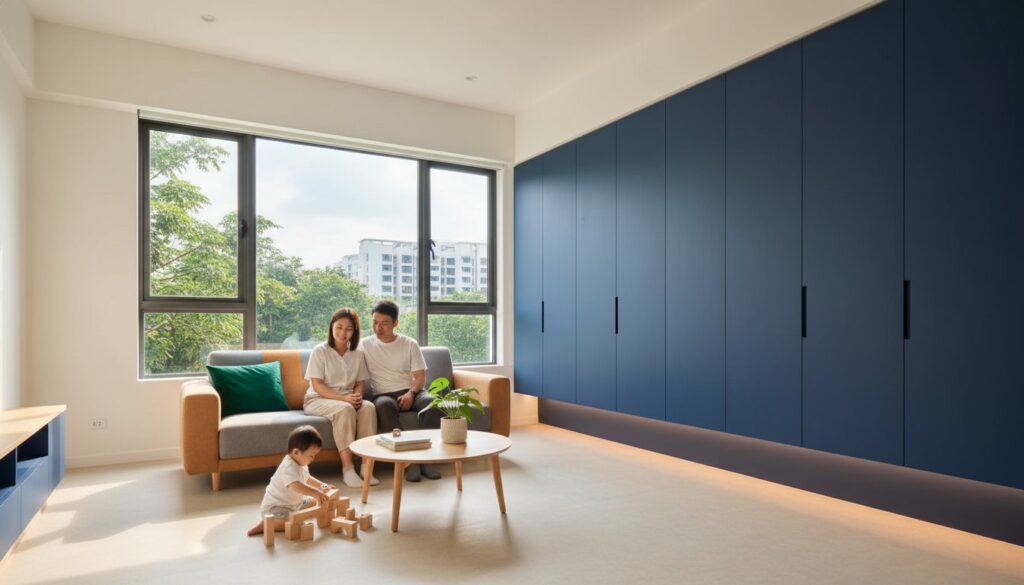
Since 2020, the National Environment Agency has received 19 formal feedback cases regarding toxic formaldehyde levels from home renovation works. It’s a sobering reminder that the hidden chemicals in your cabinets and walls are just as dangerous as sharp corners or heavy furniture. If you’re planning your next project, you need practical child-proof home renovation ideas that go beyond simple foam padding. You deserve a home that survives the toddler years without sacrificing your family’s health or your hard-earned savings.
We understand the anxiety of balancing safety with a realistic budget. That’s why we focus on technical competence and direct sourcing instead of flashy design presentations. This 2026 guide shows you how to create a durable, safe living space by utilizing zero-VOC paints and low-formaldehyde wood products certified by the Singapore Green Labelling Scheme. You’ll learn how to implement the latest BCA Code on Accessibility standards and secure your windows and carpentry effectively. We provide a clear roadmap to a safer home through direct contractor expertise, ensuring every dollar goes toward quality workmanship rather than middleman commissions.
Key Takeaways
- Shift from temporary baby-proofing to permanent, growth-ready layouts that integrate safety directly into your home’s structural design.
- Compare vinyl flooring, tiles, and laminates to find the best impact absorption for toddlers while ensuring materials meet 2026 non-toxic standards.
- Discover technical child-proof home renovation ideas like custom built-in cabinetry that eliminates tipping hazards and utilizes hydraulic stays for safer storage.
- Implement room-specific safety features, such as induction hobs in the kitchen and anti-scald plumbing in the bathroom, to prevent common household accidents.
- Use the direct contractor model to secure transparent material specifications and reinvest saved commissions into higher-quality, durable finishes.
What is a Child-Proof Home Renovation in 2026?
Child-proofing isn’t just about sticking plastic covers on your power sockets or foam on your table corners. In 2026, a child-proof home renovation focuses on integrating safety, durability, and health into the permanent fixtures of your property. We define this as building a home that protects your children from the start, rather than fixing problems later with temporary accessories. While a comprehensive guide to childproofing might suggest temporary latches, a professional renovation uses structural solutions like curved carpentry and non-toxic materials. You’re building for the long term, not just for the crawling stage.
The Core Pillars of a Child-Safe Renovation
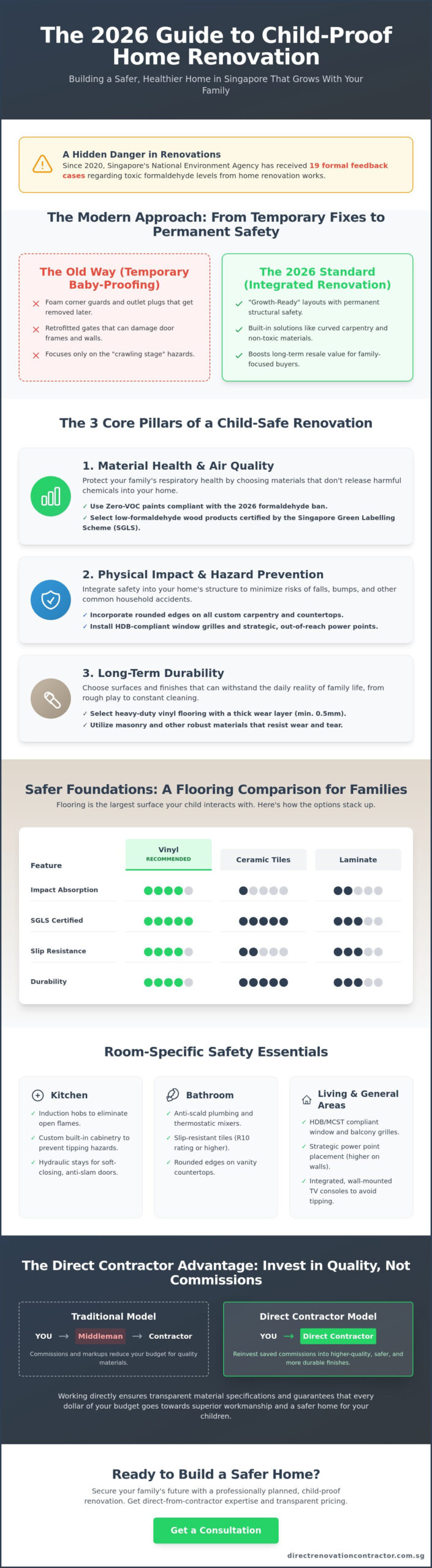
Physical safety is our first priority. We focus on minimizing impact risks by using rounded edges on all custom kitchen cabinet carpentry and wardrobe carpentry. Material health is equally vital. Since the January 1, 2026 ban on formaldehyde in interior paints, we ensure all painting services use compliant, zero-VOC products to protect your family’s respiratory health. Finally, durability is key. We select surfaces like heavy-duty vinyl flooring and masonry works that withstand constant cleaning and rough play without showing wear. It’s about choosing materials that don’t just look good but survive the daily reality of family life.
Singapore-Specific Safety Standards
Navigating local regulations is essential for any high-rise home. For HDB owners, window and grille installation must follow strict safety guidelines to prevent falls while remaining accessible for fire safety. We also strategically plan electrical wiring and installation to place power points out of reach for toddlers but convenient for adults. In condominiums, we work within MCST rules to install balcony safety features, such as glass partitions or specialized grilles, that don’t compromise the building’s facade. These are practical child-proof home renovation ideas that balance legal requirements with your daily peace of mind.
Selecting Non-Toxic Materials: Flooring and Walls for Growing Families
Flooring is the primary contact surface for toddlers. It’s where they learn to crawl and where they inevitably fall. In 2026, selecting the right material is about balancing impact absorption with air quality. We prioritize materials that meet the Singapore Green Labelling Scheme (SGLS) standards. These certifications ensure your wood products and flooring adhesives don’t emit harmful gases. When evaluating child-proof home renovation ideas, look specifically at the technical specs of your materials rather than just the color or pattern.
Flooring: Safety Underfoot
For most HDB and condo projects, we recommend vinyl flooring installation. It offers superior impact absorption compared to traditional ceramic tiles. We look at slip-resistance ratings, often called R-ratings. For living areas, an R10 rating provides a good balance of grip without being too abrasive. In 2026, high-quality vinyl comes with a thick wear layer, typically at least 0.5mm, that resists scratches from toys and walkers. We also use specialized high-density underlayment. This provides a necessary cushion for falls and helps dampen noise, which your neighbors downstairs will appreciate.
Walls and Paints: Breathing Easier
Wall safety is about what you can’t see. As of January 1, 2026, Singapore has banned interior paints containing more than 0.01% formaldehyde. This regulation under the Environmental Protection and Management Act is a major win for child safety during renovations. We exclusively use zero-VOC paints that meet NEA market surveillance standards. These products eliminate the “new house smell” which is actually the off-gassing of toxic chemicals. This is particularly important in smaller Singapore units where ventilation can be limited.
For active households, we suggest going beyond standard paint. High-pressure laminates (HPL) on feature walls or lower wall sections are nearly indestructible and easy to wipe clean. You can also integrate “legal” doodling zones using chalkboard or whiteboard paint on specific partitions. When it comes to corners, we prefer rounded masonry works over plastic corner guards. Masonry is a structural solution that won’t peel off or become a choking hazard. These practical child-proof home renovation ideas ensure your walls remain pristine and your indoor air stays clean for years to come.
Custom Carpentry Solutions: Safety-First Cabinetry and Built-ins
Loose furniture is one of the most significant hazards in a family home. Heavy dressers and bookshelves can tip over easily if a child decides to climb them. Custom carpentry solves this problem by anchoring every storage unit directly to your walls or floor. When you implement these child-proof home renovation ideas, you’re choosing structural stability over temporary fixes. Built-in wardrobes and kitchen cabinets become part of the home’s architecture, making them impossible to pull down. This approach provides a level of security that ready-made furniture simply cannot match.
The technical specifications of your hardware are just as important as the structure itself. We use soft-close hinges on all doors to prevent trapped fingers. For heavy lids on toy chests or top-access storage, we install hydraulic stays. These mechanisms ensure that heavy panels descend slowly and safely, even if a child lets go suddenly. We also prioritize the use of E0 or E1 grade plywood. These materials have the lowest possible formaldehyde emission levels, which is crucial for maintaining the indoor air quality standards mandated in 2026. By choosing high-grade wood cores, you’re protecting your children from long-term respiratory issues caused by off-gassing.
Technical Carpentry Details for Kids
We pay close attention to the finishing of every edge. Proper edge banding is essential; if the laminate is poorly applied, it can peel and become a sharp cutting hazard. We recommend recessed handles or finger-pull grooves instead of protruding metal knobs. Protruding hardware is a common cause of head injuries and snagged clothing for active toddlers. We also design integrated “safety zones” in TV consoles. This involves creating ventilated, lockable compartments for media players and cables, keeping dangerous electrical components completely out of sight and reach.
The Direct Contractor Advantage in Carpentry
Working with a direct contractor gives you full transparency over the materials used in your home. You aren’t paying for an interior designer’s aesthetic markup; instead, your budget goes directly toward superior hardware and low-emission wood. We help you plan your storage based on precise linear footage, ensuring every inch of your child-proof home renovation ideas is functional and safe. This direct model allows us to source high-tier safety hardware at trade prices, which we pass on to you. For more technical insights on built-in safety, you can consult our specialized carpenter singapore guide. This ensures your custom built-ins are durable enough to survive the toddler years while remaining adaptable as your children grow.
Room-Specific Child-Proofing: Kitchen, Bathroom, and Living Area Essentials
Every room in a Singapore apartment presents different risks that generic baby-proofing kits can’t address. Effective child-proof home renovation ideas require a room-by-room assessment of how your family actually uses the space. In high-traffic areas like the kitchen and bathroom, safety must be built into the plumbing and electrical infrastructure. We focus on structural changes that prevent accidents before they happen, ensuring your home remains functional for adults while staying safe for the little ones.
Kitchen and Dining Safety
The kitchen is the most hazardous zone in any home. We recommend induction hobs over gas stoves because the surface remains cool to the touch, significantly reducing burn risks. For your cabinetry, we plan the placement of dangerous appliances like ovens and microwaves in high-level built-ins, keeping them well out of a toddler’s reach. We also ensure all custom island counters and dining tables feature rounded corners. This prevents painful head injuries during inevitable living room sprints. For a deeper look at safe layouts, check our guide on hdb kitchen renovation to see how we optimize workflow and safety simultaneously.
The Safe Bathroom Environment
Bathroom safety starts with the right tiling and masonry works. We select floor tiles with a high Coefficient of Friction (COF), specifically R11 or R12 ratings, to provide maximum grip in wet conditions. Wall-hung vanities are another practical choice; they eliminate sharp floor-level corners and make the entire floor easier to clean and keep dry. Plumbing safety is equally critical. We install pressure-balance valves in your shower and tap systems. these valves maintain a consistent water temperature even when someone else flushes a toilet, preventing sudden hot water bursts that can cause scalding.
Living areas and service yards also need technical attention. In the living room, we create open play zones by using built-in storage that keeps toys off the floor and out of the way. In the service yard, we secure heavy laundry machinery on stable, raised platforms and ensure all electrical wiring is concealed and protected from moisture. This pragmatic approach to renovation ensures that every square foot of your home is optimized for safety. If you’re ready to secure your space, speak with our technical team today to discuss your specific floor plan and safety requirements.
Executing a Child-Safe Renovation via the Direct Contractor Model
Choosing the right business model for your project is as important as the materials themselves. In the Singapore market, many homeowners default to design-heavy firms that often add significant markups to every material and sub-service. By working directly with a contractor, you gain full transparency into the technical specifications of your build. You’ll know exactly which brand of zero-VOC paint is being applied and the specific grade of plywood used in your kitchen cabinet carpentry. This direct line of communication ensures that your child-proof home renovation ideas are executed with technical precision rather than being lost in translation through a middleman.
We use technical 3D drawings to help you visualize safety features before any hacking or demolition works begin. This process allows us to precisely plan the placement of electrical wiring and installation, ensuring power points are safely out of reach. You’ll work directly with the professionals executing the masonry and carpentry, which means safety requirements like rounded edges or anti-slip tile alignments are handled by the people actually doing the labor. This hands-on approach eliminates the risk of safety specs being overlooked during the construction phase.
Budgeting for Safety Without Intermediaries
The primary advantage of the direct contractor model is cost efficiency. When you remove the intermediary, you typically save on the 20% to 30% commission that design firms often charge. We recommend reinvesting these savings into higher-quality, non-toxic materials that directly benefit your child’s health. For example, instead of standard laminate, you can opt for high-pressure laminates with superior durability and lower chemical emissions. You can find a detailed breakdown of how this model works in our direct renovation contractor singapore guide. This transparency allows you to prioritize safety features that matter most to your family without exceeding your budget.
Next Steps: Your Safety Consultation
Before starting your project, prepare a checklist of your specific child-safety priorities. During our site assessment, we identify structural risks common in resale flats, such as old window grilles or uneven flooring that could cause trips. We’ll walk through your floor plan to ensure every child-proof home renovation ideas is feasible within HDB or MCST regulations. Once the project is complete, we conduct a final walkthrough with you. We test every soft-close hinge, check the tension on window restrictors, and ensure every masonry corner is smooth. This rigorous process ensures your home is truly move-in ready for a growing family.
Build Your Secure Family Home Today
Working with an HDB registered contractor allows you to focus on quality workmanship and material safety without paying for unnecessary intermediary commissions. We specialize in custom carpentry and safety-first installations, providing you with direct-to-owner pricing and complete financial transparency. You don’t have to choose between a beautiful home and a safe one when you have a straightforward partner managing the technical details. Take the next step toward a durable, worry-free living space for your toddlers. Get a Direct Quote for Your Child-Safe Renovation Today and start building with confidence.
Frequently Asked Questions
Is it more expensive to renovate a child-proof home in Singapore?
Renovating for child safety doesn’t have to exceed your budget if you use a direct contractor model. Instead of paying for aesthetic markups, you reinvest those funds into technical safety features like R10-rated tiles or E0-grade plywood. Focus on permanent fixtures like rounded masonry edges rather than expensive temporary baby-proofing gadgets to save money in the long run.
Can I child-proof an HDB resale flat without a full hacking renovation?
You can implement several child-proof home renovation ideas without a full hacking project. Consider overlaying existing floors with vinyl or applying zero-VOC painting services to refresh walls safely. Installing new window grilles and adding soft-close hardware to existing cabinets are effective ways to upgrade safety in a resale flat without the mess and cost of total demolition.
What is the best flooring for a home with toddlers and pets?
High-quality vinyl flooring is the most practical choice for families with young children and pets. It provides better impact absorption for falls than ceramic tiles and is highly resistant to scratches from toys or claws. Look for options with a 0.5mm wear layer and a slip-resistance rating of at least R10 to ensure the surface remains safe even when wet.
Do I need special permits for installing child-safety window grilles?
You don’t need a specific HDB permit to install window grilles, but they must comply with the standard safety designs and materials approved by the board. For condominiums, you must check with your MCST regarding the color and style to ensure they match the building’s facade. Always verify that your contractor is HDB registered to ensure the installation meets high-rise safety requirements.
How do I ensure my custom carpentry is non-toxic?
Ensure your custom carpentry uses E0 or E1 grade plywood to minimize formaldehyde emissions. Since the 2026 ban on high-formaldehyde paints, choosing the right wood core is the most critical step for indoor air quality. Ask your contractor for technical data sheets on the adhesives and laminates used to confirm they meet Singapore Green Labelling Scheme standards.
What are the most common safety mistakes in Singapore home renovations?
One of the biggest mistakes is prioritizing “Instagrammable” designs over structural integrity, such as choosing sharp-edged marble counters or loose furniture that can tip. Many homeowners also overlook air quality, forgetting that the paints and glues used in child-proof home renovation ideas must be zero-VOC. Another error is neglecting electrical point placements, which should be high enough to be out of reach.
Can a direct contractor help with child-safe electrical wiring?
A direct contractor handles all aspects of electrical wiring and installation, which is vital for child safety. We can relocate power sockets to higher positions and install concealed wiring to prevent toddlers from pulling on loose cables. Using high-quality circuit breakers and child-safe socket covers during the renovation phase provides a permanent safety solution that temporary plastic plugs cannot match.
Is vinyl flooring safer than tiles for children?
Vinyl flooring is safer than tiles for children because it offers a softer landing surface during falls. Ceramic and porcelain tiles are extremely hard and can cause more severe injuries upon impact. Additionally, vinyl stays warmer underfoot and provides better natural grip, making it a superior choice for toddlers who are just learning to walk or crawl.