
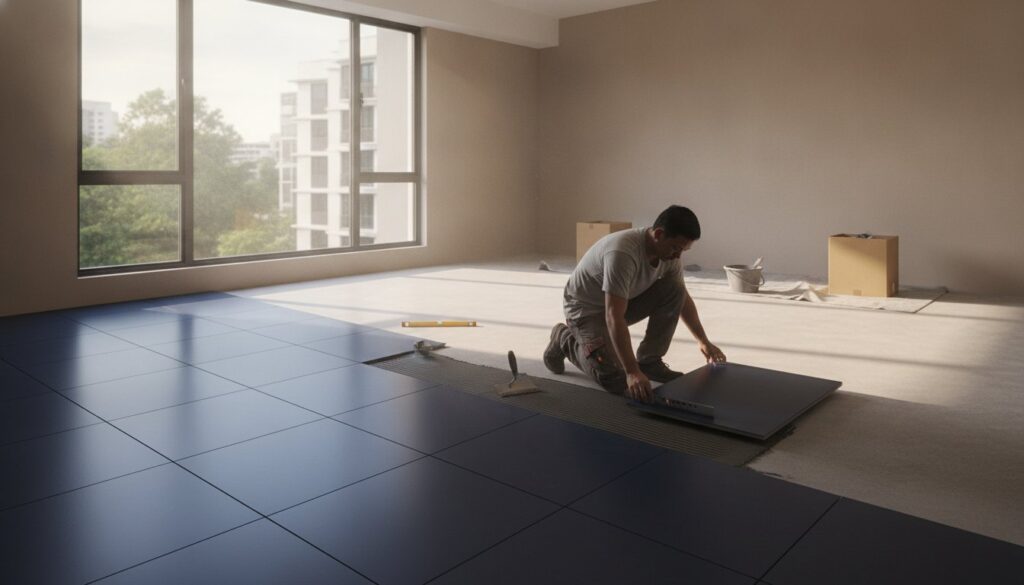
Your interior designer’s “provisional sum” for tiles is often just a placeholder for a significant markup that adds no value to the actual masonry of your home. Many homeowners in Singapore feel frustrated by these hidden costs and the anxiety of potentially poor workmanship, such as hollow-sounding tiles or misaligned grout lines. If you’re looking for a reliable tiling contractor in Singapore, it’s time to prioritize technical skill over flashy sales presentations. Working directly with the people doing the heavy lifting ensures that your budget goes into quality materials and precise installation rather than administrative overhead.
We understand that navigating HDB renovation rules can be confusing. From the strict 50mm limit on floor thickness to the three-year restriction on tampering with BTO bathroom waterproofing, the technical requirements are demanding. This guide provides the clarity you need to manage your project with confidence. We’ll show you how to achieve perfectly leveled floors and durable waterproofing while saving money through direct material sourcing. You’ll learn the essential standards for 2026, ensuring your home remains compliant with all BCA and HDB regulations without paying for unnecessary intermediaries.
Key Takeaways
- Learn how to eliminate interior design markups by engaging a direct tiling contractor in Singapore for your masonry works.
- Master essential technical requirements for HDB renovations, including strict floor thickness limits and the mandatory three-year waterproofing warranty for BTO bathrooms.
- Discover the two-step verification process for selecting a reliable mason by checking HDB-registered status and inspecting live site workmanship.
- Understand the full scope of masonry services, from professional hacking and demolition to precision cement screeding for a perfectly level finish.
- Explore how 3D architectural drawings can help you visualize complex tile patterns and layouts without the need for expensive design consultancies.
Direct Tiling Contractor vs. Interior Designer: Understanding the Savings
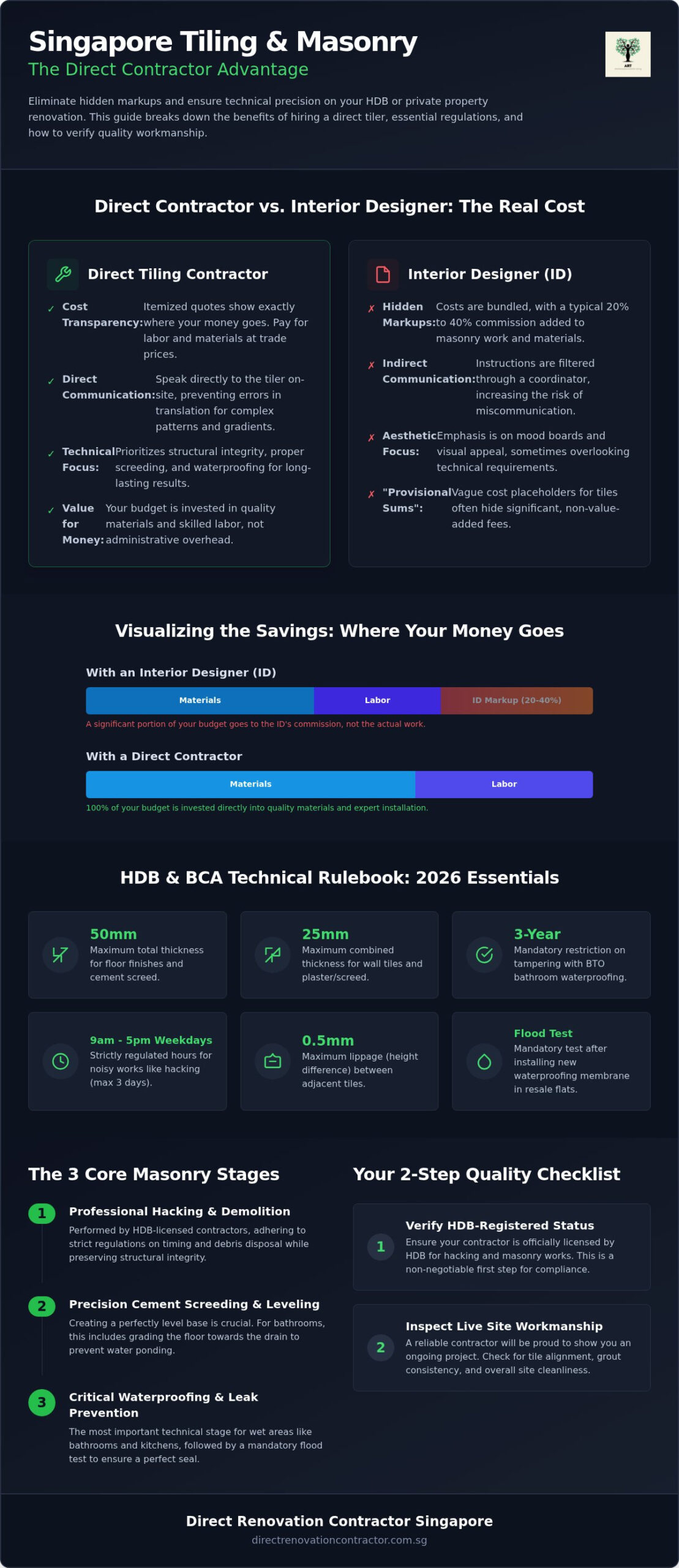
Hiring a tiling contractor in Singapore directly is a strategic move for homeowners who prioritize technical precision over design fluff. In the local market, a direct contractor manages the actual labor, site preparation, and material installation. Unlike an interior designer (ID) who acts as a project coordinator, the contractor is the one physically handling the Masonry work. This direct relationship eliminates the common ‘ID markup’ where design firms add a commission of 20% to 40% on top of the tiler’s labor and tile costs. By cutting out the middleman, you ensure that every dollar you spend contributes directly to the durability of your floors and walls.
Direct communication with the person on-site leads to better technical outcomes. When you speak directly to the tiler, instructions regarding grout width, tile patterns, and drainage gradients don’t get lost in translation. This clarity is essential for complex layouts where precision is the difference between a flawless finish and a slanted floor. For a deeper look at how these roles differ, you can refer to our Direct Renovation Contractor Singapore: The 2026 Comparison Guide.
Breaking Down the Cost Transparency Model
Cost transparency is the primary benefit of the direct-to-owner model. When you work with an ID, masonry costs are often bundled into a vague lump-sum quote or hidden within ‘provisional sums’ for tiles. A direct tiling contractor in Singapore provides itemized quotes that separate labor from material costs. This allows you to visit tile suppliers yourself and purchase materials at trade prices without the design firm’s undisclosed margin. You pay for the exact quantity of cement, sand, and tiles required, avoiding the inflated estimates often used to pad design fees. This itemized approach makes it easy to see where your money is going.
Technical Expertise vs. Aesthetic Design
Masonry is a structural trade, not just a cosmetic one. While an ID focuses on the visual appeal of a mood board, a professional tiler focuses on the technical integrity of the installation. This includes ensuring proper cement screeding for a level base and managing the critical transition from hacking to tiling. Technical supervision is vital to prevent common issues like hollow tiles or poor alignment. For example, the Building and Construction Authority (BCA) specifies a maximum of 0.5mm lippage between adjacent tiles. Achieving this level of precision requires a hands-on expert who understands the nuances of local HDB and BCA standards. Direct communication ensures that technical requirements, such as waterproofing and drainage gradients, are met without being filtered through multiple layers of management.
Essential Masonry Services for Singapore Homeowners
Professional masonry begins with controlled hacking and demolition. In Singapore, all hacking works in HDB flats must be performed by an HDB-licensed contractor. This isn’t just about clearing old tiles; it’s about preserving the structural integrity of the concrete slab. Noisy works like hacking and tile cutting are strictly regulated. These activities must be completed within three consecutive days and are only permitted on weekdays between 9:00 am and 5:00 pm. A skilled tiling contractor in Singapore ensures these timelines are met while managing debris disposal and site protection efficiently.
Cement Screeding and Leveling
HDB’s 2026 regulations remain specific about floor thickness to prevent excessive loading on the building structure. The total thickness of your floor finishes and cement screed must not exceed 50mm. For walls, the combined limit for screed and tiles is 25mm. While traditional sand-cement screed is the standard for most areas, we often recommend self-leveling compounds for living rooms intended for large-format tiles. Precision is vital in the bathroom, where the screed must be graded accurately toward the floor trap. A poor gradient leads to water ponding, which eventually damages the grout and tile adhesive.
Waterproofing and Leak Prevention
Waterproofing is the most critical technical stage of any bathroom or kitchen renovation. For HDB resale units, hacking down to the bare slab requires the installation of a new waterproofing membrane. This process must be followed by a mandatory flood test to comply with PUB and HDB standards. We plug the floor traps and fill the area with water for at least 24 hours to check for seepage in the unit below. Common failure points usually occur at the floor-to-wall joints. We prevent this by applying reinforced corner strips and extending the waterproofing membrane up the wall by at least 150mm. If you’re planning a bathroom overhaul, it’s safer to engage a direct renovation contractor who manages these technical protocols in-house.
Once the technical preparation is complete, precision tile laying begins. Whether you’re installing homogeneous, porcelain, or ceramic tiles, we adhere to BCA CONQUAS workmanship standards. This specifies a maximum of 0.5mm lippage between adjacent tiles. Achieving this level of flatness requires the use of tile leveling systems and high-quality adhesives. A professional tiling contractor in Singapore will also ensure consistent grout lines, usually 2mm for floors and 1.5mm for walls, to provide a clean and durable finish that resists mold growth and cracking over time.
Tiling Scopes for HDB, Condo, and Landed Properties
Every property type in Singapore presents unique masonry challenges. A tiling contractor in Singapore must understand these nuances to avoid legal complications and structural issues. For HDB BTO units, you’re working with a blank canvas, but you’re bound by the three-year restriction on removing bathroom waterproofing. This means only overlaying is permitted in new bathrooms for the first 36 months to prevent leaks in the units below. In contrast, resale units often require full hacking and re-piping. This demands a more intensive labor schedule and strict adherence to HDB’s noisy work regulations, which only allow hacking for three consecutive days.
Condo renovations are governed by the Management Corporation Strata Title (MCST). These bodies often require a renovation deposit and have strict windows for noisy masonry work, typically restricted to 9:00 am to 5:00 pm on weekdays. Landed properties introduce external masonry needs, such as driveway porches and roof terraces. These areas require specialized waterproofing membranes that can withstand UV exposure and heavy rain. Without professional installation, external tiles can quickly delaminate due to Singapore’s high humidity and heat cycles. For internal renovations in landed homes, homeowners often integrate new floor tiles with a modern staircase update; a professional glass bannister transformation by MrGlass is an excellent example of how specialized installations can complement high-quality masonry.
HDB-licensed contractors are mandatory for all hacking and tiling works. Applying for hacking permits usually takes three to five working days, and the work must be completed within the approved timeframe. If you’re considering tiling over existing finishes, the current tiles must be sound. Any hollow tiles underneath will cause the new layer to crack over time. For a complete walkthrough of these rules, read our HDB Renovation in Singapore: The Ultimate 2026 Owner’s Guide. We ensure all materials used, including tile adhesives and waterproofing agents, meet HDB’s technical specifications for safety and durability.
Condo and Landed Tiling Challenges
Working in a condominium requires meticulous site management. We prioritize common area protection, covering lift lobbies and corridors with plastic sheets or plywood to avoid damaging the MCST’s property. If you’re managing a compact unit, our Singapore Small Condo Interior Design: The 2026 Guide offers tips on maximizing space through smart tile choices. For landed homes, the focus shifts to structural masonry. This includes car porch works where tiles must be rated for heavy vehicle loads. We recommend homogeneous tiles for these areas because they’re durable and slip-resistant. For roof terraces, we implement multi-layer waterproofing systems and conduct a 24-hour flood test to ensure the structure remains watertight before any tiles are laid.
How to Verify and Select a Reliable Tiling Contractor
Choosing a tiling contractor in Singapore requires more than just browsing a portfolio of finished photos. You need to verify the technical foundation of their work. Your first step is to confirm their HDB Registered Contractor status. This is a legal requirement for any masonry work involving hacking or screeding in HDB flats. Unregistered contractors can’t apply for the necessary permits, which leaves you liable for fines and the cost of reinstating the property if regulations are breached. A registered contractor understands the structural limits of the building and follows safe hacking protocols.
Visit an ongoing project site before signing a contract. Don’t just look at the tiles; tap on them. A hollow sound indicates a lack of adhesive coverage, a common shortcut taken by unskilled labor. Check the grout lines for consistency and alignment. According to BCA standards, lippage between adjacent tiles shouldn’t exceed 0.5mm. If you see uneven edges or “tripping hazards” on a live site, the contractor lacks the precision required for high-quality masonry. You should also verify their experience with specific materials, such as large format porcelain tiles, which require specialized suction tools and leveling systems.
Red Flags in Tiling Quotes
Transparency in pricing is the best indicator of a contractor’s honesty. Be wary of quotes that use vague descriptions like “tiling for whole house” without specifying material grades or technical steps. A professional quote should be itemized, clearly separating the costs for hacking, cement screeding, and waterproofing. If a quote is significantly lower than the market average, the contractor might be skipping the “back-buttering” technique. This process is essential for ensuring tiles don’t pop up during temperature changes. Always ask for the specific brand of waterproofing membrane and tile adhesive they intend to use.
The Value of Technical Site Supervision
Masonry doesn’t happen in a vacuum. A lead tiling contractor in Singapore must oversee the coordination between plumbers and electricians. For instance, floor traps and sewage pipes must be positioned perfectly before the cement screed is poured. If these are misaligned by even a few millimeters, your tile layout will be ruined, or worse, you’ll face drainage issues. Effective site supervision ensures that every technical detail, from the waterproofing flood test to the final grout application, is executed in the correct sequence. For a deeper look at managing these renovation timelines, refer to our Home Renovation in Singapore: A Practical Guide to Planning and Execution in 2026.
Finally, ensure your contractor provides a clear warranty. While tiles themselves are durable, the installation can fail if the bond is weak or the waterproofing is punctured. A reliable partner will stand by their workmanship with a documented guarantee for both tile adhesion and water-tightness. To ensure your project is handled with this level of technical rigor, you can speak with our experienced masonry team about your specific flooring and wall requirements.
Direct Masonry Solutions with Direct Renovation Contractor Singapore
Choosing Direct Renovation Contractor Singapore means you’re partnering with a specialist tiling contractor in Singapore that manages every stage of the masonry process in-house. Our dedicated team handles everything from the initial hacking and demolition to the final grout application. We don’t employ sales designers or intermediaries; instead, you deal directly with the technical experts responsible for your project’s structural integrity. This streamlined business model allows us to offer professional HDB BTO and resale masonry packages without the common 20% to 40% markups found in interior design contracts. We prioritize functional results and financial transparency, ensuring your budget is spent on quality workmanship rather than commissions. This commitment to direct, high-quality service is shared by industry leaders; you can learn more about King Builders Remodeling to see how a full-service general contractor delivers comprehensive residential and commercial improvement solutions.
One of the biggest hurdles for homeowners managing their own renovation is visualizing how different tile patterns will look in their specific space. Our DIY Support Package addresses this by providing 3D architectural drawings. These aren’t just for show; they allow you to experiment with tile orientations and grout colors before a single bag of cement is mixed. By seeing a digital representation of your layout, you can make informed decisions that prevent costly mistakes on-site. Accurate 3D measurements also help in calculating the exact number of tiles required, which significantly reduces material wastage and ensures your sourcing remains cost-effective. This tool empowers you to manage your project with the same precision as a professional firm.
Start Your Masonry Project Today
Consulting with our technical team allows you to benefit from decades of local industry experience. We’ll guide you on material durability, such as which porcelain tiles are best for high-traffic areas or which waterproofing membranes are required for your specific property type. We believe in providing straightforward advice that focuses on the longevity of your home. Once your masonry is complete, you might consider how your new floors will integrate with your custom storage needs. You can explore our Carpenter Singapore: The 2026 Guide to Custom Carpentry to learn more about direct-to-owner cabinetry solutions that follow the same transparent pricing model.
We’re ready to provide an itemized, unmarked-up quote for your HDB, condo, or landed property project. Every quote we issue is clear and declarative, showing you exactly what you’re paying for in terms of labor and raw materials. There are no hidden fees or “management charges” added at the end. If you’re looking for a tiling contractor in Singapore that values hard work and technical skill over flashy presentations, contact us today to discuss your project requirements and secure significant savings for your 2026 renovation.
Securing Your 2026 Home Renovation with Direct Masonry Mastery
Successful renovation in Singapore relies on technical competence rather than expensive design presentations. By choosing a direct tiling contractor in Singapore, you ensure that your budget is allocated to high-quality materials and skilled labor instead of intermediary commissions. Technical mastery, such as proper cement screeding and certified waterproofing, is the only way to protect the long-term value of your property. You don’t need a middleman to achieve a professional finish.
Direct Renovation Contractor Singapore provides a straightforward path to these results. As an HDB Registered Contractor, we utilize in-house masonry teams to deliver precision without any ID markups on labor or material supply. Our DIY Support Package even includes 3D architectural drawings to help you visualize your layout patterns and avoid material wastage. This transparent approach gives you full control over your project’s financial and structural outcomes.
Don’t let hidden fees inflate your renovation costs. Get a Direct Tiling and Masonry Quote from Direct Renovation Contractor Singapore and start building a home that’s as durable as it is beautiful. We look forward to partnering with you on your next masonry project.
Frequently Asked Questions
How much does a tiling contractor in Singapore charge per square foot in 2026?
Costs vary based on labor intensity and your specific material selection. A professional tiling contractor in Singapore typically quotes labor separately from the cost of the tiles themselves to ensure transparency. Factors like hacking existing finishes, cement screeding requirements, and the dimensions of your tiles impact the final rate. Large format tiles often require higher labor fees due to the specialized handling and leveling systems needed for a flat finish.
Do I need an HDB permit for changing my floor tiles?
You must apply for an HDB renovation permit if you plan to hack or remove existing floor and wall finishes. This is a mandatory safety requirement to ensure the structural integrity of the building. If you’re only overlaying tiles, a permit isn’t generally required; however, you must still comply with the 50mm maximum floor thickness rule. Always ensure your contractor is HDB-registered to manage these applications correctly.
Is it better to overlay tiles or hack them off completely?
Hacking is the superior choice for long-term durability and structural health. While overlaying is faster and more budget-friendly, it doesn’t allow you to inspect the underlying slab for leaks or replace old waterproofing membranes. Hacking also ensures you stay within HDB’s 50mm floor thickness limit. For resale units with older plumbing, a full hack is the only way to guarantee a leak-free bathroom for years to come.
What is the difference between homogeneous and porcelain tiles?
Homogeneous tiles are a specific category of porcelain where the color and composition are consistent through the entire tile body. Standard porcelain tiles have a decorative glaze on the surface. Homogeneous tiles are preferred for high-traffic areas like driveways or kitchens. If they chip, the damage is less visible because the color underneath matches the surface. Both materials are highly durable and resistant to Singapore’s humid climate.
How long does a typical bathroom tiling project take in Singapore?
A standard bathroom renovation usually takes between seven to ten working days to complete. This timeline includes one to two days for hacking, followed by screeding and the application of waterproofing. A mandatory 24-hour flood test is then conducted to verify water-tightness. The actual tile laying and grouting take another three to four days. Timelines can shift slightly if you choose intricate tile patterns or specialized mosaic work.
Can a direct contractor help me with 3D drawings for my tile layout?
Yes, we provide 3D architectural drawings as part of our DIY Support Package. These visuals help you plan tile layouts and grout colors before the physical work begins. This service is designed for homeowners who want to manage their own projects without paying for an interior designer. It ensures that your chosen patterns fit the space perfectly and helps prevent material wastage during the procurement phase at the tile supplier.
What should I do if my floor tiles sound hollow after renovation?
Hollow-sounding tiles indicate a lack of proper adhesive coverage between the tile and the cement screed. This is a technical failure that can lead to tiles cracking or popping up over time. You should contact your tiling contractor in Singapore immediately to request a rectification. A skilled mason will remove the affected tiles and re-install them using the “back-buttering” technique to ensure 100% adhesive contact across the entire surface.
Does HDB provide free cement screeding for BTO flats in 2026?
HDB does not provide free cement screeding for new BTO flats. Homeowners are responsible for engaging their own HDB-registered contractor to perform screeding works before laying floor finishes like tiles or vinyl. It’s important to ensure your contractor follows the strict 50mm thickness regulation to avoid penalties. We manage the entire screeding process in-house to ensure a perfectly level base for your chosen flooring without any hidden markups.