
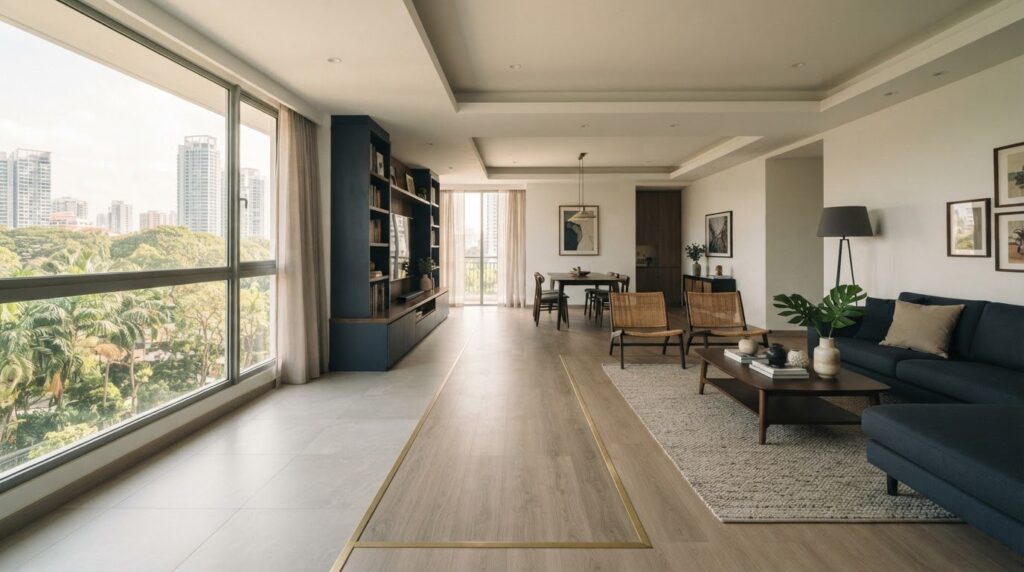
Vinyl may seem like the obvious answer for a humid Singapore home, but it isn’t automatically the best flooring for living room singapore households. Tiles may suit a busy family that wants a firm, easy-to-clean surface, while other materials may appeal if comfort, appearance or installation scope matters more. The right choice depends on how you use the room and what lies beneath the existing floor.
Moisture, scratches, cleaning and unexpected installation work are all worth considering. A sample can look right, yet the result may depend on the condition of the existing floor, household traffic and the product’s care requirements. Compare those factors alongside appearance to avoid choosing a finish that doesn’t fit your routine.
This guide compares common flooring choices for Singapore homes, including maintenance, durability and installation trade-offs. It also explains what to consider for your household and renovation scope, and what to confirm about site preparation, work requirements and an itemised quote before choosing a contractor. The aim is to help you build a shortlist that suits your home, not to recommend one material for everyone.
Key Takeaways
- The best flooring for living room singapore homes depends on household routines, existing floor conditions and how much maintenance you’re prepared to do.
- Compare vinyl, ceramic or porcelain tiles, laminate and engineered timber by cleaning needs, surface feel, repair considerations and installation suitability.
- Match each option’s trade-offs to your priorities. Busy households may value easy cleaning and documented wear guidance, while other needs can change the shortlist.
- Before choosing a material, ask the contractor to inspect the existing floor and itemise preparation, installation work and related requirements.
- A direct contractor can help clarify the scope and pricing breakdown. Check which services fit your plan, including vinyl flooring installation or tiling and masonry works.
Best flooring for living room Singapore homes: start with how you use the space
The right living-room floor depends on how your household uses the space, the condition of the existing floor and how much upkeep you’re willing to take on. A search for the best flooring for living room singapore homes shouldn’t start with colour alone. Consider durability, comfort underfoot, cleaning, appearance and the installation work required.
Singapore’s humidity makes it sensible to check how the product and installation method will suit moisture conditions at your home. That doesn’t mean every room needs the same flooring. A living room doesn’t face the same water exposure as a kitchen or bathroom, so don’t assume a material suitable for one area is automatically right for another.
Start by comparing material types and their characteristics. This comprehensive guide to flooring materials provides a broad overview. Your final choice should also reflect your home’s conditions and the installer’s assessment.
Which living-room conditions should guide your flooring choice?
Think through a normal week. Frequent foot traffic, children, pets and moved furniture can affect how a surface looks over time. Your cleaning habits matter too: decide whether you want a floor that’s quick to wipe or one that needs more careful maintenance. Then consider direct sunlight, spills, dampness and ventilation in the room. These observations can help narrow the options without assuming one material suits every home.
Ask the contractor to inspect the existing floor. Confirm whether it’s sound, level and suitable for the intended installation. If preparation is needed, clarify what work is included before comparing quotes.
What matters most in an HDB flat or condominium?
In an HDB flat or condominium, check the applicable building requirements before altering existing flooring. Confirm who you need to consult and whether approvals or other conditions apply to your planned work. Don’t rely on assumptions based on another unit or renovation project; requirements and site conditions can differ.
Review floor height and how the new finish will meet doorways, skirting, adjoining rooms and existing floor levels. These details can affect the installation scope and finished transitions. Ask the contractor to explain the proposed method and flag constraints before work begins. An approach that works in one unit may not suit yours.
Compare living-room flooring options for Singapore homes
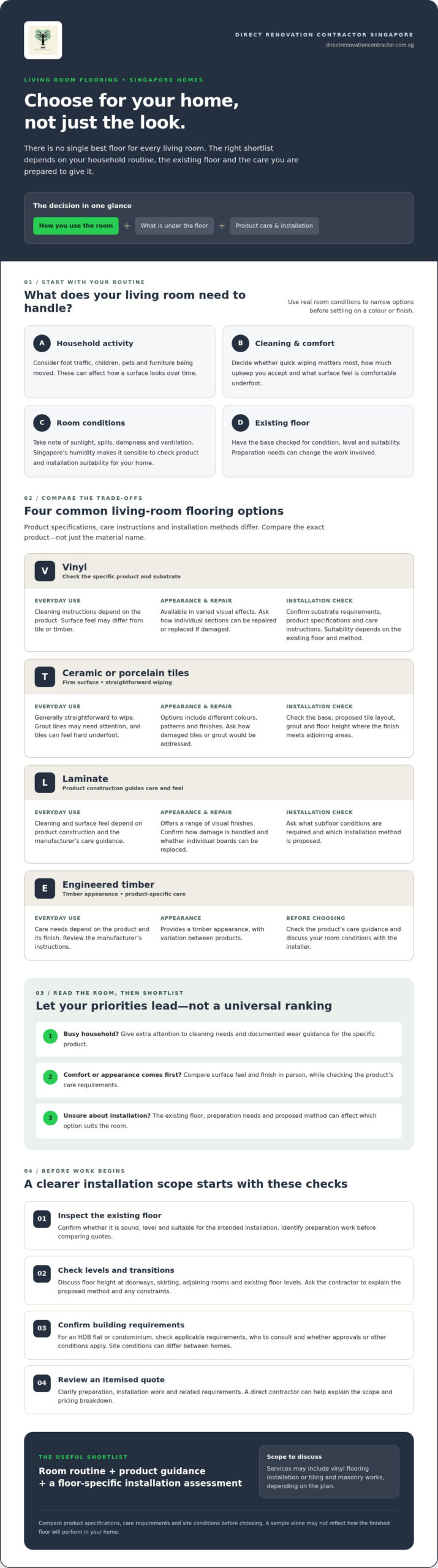
Use this comparison to narrow your shortlist, not to assume every product in a category performs the same way. Cleaning needs, surface feel and repair options vary by product, installation method and the condition of the existing floor. Ask for product specifications and care guidance before deciding.
| Flooring type | Everyday cleaning and feel | Visual options and repair considerations | Installation checks |
|---|---|---|---|
| Vinyl | Cleaning instructions depend on the specific product. The surface may feel different from tile or timber underfoot. | Available in varied visual effects. Ask how individual sections can be repaired or replaced if damaged. | Confirm substrate requirements, product specifications and care instructions. Suitability depends on the existing floor and installation method. |
| Ceramic or porcelain tiles | A firm surface that is generally straightforward to wipe. Grout lines may need attention, and tiles can feel hard underfoot. | Options include different colours, patterns and finishes. Ask how damaged tiles or grout would be addressed. | Check the condition of the base, proposed tile layout, grout and floor height at adjoining areas. |
| Laminate | Cleaning and surface feel depend on product construction and the manufacturer’s care guidance. | Offers a range of visual finishes. Confirm how damage is handled and whether individual boards can be replaced. | Ask what subfloor conditions are required and which installation method is proposed. |
| Engineered timber | Care needs depend on the product and its finish. Review the manufacturer’s instructions before choosing. | Provides a timber appearance, with variation between products. Ask about repair options for the specific construction. | Check the substrate and installation requirements. For a local reference, review BCA’s good industry practices for timber flooring. |
Vinyl flooring: where it may fit and what to check
Vinyl is a broad category, not a blanket promise of waterproofing or scratch resistance. Before selecting a product, ask about its wear layer, substrate requirements and care instructions. Confirm what preparation is included and how the installer will address uneven or unsuitable areas. Direct Renovation Contractor Singapore offers vinyl flooring installation; confirm the material options and installation approach for your project.
Tiles, laminate and engineered timber: compare the trade-offs
Tiles can suit households that prefer a firm, wipe-clean surface, but consider grout upkeep and whether the hard feel works for your family. Laminate and engineered timber vary by construction, so follow product-specific care guidance rather than relying on broad claims about moisture performance, lifespan or repair. Tiling and masonry works are among the company’s service categories. For any material, product quality, workmanship and site preparation affect the finished result.
For the best flooring for living room singapore homes, compare the actual product and installation scope, not just the material label. If vinyl or tile is on your shortlist, you can review flooring installation services and ask for an itemised breakdown of the proposed work.
Which living-room floor is best for your household? Compare the trade-offs
There isn’t one universal winner. The best flooring for living room singapore homes depends on what matters most to your household: quick cleaning, comfort underfoot, sound, appearance or how the floor connects with adjoining rooms. A busy household might put maintenance and documented wear guidance first. Someone who spends more time barefoot at home may weigh surface feel more heavily.
Use this matrix to compare priorities, then check product details with the contractor. A material label alone doesn’t confirm how a floor will perform in your home.
| Household priority | Potential benefit to look for | Limitation to consider | Question to verify |
|---|---|---|---|
| Frequent use and easier cleaning | A surface with clear, practical care instructions may make routine cleaning simpler. | Resistance to wear and spills varies by product and finish. | What wear and maintenance guidance does the manufacturer provide? |
| Children, pets or furniture movement | A product suited to your household’s everyday activity may help manage regular use. | Furniture feet, dragged objects and spills can affect surfaces differently. | What protection or care does the product guidance recommend? |
| Comfort and sound | A surface that feels comfortable to your household can make the room more pleasant to use. | Hard and softer-feeling finishes differ underfoot; sound can also vary with the product and installation. | Can you assess a sample in the room, and what installation details affect sound? |
| Visual continuity | Coordinating the floor with existing finishes can make adjoining spaces feel more consistent. | Colour and pattern can look different under the room’s lighting and beside existing surfaces. | How will the selected finish meet the adjoining floor and skirting? |
Best-fit flooring priorities for families, pets and frequent use
If the living room sees heavy daily use, start with the product’s documented wear guidance and care instructions. Ask how common spills should be cleaned and whether furniture feet or dragged items need special consideration. Don’t assume a material category is automatically scratch-proof or stain-proof. Check which cleaning products and methods are suitable for the specific product, so routine care follows its instructions.
Best-fit flooring priorities for comfort and a coordinated interior
Consider how the surface feels underfoot and sounds as people walk across it. A firm tile surface may not suit everyone’s comfort preference, while other finishes have their own product-specific characteristics. Compare samples beside your existing walls, furniture and adjoining flooring, ideally in natural and evening light. This keeps the decision grounded in your home rather than a display sample alone.
Before settling on a shortlist, ask the contractor to clarify product specifications, care requirements, repair implications and installation scope. That gives you a practical basis for comparing options without treating any single material as the automatic answer.
How to choose and prepare for living-room flooring installation
A sound flooring decision involves more than picking a material. Follow four steps: assess the existing floor, shortlist suitable options, confirm the scope in writing, then schedule installation once relevant property requirements and preparation are clear. This sequence helps identify practical issues before they affect the quote or work programme.
What should a flooring site assessment cover?
Ask the contractor to inspect the current surface for damage, unevenness, level changes and signs of moisture. They should also review transitions to adjoining floors, door clearances and skirting. If removal, levelling or other preparation is proposed, ask why it’s needed and what it involves. Confirm applicable building-management or official requirements for your property before agreeing to alter the floor.
For HDB work, check current HDB renovation guidance. Confirm requirements against current official information rather than relying on assumptions or advice from another unit’s project.
What should a clear flooring quotation include?
Request a written, itemised scope. It should identify the proposed material, measured area, surface preparation, installation work and finishing details, including transitions and skirting. Also confirm what’s excluded, how debris will be handled, the proposed timeline and payment stages, and how changes to the agreed scope must be approved.
Compare quotations using matching specifications and included work, not the headline total alone. One quote may include floor preparation or disposal while another excludes those items. Ask the contractor to explain differences before you decide. A direct contractor can help clarify the work scope and pricing breakdown without intermediary mark-ups, but the written details still matter.
- Assess: Record the existing floor condition, level changes and transition points.
- Shortlist: Select materials that fit your household priorities and site conditions.
- Confirm scope: Agree in writing on materials, preparation, finishing, exclusions and changes.
- Schedule: Set installation timing after checking relevant requirements and the agreed work sequence.
Clear preparation helps turn a material shortlist into a workable renovation plan. If vinyl flooring installation or tiling is under consideration, discuss your flooring installation scope and request an itemised breakdown before confirming the work.
Plan your living-room flooring with a direct renovation contractor
Once you’ve compared materials and identified your priorities, check whether your preferred option fits the property and renovation scope. A direct contractor can discuss flooring work without an interior-design intermediary and help clarify what’s included, what preparation may be needed and which details still require confirmation. Direct contracting can reduce intermediary mark-ups, but ask for a transparent, itemised quotation rather than relying on a general estimate.
Direct Renovation Contractor Singapore undertakes vinyl flooring installation and tiling and masonry works. These are service categories, not a recommendation that either material suits every home. Confirm the material options, installation methods and project availability for your requirements.
When can a direct contractor help with living-room flooring?
If flooring is part of a wider residential renovation, one contractor can help define how that work fits into the agreed project scope. Get clear answers about the proposed material, surface preparation, installation, finishing details and exclusions. A direct contractor can explain the work and pricing breakdown, while your material choice should still reflect household needs, site conditions and product guidance.
What to prepare before requesting a flooring quotation
Share the property type, living-room dimensions and what you know about the existing floor, such as visible damage, uneven areas or a previous finish. Name your preferred material category, if you have one, and describe daily use. For example, explain whether easy cleaning, comfort underfoot or frequent furniture movement matters most. This gives the contractor useful context; an inspection can confirm site-specific requirements.
Before proceeding, make sure you’ve considered the following:
- Priorities: List the cleaning effort, comfort and everyday-use needs that matter most.
- Floor condition: Note visible concerns and ask what preparation an inspection identifies.
- Material questions: Confirm product details, care guidance, installation method and finishing scope.
- Requirements: Check which approvals or building-management requirements apply to your property before work is scheduled.
A clear brief helps a contractor respond to your project rather than make assumptions. If you’re comparing the best flooring for living room singapore options and want to discuss your site conditions, discuss your flooring renovation requirements and request a scope-based quotation.
Make your flooring decision with a clear plan
The best flooring for living room singapore homes isn’t one material for everyone. Choose based on how your household uses the room, the condition of the existing floor and the maintenance you’re comfortable with. Before committing, check product care guidance and confirm preparation, finishing details and applicable property requirements in writing.
A clear scope also makes contractor quotations easier to compare. Direct Renovation Contractor Singapore undertakes vinyl flooring installation and tiling and masonry works. Its direct-contractor model focuses on transparent pricing without middleman mark-ups. Confirm the material options and installation details for your project, then request an itemised quotation that sets out the work involved.
Ready to discuss your flooring plans? Request a clear flooring renovation quotation and share your property type, room dimensions, floor condition and priorities. Confirm the key details before work begins so you can proceed with a practical choice and a clear renovation scope.
Frequently Asked Questions
What is the best flooring for a living room in Singapore?
The best flooring for living room singapore homes depends on household routines, existing floor condition, maintenance preferences and the specific product’s verified specifications. Vinyl, tiles, laminate and engineered timber each have different trade-offs. Compare manufacturer care instructions and installation requirements, then ask a contractor to assess your living room. The assessment can help identify whether the existing surface is suitable and what preparation may be needed.
Is vinyl flooring suitable for a living room in Singapore?
Vinyl can be a practical option to consider, but its suitability depends on the exact product, the subfloor, the proposed installation method and how your household uses the room. Don’t assume every vinyl floor has identical performance or care requirements. Review the manufacturer’s product information and cleaning guidance. A site assessment can identify whether the existing surface is appropriate and whether preparation should be included in the installation scope.
Are tiles or vinyl better for a living room?
Neither tiles nor vinyl is automatically better for every household. Tiles provide a firm, hard surface, while vinyl products vary in construction, surface feel and maintenance requirements. Compare how each option fits your cleaning routine, comfort preferences, appearance goals and existing floor conditions. Before deciding, ask for product-specific information and a written quotation that clarifies preparation, installation and finishing. Matching the scope makes it easier to compare contractors fairly.
Can new flooring be installed over existing living-room tiles?
It may be possible, but the existing tiles must be assessed for condition, level, moisture concerns and suitability for the proposed flooring system. An overlay can also change floor height, affecting door clearances and transitions to adjoining rooms. Ask a contractor to inspect the surface and explain whether preparation is required. Get the proposed method, finishing details and exclusions recorded in writing before agreeing to the work.
How do I choose flooring for an HDB living room?
Start by checking the current floor and listing your household priorities, such as cleaning effort, comfort and appearance. Compare product-specific guidance for the materials you’re considering, then ask contractors to assess the room. Before renovation work, confirm applicable HDB requirements using current official guidance. Request a written quotation that identifies preparation, installation, finishing details, exclusions and relevant approvals, so you know what the proposed scope covers.
How much does living-room flooring installation cost in Singapore?
The total depends on the measured area, selected material, existing floor condition, preparation needs, finishing details and quotation scope. Ask whether removal, levelling, skirting, debris disposal and related work are included or excluded. Compare itemised quotations with equivalent materials and specifications rather than relying on headline totals alone. Have changes or additional work explained and approved in writing before proceeding, so the agreed scope remains clear.
How long does it take to install living-room flooring?
The schedule depends on room size, chosen material, existing floor condition, preparation work and the contractor’s work plan. Ask for the expected sequence and timeline after the site assessment, including preparation or finishing stages. Confirm how long access to the living room may be affected and when furniture can be moved back. Follow the product instructions and contractor guidance rather than assuming the room is ready immediately after installation.