
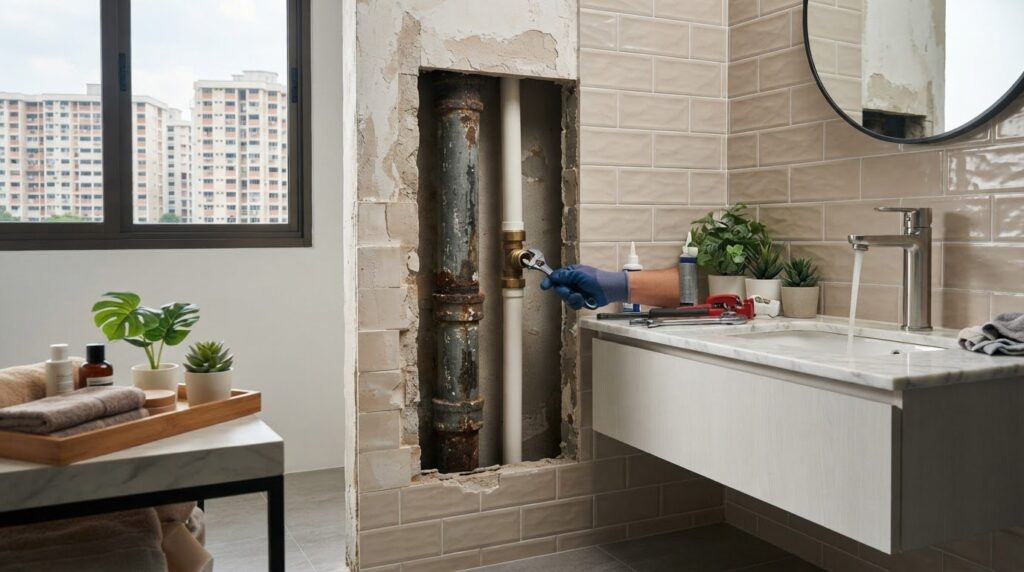
Pipe replacement isn’t automatically required just because an HDB flat is resale. Older resale flats built before the mid-1990s were fitted with concealed galvanized iron water pipes, and replacing old pipes in a resale HDB is worth planning for when the flat is around 20 to 30 years old. Low water pressure can also signal plumbing issues, so the pipe condition matters as much as the flat’s age.
It’s understandable to worry that opening walls or floors during renovation could uncover extra work. A clear assessment can distinguish ageing pipes that need attention from a wider plumbing overhaul, and show how pipe work may affect your renovation budget.
This guide explains warning signs to look for, what to review about previous plumbing work, and how to assess replacement costs if hidden problems emerge. It also covers the piping requirements that apply in HDB flats, so you can plan what needs attention and why.
Key Takeaways
- Use the flat’s age and pipe material as starting points, then look for warning signs such as low water pressure and evidence of previous plumbing work.
- Build your renovation budget around the actual scope of repiping, and allow a contingency for problems uncovered during demolition.
- Understand the difference between sanitary branch pipes within the flat and the main sanitary pipes, as maintenance responsibility differs.
- Plan replacement work around the applicable piping standards and materials for the relevant water or waste lines.
- Include plumbing condition in your renovation planning so pipe work can be coordinated with other works in the flat.
Ageing GI water-pipe corrosion and replacement
Older resale HDB flats built before the mid-1990s were fitted with concealed galvanized iron water pipes. Age, pipe condition and renovation plans help determine whether replacement should be considered.
Corrosion in Ageing GI Pipes
Corrosion is the gradual deterioration of iron inside a galvanized pipe as its protective zinc coating wears away. As corrosion builds, rust and deposits can narrow the water passage. In an HDB flat, these pipes form part of the water supply system, so restricted flow can affect everyday use. Concealed pipes may deteriorate out of sight, making their age and history useful clues.
Age alone doesn’t mean every pipe needs replacing. However, resale flats may retain plumbing installed decades ago, including pipes that previous owners never updated. Low water pressure can indicate a plumbing problem, but doesn’t identify the cause. The issue could involve one section or a wider part of the supply system.
Use the flat’s age as a planning prompt, not a diagnosis. Pipe replacement may be worth considering as part of renovation planning, depending on the pipes’ condition. Another planning recommendation is to consider fresh piping in resale flats older than 20 to 30 years. These are useful renovation benchmarks, but the actual pipe condition and scope of work still matter.
Replacing Ageing GI Pipes
Replacement involves removing or bypassing ageing sections and installing new water-supply piping. An isolated repair may leave other deteriorated sections in place. A leak at one joint, for instance, doesn’t prove that every concealed pipe has failed, but visible age and recurring problems may justify assessing a broader replacement.
Start by finding out what the previous owner changed. Review renovation records, receipts or handover notes for repiping details. Then map the affected supply points, such as kitchen and bathroom taps, and note any differences in water pressure. This gives the plumber a clearer picture of whether the concern is local or affects several outlets.
Replacement planning also involves material and access decisions. Grade 304 or 316 stainless steel is recommended for cold-water supply lines in Singapore renovation projects. The route may follow existing pipe paths or require a different installation approach, depending on access and the flat’s layout. Concealed pipes can require more opening and reinstatement work than exposed sections.
Replacing old pipes in a resale HDB is often easiest to plan alongside renovation work, when concealed routes are already under consideration. Before deciding, compare the pipe history, symptoms and proposed scope. Base the decision on the condition of the water-supply system, not the flat’s age alone.
Budgeting for pipe replacement and other hidden costs
Set aside a plumbing allowance based on the required work, not just visible leaks. In a resale HDB renovation, demolition may reveal concealed problems that change the original scope.
Budgeting for Pipe Replacement
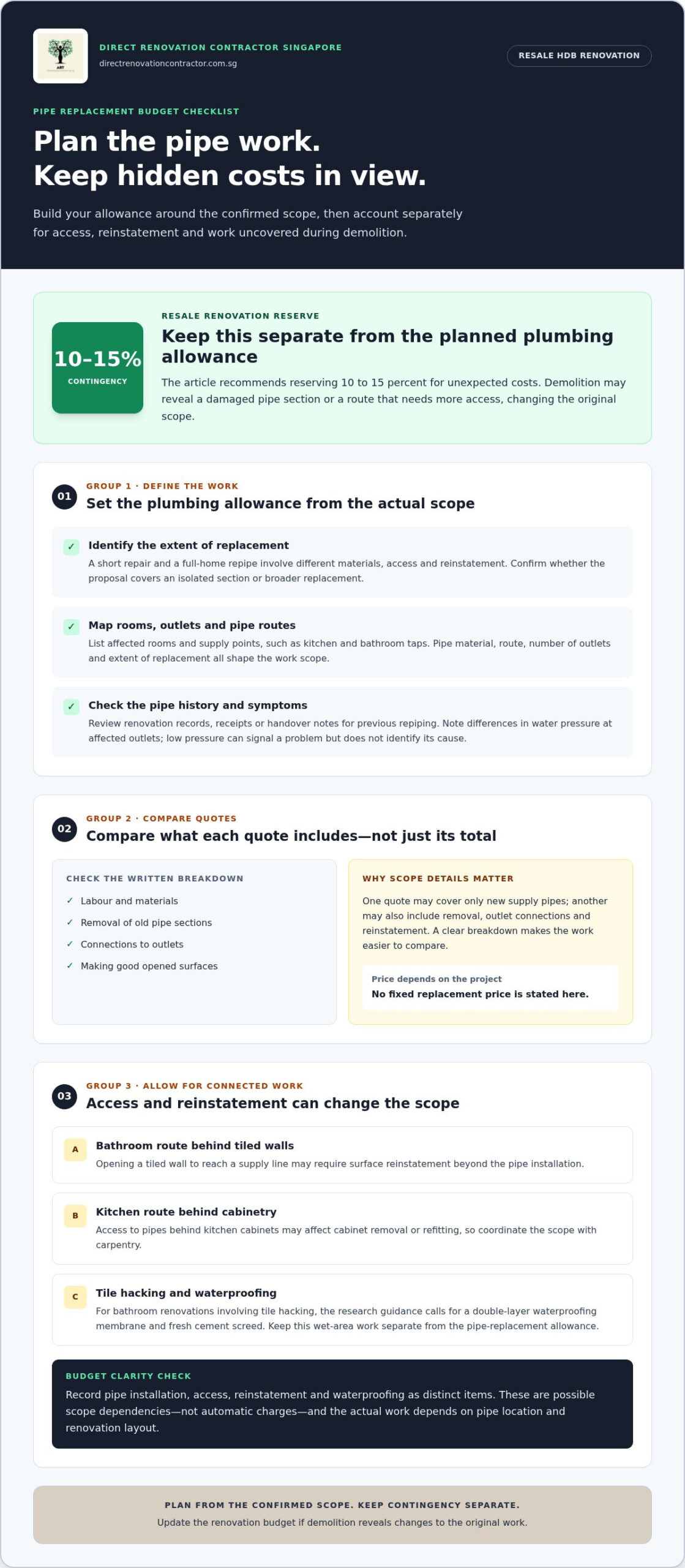
A pipe-replacement budget should cover the confirmed piping scope and connected work. A short repair and a full-home repipe involve different materials, access and reinstatement. The price depends on the project and is provided after a quote request. Pipe material, route, number of outlets and extent of replacement all shape the scope.
Compare quotes by checking exactly what each includes. One may cover only new supply pipes, while another may include removing old sections, connecting outlets and making good opened surfaces. Ask for a written breakdown of labour, materials and reinstatement. This makes it easier to compare the work, not just the headline totals.
Separate plumbing costs from related renovation allowances. Replacing pipes behind kitchen cabinets, for example, may affect access and carpentry coordination. Pipes routed through tiled bathroom walls may require additional surface reinstatement. A clear scope identifies affected rooms, supply points, pipe routes and the work included after installation.
For a resale renovation, reserve a contingency of 10 to 15 percent for unexpected costs. Keep this separate from the planned plumbing allowance. That way, if demolition reveals a damaged pipe section or a route requiring more access, the revised work doesn’t immediately consume funds allocated to other essentials.
Other Hidden Costs
Hidden costs are additional renovation expenses revealed by site conditions or connected work. Pipe replacement may involve more than installing new piping. Once demolition exposes a concealed route, the work could require extra access, surface reinstatement or coordination with nearby fixtures.
For example, opening a tiled bathroom wall to reach a supply line can create reinstatement work beyond the pipe installation. A kitchen pipe route may pass behind cabinetry, so access can affect cabinet removal or refitting. These are possible scope dependencies, not automatic charges. The actual work depends on pipe location and renovation layout.
Include related wet-area work as a separate budget item if tile hacking is planned. For bathroom renovations involving tile hacking, the research guidance calls for a double-layer waterproofing membrane and fresh cement screed. This is separate from replacing a water-supply pipe, so combining both tasks in one allowance can obscure what each part covers.
Before approving work, list the affected rooms and identify pipe installation, access, reinstatement and waterproofing separately. Record any changes after demolition and update the renovation budget against the original scope. For a clearer project plan, resale renovation planning can help align plumbing work with related renovation tasks.
Assessing the condition of old pipes
Assess plumbing by combining its history, visible symptoms and a physical inspection. Age alone cannot show whether a particular pipe is leaking or restricted, so consider the whole supply system and its repair history.
Responsibility depends on which pipe is leaking. Residents maintain sanitary branch pipes within their flats, while the Town Council maintains the main sanitary pipes. If a leak appears near a neighbour’s flat, first identify whether it comes from that flat’s branch or a shared main, then determine who handles the affected pipe.
Before completing an HDB resale purchase, ask what plumbing work previous owners carried out and review available renovation records. Look for repiping details, repair receipts and notes about recurring leaks. Check taps and showers throughout the flat for low water pressure, and inspect visible pipes, joints and nearby surfaces for damp patches or water marks.
Compare outlets rather than relying on one tap. If kitchen pressure is weak but bathroom pressure seems normal, for example, record the difference for the assessment. Note it too if several outlets show similar problems. These observations help describe the issue, but don’t establish its cause or prove that every pipe needs replacing.
Use a practical inspection checklist during the viewing:
- Record which taps and showers have low pressure, including whether the problem affects one room or several.
- Look beneath sinks and around exposed joints for dampness, corrosion marks or signs of earlier patch repairs.
- Check bathroom and kitchen walls near plumbing routes for water stains or bubbling finishes.
- Ask which sections were replaced, when the work took place and whether records show its scope.
Concealed pipes need more than a visual check. A contractor can assess accessible pipe sections, trace likely routes and consider the findings alongside the flat’s plumbing history. This is useful when renovation plans may involve opening tiled walls, flooring or cabinetry. The assessment can distinguish a repair to one connection from work involving a wider pipe route.
Keep your notes specific. Record the affected outlet, symptoms, visible moisture and previous work connected to that area. For example, “low pressure at the kitchen tap, with no visible leak beneath the sink” gives a clearer starting point than “old plumbing.” This helps the contractor assess the pipe condition and define the relevant scope.
Include plumbing observations in your purchase review, then arrange a pipe assessment before finalising renovation decisions. This connects information gathered during the sale with the actual condition of the HDB flat’s supply lines. It also helps separate confirmed symptoms from assumptions about concealed pipes.
Piping works guidelines
Pipe work in an HDB flat depends on the pipe’s purpose, route and material. Plan the installation according to the relevant requirements and who maintains each pipe.
Concealed pipes can often be replaced without hacking every room. Plumbers can use accessible routes and open only the areas needed to reach connections and complete the installation.
A whole-house stainless-steel repiping job has been advertised as taking 1-2 working days at most. Owners should still expect noise, temporary water interruptions and access restrictions around the work area.
Work Requiring a PUB Licensed Plumber
A PUB Licensed Plumber is the appropriate professional for work on an HDB flat’s water-supply pipes. Supply lines connect to the home’s water system, so the scope must suit the pipe material and route. Gas-pipe adjustments require a licensed gas worker, a separate requirement from water-pipe work.
For cold-water supply lines, Grade 304 or 316 stainless steel is recommended for Singapore renovation projects. The choice should be stated clearly in the work scope, alongside the affected outlets and pipe route. Don’t confuse water-supply piping with sanitary branch waste pipes, which carry used water away from fixtures.
Replacement branch waste pipes should comply with SS 213. Residents maintain sanitary branch pipes inside their flats, while the Town Council maintains the main sanitary pipes. Identifying which pipe is involved helps direct the work correctly. A leaking branch pipe and a problem in a main sanitary pipe are not the same repair.
Replacing Concealed Pipes
Replacing concealed pipes means accessing their route and installing new piping without demolishing every floor or wall. The plumber can assess whether an exposed route along a wall or ceiling will work, or whether targeted openings are needed. The pipe’s position and the flat’s layout determine how much surface access the job requires.
For example, a new line may run visibly along a bathroom wall, avoiding extensive tile removal. If a connection is behind tiled finishes, a small, focused opening may be needed, followed by reinstatement. Before installation, the work plan should identify the route, access points and affected surfaces.
Replacement Time and Disruption
Replacement time depends on the pipe route, number of connections and access conditions. A whole-house stainless-steel repiping job has been advertised as taking 1-2 working days at most, but that example doesn’t include every possible repair or reinstatement task.
Clear access to kitchen and bathroom outlets helps the plumber reach connections. Plan for possible temporary water interruptions and keep belongings away from opened surfaces. If bathroom tile hacking is part of the renovation, the work also requires a double-layer waterproofing membrane and fresh cement screed.
Coordinate pipe installation with tiling and masonry when both are planned. Completing access and pipe connections before reinstating surfaces reduces the risk of reopening finished areas. Document the agreed pipe route, material and affected rooms so installation and follow-on work stay aligned.
Which pipe replacement works must be done by a PUB licensed plumber in Singapore?
Before arranging pipe replacement, identify whether the work concerns water supply, sanitary waste or gas. Each system has a different function, and gas-pipe adjustments have separate requirements from water and waste piping.
For domestic water-supply pipe replacement in an HDB flat, engage a PUB Licensed Plumber. This assigns installation and connection work to a plumbing professional familiar with home water lines. The scope should clearly state the route, materials and affected outlets.
Separate water-supply work from sanitary branch pipe work. Supply pipes bring water to taps and other outlets; sanitary branch pipes carry wastewater away from fixtures. Replacement branch waste pipes should comply with SS 213. Residents maintain sanitary branch pipes within their flats, while the Town Council maintains the main sanitary pipes.
Gas lines are a separate category. In HDB flats, a licensed gas worker must carry out gas-pipe adjustments. A water-pipe plumber’s role doesn’t replace this requirement. For example, a renovation involving a new kitchen water line and an adjusted gas pipe includes two different types of work.
Before work starts, identify the pipe and the intended change. The scope should state whether it covers:
- Cold-water supply lines serving kitchen or bathroom outlets.
- Sanitary branch waste pipes serving sinks or other fixtures.
- Gas-pipe adjustments associated with a kitchen layout change.
For cold-water supply lines, Grade 304 or 316 stainless steel is recommended for Singapore renovation projects. For branch waste pipe replacement, SS 213 is the relevant stated standard. Listing the pipe type, material and affected outlets helps prevent confusion between separate systems.
Also identify whether the problem lies within the flat or in a main sanitary pipe. Residents maintain sanitary branch pipes inside their HDB flat, while the Town Council maintains main sanitary pipes. This distinction helps direct the repair to the correct pipe section and responsible party.
In a kitchen renovation, replacing a cold-water line is different from changing a waste connection or adjusting a gas pipe. Set out each task separately, then coordinate access and reinstatement around the relevant work. This avoids treating all pipes as one job and clarifies who handles each part.
Plan the pipe scope alongside the renovation work, including any access openings and surface reinstatement. Plan your HDB plumbing and sanitary works with the pipe type and affected areas clearly defined.
Direct Renovation Contractor Singapore: HDB BTO Renovation Packages
Direct Renovation Contractor Singapore helps homeowners coordinate renovation work, including planning around pipe replacement in a resale flat. Its HDB Resale Renovation Packages suit owners planning broader upgrades alongside plumbing and sanitary work.
The company’s DIY renovation approach provides 3D drawings and a curated list of direct contractors and material suppliers, helping homeowners manage project decisions and work coordination. This approach can suit owners who want to organise renovation tasks around a defined scope, including pipe access and reinstatement. HDB BTO Renovation Packages are available for new flats, while resale owners can consider the resale package for their home.
Contact Direct Renovation Contractor Singapore to discuss your resale renovation plans.
Plan the Next Renovation Decision with Confidence
A plan for replacing old pipes in a resale HDB should account for how plumbing fits with the rest of your renovation. Before work begins, decide which rooms may need access and how pipe installation, surface reinstatement and other planned upgrades will be coordinated. A clear scope keeps decisions practical as the project moves forward.
Direct Renovation Contractor Singapore offers HDB Resale Renovation Packages for resale homeowners planning a broader renovation. It also offers HDB BTO Renovation Packages and Condo Renovation Packages. Its DIY renovation approach provides 3D drawings and a curated list of direct contractors and material suppliers to help homeowners manage project decisions.
If you’re ready to plan the renovation around your home’s needs, contact Direct Renovation Contractor Singapore to discuss the next step. A clear plan gives you a practical starting point for moving ahead.
Frequently Asked Questions
Resale HDB Plumbing & Electrical Overhaul: When Is Rewiring and Pipe Replacement Mandatory?
Flat age is a planning signal, not a blanket legal trigger for every home. An overhaul matrix classifies flats above 20 years old as requiring plumbing pipe replacement and electrical rewiring, while flats under 10 years old have these works marked optional. For flats aged 10 to 20 years, rewiring is particularly relevant when adding high-wattage appliances. Check previous work records before deciding what the flat needs.
When should old pipes in a resale HDB flat be replaced?
Consider replacement when inspection finds deterioration, recurring leaks or plumbing problems, rather than relying on age alone. Flats older than 20 to 30 years are a planning point for fresh piping, and older flats may still have original pipes. Low water pressure can indicate a plumbing issue. Review past repairs and the affected outlets to help distinguish a local fault from a wider replacement need.
How much does it cost to replace water pipes in a resale HDB flat in Singapore?
The cost depends on the scope and is provided after a quote request. Key factors include whether the work covers one section or multiple supply lines, pipe material, route and access, the number of outlets, and any surface reinstatement. A kitchen line behind cabinetry, for example, may require different access work from an exposed pipe. Compare quotes based on the work each includes, not just the total.
What is the cost to replace sanitary and waste pipes in a resale HDB flat?
The cost depends on the pipe route, affected fixtures, access and reinstatement, and is given after a quote request. First distinguish a sanitary branch pipe inside the flat from a main sanitary pipe. Residents maintain branch pipes in their flats, while the Town Council maintains main sanitary pipes. That distinction helps define the work scope. Replacement branch waste pipes should comply with SS 213.
Does HDB require approval or a permit to replace pipes in a resale flat?
Plan the work according to the pipe type and renovation scope, rather than treating all pipe changes as one task. Water-supply lines, sanitary branch waste pipes and gas-pipe adjustments involve different requirements. Replacement branch waste pipes should comply with SS 213, and gas-pipe adjustments in HDB flats must be done by a licensed gas worker. Include any pipe access and surface work in the renovation plan.
What pipe materials are approved for HDB flats in Singapore?
For cold-water supply lines in Singapore renovation projects, Grade 304 or 316 stainless steel is recommended. That recommendation doesn’t mean the same material applies to every pipe system. Waste lines carry used water, and replacement branch waste pipes should comply with SS 213. Specify whether the work concerns a supply line or waste pipe, then match the material and standard to that system.
What are the risks and signs of old or leaking pipes in a resale HDB flat?
Corrosion can narrow an ageing galvanized iron pipe and restrict water flow. Low pressure at a tap or shower can signal a plumbing issue, while damp patches, water stains or a recurring leak may indicate nearby moisture. These signs don’t identify the exact fault by themselves. Record which outlets are affected and where marks appear, then use those observations to guide a pipe assessment.
Should buyers replace old pipes before moving in or wait until renovation?
If inspection or repair history points to replacement, planning before moving in can make access and reinstatement easier to coordinate. During renovation, pipe routes may be more accessible before new cabinets, tiles or finishes are installed. If there are no symptoms or concerning history, record the pipe condition and include it in renovation planning. Base the decision on the actual condition and intended scope, not age alone.