
HDB renovation in Singapore involves rules homeowners need to understand before work begins. Some work requires an HDB permit and some does not. Only HDB-registered renovation contractors can apply, and processing takes approximately three working days. Knowing the requirements early helps you plan the work in the right order.
Permits are only one part of planning. Renovation can affect your budget, daily routine and neighbours, while choices such as flooring, carpentry and bathroom materials need to suit the flat and the work involved. A clear scope helps you manage these decisions.
This guide explains HDB renovation rules, what flat owners are responsible for, and how to plan materials, furnishings, neighbour communication and temporary accommodation. It also covers how a renovation contractor can help organise the work, so you can make informed decisions before work starts.
Key Takeaways
- Separate permit-required work from work that doesn’t need a permit, and factor HDB’s application processing time into your schedule.
- Read HDB’s renovation guidelines and stay involved: flat owners are responsible for ensuring the work follows them.
- Choose furnishings and materials around your flat’s layout, day-to-day use and maintenance needs, not appearance alone.
- Plan noisy work within permitted hours, notify neighbours about disruption, and arrange a temporary stay if the renovation makes your home difficult to use.
HDB renovation permits and regulations
Before renovating an HDB flat in Singapore, find out which work requires a permit and what hours apply to noisy work. Confirm the scope and schedule before setting a start date.
Renovation Guidelines and Permits
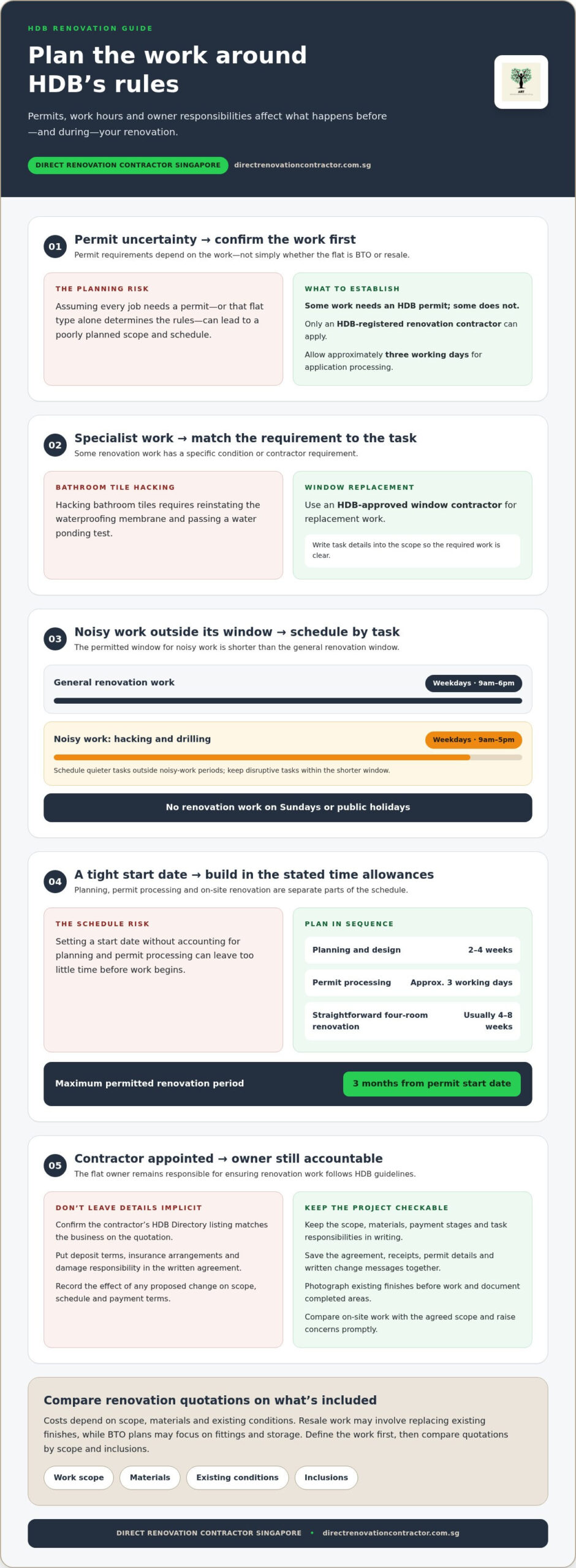
An HDB renovation permit is approval required for certain work in a flat. Some work needs a permit; other work doesn’t. Applications take approximately three working days to process, and only HDB-registered contractors can apply. Bathroom tile hacking requires reinstating the waterproofing membrane and passing a water ponding test. HDB-approved window contractors must carry out window replacement. The maximum permitted renovation period is three months from the permit start date.
Permitted Renovation Hours
Permitted renovation hours are the time windows when work may take place in an HDB flat. Renovation work is permitted on weekdays from 9am to 6pm, with no work allowed on Sundays and public holidays. Noisy work, including hacking and drilling, is restricted to weekdays from 9am to 5pm. Schedule quieter tasks outside noisy-work periods, and keep disruptive tasks within the shorter window.
BTO and Resale Renovation Rules and Costs
BTO and resale renovation rules govern work in new and previously occupied HDB flats. Permit requirements depend on the work, not simply the flat type. HDB renovation costs depend on scope, materials, and existing conditions. Resale work may involve replacing existing finishes, while BTO plans may focus on fittings and storage. Homeowners planning HDB renovation in Singapore should define the work first, then compare quotations by scope and inclusions.
Checking Contractor HDB Licensing
HDB registration means a contractor is listed to handle work requiring an HDB permit. Search HDB’s Directory of Renovation Contractors by business name and match the listing to the business on the quotation. Keep the scope and payment stages in writing to reduce scam risks. A straightforward four-room renovation usually takes four to eight weeks. Planning and design takes 2-4 weeks before permit application, followed by approximately three working days for processing.
Flat owners’ responsibility for renovation work
Flat-owner responsibility means the homeowner remains accountable for renovation compliance in their HDB flat. HDB flat owners must ensure contractors follow HDB guidelines. What renovation deposit, insurance, and damage-liability rules apply? Set out deposit terms, insurance arrangements, and responsibility for damage in the written agreement before work starts. Treat these as contract details, not substitutes for following HDB requirements.
The Housing & Development (Renovation Control) Rules date from 2006 and require owners to engage contractors from HDB’s Directory of Renovation Contractors. HDB advises owners to read its renovation guidelines before work begins. For HDB renovation in Singapore, homeowners need to know their role continues after appointing a contractor. Keep the work scope and permit details accessible throughout the project.
Use the written scope to check progress. It should describe the work, materials, payment stages and who handles each task. For example, specify whether bathroom tile hacking includes reinstating the waterproofing membrane and completing the water ponding test. Comparing work on site with the agreed plan helps you spot changes early.
Keep project records together: save the agreement, receipts, permit information and written messages about changes. Photograph existing finishes before work starts, then document completed areas. If there is a concern about damage to a fixture or common area, dated photographs and written updates can help clarify what was observed and when. Raise concerns promptly and keep the response.
Before approving a change, record its effect on the scope, schedule and payment terms. HDB renovation in Singapore involves responsibilities beyond choosing finishes: owners must ensure work follows HDB guidelines. Clear records help you track decisions and resolve misunderstandings during the renovation.
A documented plan helps keep those responsibilities visible. HDB renovation planning support can help homeowners organise the proposed work before it begins.
Furniture, decor, and material selection
Furniture is the movable equipment that supports daily activities, such as a dining table or bed. Measure each room and map walking routes before choosing pieces. In an HDB bedroom, compare wardrobe depth with door swings and access to windows. Keep frequently used storage easy to reach, and avoid buying large items before confirming their delivery path.
Decor includes visual finishes and accessories that personalise a home. Choose colours and lighting in relation to fixed finishes, not in isolation. A warm wall colour may look different beside cool-toned floor tiles. Bring samples into the flat and view them under the room’s actual lighting before making final selections.
Materials are the surfaces and components used in fixed renovation work. Compare cleaning needs, expected wear and suitability for each room. Kitchen surfaces face spills and frequent cleaning, while bathroom finishes encounter regular moisture. Record each selected product and finish alongside its installation location to avoid substitutions that change the planned result.
HDB flats typically have ceiling heights of 2.6 metres. Measure from floor to ceiling before choosing tall wardrobes, shelving, or ceiling-mounted lighting. Check that furniture proportions leave practical clearance and don’t obstruct doors, windows, or access to switches. For built-in carpentry, settle storage needs and appliance dimensions before finalising the layout.
Environmental and water-efficiency labels can help when comparing products. The Singapore Green Labelling Scheme is administered by the Singapore Environment Council. For water fittings, the WELS label rates water efficiency, with more ticks indicating higher savings. Compare labelled options with your household’s expected use, then record the chosen model in your selections.
Finish with a coordinated schedule of furnishings and materials. List each room, item, finish, and required measurement. Mark what must be installed before other items, such as flooring before movable furniture. This simple sequence helps prevent purchase decisions from clashing with carpentry, tiling, or the usable space in your HDB flat.
Neighbour communication and temporary accommodation
Neighbour communication means sharing renovation timing and likely disruption with nearby residents. Tell immediate neighbours before noisy work begins, especially those beside, above and below your flat. Share the planned start date, likely noisy tasks and a way to raise concerns. This gives residents useful context without promising that disruption will disappear.
In HDB blocks, hacking and drilling can be heard beyond your unit. Schedule these tasks within permitted noisy-work hours. Explain the work sequence plainly, such as hacking before tiling. Update neighbours if the sequence changes, and keep messages factual and brief. Don’t leave notices in common areas where they could obstruct access.
Temporary accommodation means staying elsewhere while renovation makes essential rooms unusable. Decide based on which facilities the work affects, rather than the word renovation alone. A kitchen refit may disrupt meal preparation; bathroom work may remove washing facilities. If bedroom, bathroom and cooking access remain practical, some households may be able to stay home.
Map the work by room before deciding. Mark when workers need clear access to bedrooms, the kitchen, bathroom or entry. Consider children, older residents, pets, work-from-home needs and daily travel. Compare staying in the flat with staying with family or arranging temporary lodging. Factor in travel to work or school, moving essentials and returning to supervise deliveries. Keep valuables and daily medication accessible.
- Tell neighbours which tasks may cause noise, such as drilling or tile hacking.
- Keep the renovation schedule and a contact method easy to find.
- Plan meals, bathing, sleep, and work around rooms affected by each stage.
Set out the schedule and household needs before work starts. Plan your HDB renovation schedule around the work and daily routines.
Direct Renovation Contractor Singapore: HDB BTO Renovation Packages
Direct Renovation Contractor Singapore offers HDB BTO Renovation Packages for homeowners planning work in a new flat, and HDB Resale Renovation Packages for owners updating an existing home. These are practical options once you have defined the scope and want help organising the work.
For homeowners who prefer to manage their own project, the company’s DIY renovation approach provides 3D drawings and a curated list of direct contractors and material suppliers. This can help you plan how different work stages and materials fit together, while keeping project decisions in your hands.
Consider the BTO package for a new HDB flat or the resale package when an existing home needs updating. To discuss your renovation plans, contact Direct Renovation Contractor Singapore or visit directrenovationcontractor.com.sg.
Set Your Renovation Plan in Motion
Use your renovation plan to turn choices into a workable sequence. Decide which rooms matter most, what needs to be built or replaced, and how the finished home should support your daily routine. A clear scope keeps decisions practical and gives each stage a defined purpose.
For HDB renovation in Singapore, the flat type and project scope shape the work ahead. Direct Renovation Contractor Singapore offers HDB BTO Renovation Packages, HDB Resale Renovation Packages and Condo Renovation Packages. Choose the option that suits your home and discuss the work you want to plan.
Contact Direct Renovation Contractor Singapore to discuss your renovation plans. With a clear scope and a practical next step, you can move forward with confidence.
Frequently Asked Questions
What HDB renovation works require a permit in Singapore?
Permit requirements depend on the type of work, and some HDB renovation work does not require a permit. Bathroom tile hacking requires reinstating the waterproofing membrane and passing a water ponding test. HDB-approved window contractors must carry out window replacement. Before finalising the schedule, list each task separately so you don’t overlook work that needs a permit.
How do homeowners apply for HDB renovation permits, and what documents are needed?
Only HDB-registered renovation contractors can apply for an HDB renovation permit, and processing takes approximately three working days. Prepare a clear description of the proposed work and any relevant plans or drawings. Keep the contractor and flat details with your project records. This makes it easier to track the application and align the planned start with permit processing.
What are HDB renovation rules for hacking walls, flooring, and structural works?
Hacking and structural changes need careful planning because permit requirements depend on the work involved. Don’t assume a wall can be removed simply because it appears to divide two rooms. Specify the wall, floor or structural work before scheduling it, and have the HDB-registered contractor handle any required permit application. For bathroom tile hacking, the waterproofing membrane must be reinstated and pass a water ponding test.
What are the permitted renovation hours and noise restrictions in HDB flats?
Renovation work is permitted on weekdays from 9am to 6pm, with no work allowed on Sundays and public holidays. Noisy work, such as hacking and drilling, is restricted to weekdays from 9am to 5pm. Build the sequence around those windows: schedule noisy work earlier, then use the remaining permitted time for quieter tasks, such as installation or painting.
What must homeowners do to protect neighbours and common areas during HDB renovations?
Reduce disruption by informing nearby residents about the work schedule and keeping shared spaces clear. Tell neighbours when noisy tasks are planned and provide a way to raise concerns. Coordinate material deliveries so items don’t block corridors or lift access. Ask workers to manage debris and keep common areas tidy. Address any damage promptly and document it with dated photographs.
What are common HDB renovation scams and how can homeowners avoid them?
The material does not identify common scam types. To reduce scam risks, check that the contractor is listed in HDB’s Directory of Renovation Contractors and record the work scope and payment stages in writing.