
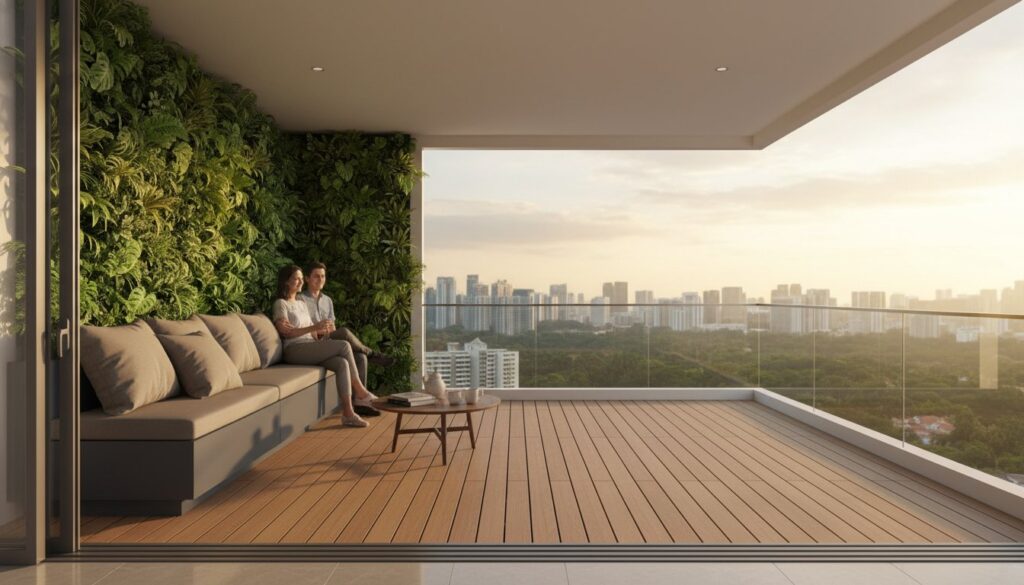
Your condo balcony shouldn’t just be a place to hang laundry or store a bicycle. It’s valuable square footage that should function as a seamless extension of your living room. Most homeowners hesitate to start because they’re worried about breaking strict MCST rules or getting hit with high markups from interior design firms. Finding the right balcony renovation ideas for condo units in Singapore requires more than just a Pinterest board. It demands a solid understanding of technical execution and tropical weather-resilience. We agree that you deserve a beautiful outdoor sanctuary without the unnecessary “design fee” fluff often added by intermediaries.
This 2026 guide provides the technical roadmap you need to renovate with confidence. You’ll learn how to transform your balcony into a durable, weather-proof space that stands up to Singapore’s intense heat and sudden downpours. We promise to show you how to follow management guidelines and select high-performance materials like wood-plastic composite (WPC) decking while dealing directly with the experts. We’ll preview the essential steps for regulatory compliance, provide transparent advice on material durability, and share practical ways to maximize your floor area while staying within legal limits.
Key Takeaways
- Learn why shifting from a “utility mindset” to a “living space mindset” is the first step in maximizing your condo’s usable square footage.
- Explore technical balcony renovation ideas for condo projects that integrate built-in furniture and vertical greenery without violating management by-laws.
- Identify the critical flooring and weatherproofing standards required to protect your outdoor space from Singapore’s extreme heat and rain.
- Understand how to navigate MCST approval processes and facade restrictions to avoid costly delays or the need for rework.
- Learn how the direct contractor model removes intermediary markups to provide transparent pricing and better technical oversight of your project.
Maximising Your Condo Balcony: Beyond the Utility Area
Many Singapore homeowners treat their balcony as a secondary utility area. It often becomes a graveyard for laundry racks and bulky storage boxes. This perspective wastes valuable square footage in a city where space is a premium asset. When considering What is a Balcony? in the context of high-density living, it’s best to view it as a high-value extension of your home rather than an architectural afterthought. Shifting this mindset is the first step toward effective balcony renovation ideas for condo units. A functional outdoor space doesn’t just improve your daily life; it adds tangible appeal to your property valuation by effectively increasing the usable floor area. Most buyers in 2026 view a well-maintained balcony as a premium feature, not just a ledge for an air-con condenser.
Balconies are often underutilised because owners fear the technical hurdles. Concerns about MCST rules, rain splashes, and the lack of privacy usually lead to the space being ignored. We find that once you address these practical barriers with technical solutions, the balcony becomes the most used part of the home. Whether you’re looking for a spot for morning coffee or a dedicated zone for remote work, the potential is there. You don’t need a high-concept artistic vision to make this work. You need a clear plan and a contractor who understands the structural and regulatory limits of your building.
Defining the Purpose of Your Outdoor Space
You need to evaluate your lifestyle needs against the actual square footage available. Don’t try to cram a six-seater dining set into a small balcony meant for a bistro table. We recommend identifying the sun path and wind direction before committing to a layout. If your unit faces the afternoon sun, you’ll need heat-resistant materials that won’t warp or fade. High-rise living also brings the reality of strong winds; lightweight furniture is often a liability during a storm. A pragmatic assessment helps you decide if the space serves best as an alfresco dining nook, a quiet reading corner, or a compact home office. We see many owners fail because they prioritize aesthetics over the reality of Singapore’s humidity and wind speeds.
The “Indoor-Outdoor” Seamless Transition
Creating a seamless transition makes your interior feel significantly larger. You can achieve this by using consistent flooring materials that blur the boundaries between the living room and the balcony. For example, matching your internal tiles with outdoor-grade masonry works creates a unified visual plane. If you’re working with a compact layout, check out our guide on Singapore small condo interior design for more space-saving tips. This approach ensures your balcony renovation ideas for condo don’t feel like a disconnected addition. By aligning floor levels and color palettes, you turn a separate outdoor patch into a functional part of your primary living zone. Using professional vinyl flooring installation or specialized tiling can bridge that gap effectively without the need for expensive design consultants.
Practical Condo Balcony Renovation Ideas for 2026
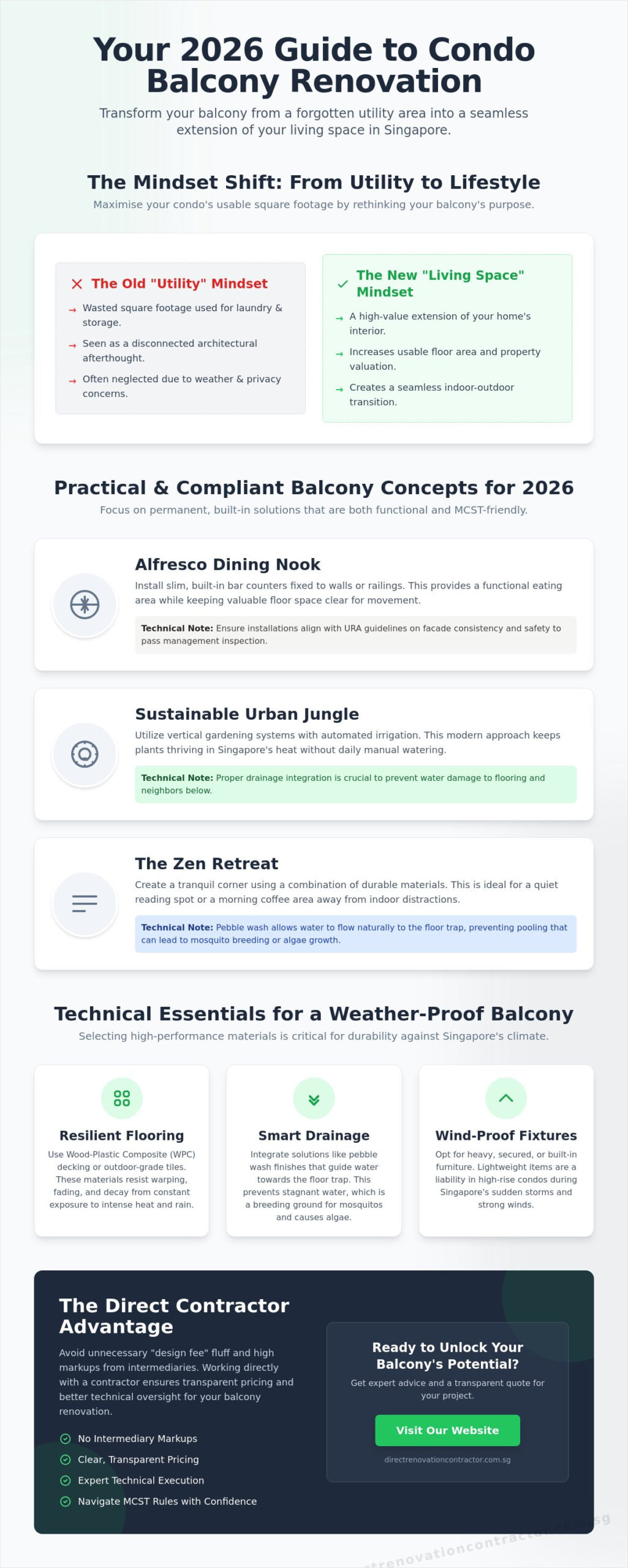
Successful balcony renovation ideas for condo layouts in 2026 focus on permanent, built-in solutions rather than loose furniture that eventually clutters the space. We’ve seen a major shift toward the Alfresco Dining Nook. Instead of a bulky table set, we install slim, built-in bar counters fixed to the railing or wall. This setup provides a functional eating area while keeping the floor clear. It’s vital to ensure these installations align with Urban Redevelopment Authority guidelines regarding facade consistency and safety. We don’t just aim for a look; we aim for a structure that passes management inspection.
The Urban Jungle remains a favorite, but the focus is now on technical sustainability. We recommend vertical gardening systems equipped with automated irrigation. This setup solves the common pain point of plants dying in the Singapore heat while you’re at work. For those seeking a Zen Retreat, we use a combination of pebble wash and timber decking. Pebble wash is a pragmatic choice for drainage because it allows water to flow naturally toward the floor trap, preventing the pooling that often leads to mosquito breeding or algae growth.
If you’re using the space as an outdoor home office, ergonomics are the priority. A built-in desk must be positioned to avoid screen glare, and power points need to be accessible. We focus on the technical execution, ensuring your workstation is functional during the day and remains weather-proof at night. If you’re planning a complete overhaul, our condo renovation packages offer a direct route to a professional finish without intermediary markups.
Space-Saving Built-In Carpentry
Custom carpentry is the most effective way to maximize a small balcony. We often build customized bench seating that includes hidden storage compartments for gardening tools or foldable chairs. This keeps the area tidy and multipurpose. You should consult a carpenter in Singapore who specializes in marine-grade materials. Standard indoor plywood will delaminate quickly in our humidity. We use high-performance materials and specialized laminates that withstand direct sun and rain without warping.
Lighting and Ambiance for Night Usage
Lighting turns a utility area into a nighttime retreat. We use weather-proof LED strips tucked under bar counters or bench seats to create a clean, layered look. Solar-powered accent lights are useful, but for reliable brightness, hard-wired fixtures are better. Safety is our primary concern for outdoor electrical points. All sockets must be IP-rated and installed by a licensed technician to prevent short circuits during torrential rain. We integrate these points seamlessly during the initial phase of our electrical wiring and installation works to ensure a clean, wire-free appearance.
Technical Essentials: Flooring, Drainage, and Weatherproofing
Most balcony renovation ideas for condo projects fail not because of poor design, but because of poor technical execution. In Singapore, the tropical climate is the primary enemy of any outdoor renovation. High humidity levels combined with sudden, heavy downpours mean that materials which work well indoors will fail quickly on a balcony. We prioritize structural integrity over temporary trends. If your flooring warps or your drainage clogs after six months, the aesthetic appeal doesn’t matter. You need to ensure every alteration complies with the Building Control Act to maintain safety and legal standards within your development.
Drainage is a critical technical detail that many homeowners overlook. We’ve seen cases where decking was installed too low, completely blocking the floor trap and leading to stagnant water. This creates a breeding ground for mosquitoes and causes algae growth that damages your building’s facade. We always design our masonry and carpentry to ensure the floor trap remains accessible for cleaning. We also account for the “splash-back” effect during monsoon season. Rain hitting a hard balcony floor can bounce into your living room if you don’t plan the gradient and drainage correctly. Using weatherproofing solutions like Ziptrak or heavy-duty outdoor blinds can mitigate this, but they must be installed with MCST-approved brackets and frames.
Selecting the Right Outdoor Flooring
Material selection is a balance between maintenance and durability. Natural wood like Chengal or Teak offers a premium feel but requires regular sanding and varnishing to prevent rot. For a lower-maintenance alternative, we recommend Wood-Plastic Composite (WPC) decking. It’s resistant to moisture and insects, often lasting over 25 years with minimal care. While vinyl flooring is popular for interiors, it’s a poor choice for sun-exposed balconies as the adhesive can fail and the planks may buckle under direct UV heat. For the most durable finish, anti-slip porcelain tiles are the pragmatic choice. Our tiling and masonry works focus on using the correct outdoor-grade grout to prevent water seepage into the slab below.
Weather Protection and Safety
Safety shouldn’t compromise your view. Invisible grilles are the standard solution for high-rise homes, providing a safety barrier for children and pets without the bulky look of traditional iron grilles. When it comes to comfort, don’t use standard indoor fabrics for your bench cushions. You must select UV-resistant and waterproof fabrics that won’t grow mold after a rainstorm. We also suggest a layout that places sensitive electrical points away from the balcony edge. By planning the furniture placement around the typical rain-entry angle, you can keep your relaxation zone dry even during light showers.
Navigating MCST Rules and Renovation Permits
Every condominium in Singapore is governed by its own Management Corporation Strata Title (MCST). While you own the interior of your unit, the balcony is often considered part of the building’s facade, making it subject to strict by-laws. You cannot simply execute balcony renovation ideas for condo units without obtaining prior written approval from your management office. The MCST’s primary goal is to maintain the architectural integrity and external appearance of the development. If your renovation deviates from their established standards, they have the legal authority to halt your project or demand a full reinstatement at your expense.
The MCST controls everything from the type of flooring you install to the specific model of outdoor blinds you choose. Before you buy any materials or commit to a layout, you must request a copy of the renovation guidelines for your specific development. These rules often include height limits for built-in planters and restrictions on permanent enclosures. Failing to check these “By-laws” is the most common reason for renovation delays. We ensure that all our balcony renovation ideas for condo projects are technically compliant before any masonry or carpentry work begins on-site.
Understanding Facade Restrictions
Facade consistency is a major priority for most condo managements. You’re generally prohibited from changing the external color of your balcony walls or altering the original railing structure. Most developments provide a list of approved outdoor blinds and invisible grilles to ensure the building looks uniform from the street. Non-compliance isn’t just a minor issue; it can lead to heavy fines and formal reinstatement orders. We’ve seen owners forced to remove brand-new decking because it interfered with the building’s drainage or exceeded the allowable floor height. Checking these technical details early saves you from wasting your renovation budget.
The Contractor’s Role in Permit Application
Managing the paperwork is a technical task that a direct renovation contractor handles to streamline the process. We provide the necessary layout plans, material specifications, and work schedules required for MCST approval. Our team also manages the refundable renovation deposit, which typically ranges from $1,000 to $2,000 for most Singapore condos. We ensure all work occurs within the standard permitted hours, usually 9 a.m. to 5 p.m. on weekdays, to prevent noise complaints from neighbors.
Managing the logistics also involves maintaining valid public liability insurance. This coverage is mandatory for condo works to protect against accidental damage to common property like lifts or corridors. If you’re looking for a partner who understands these local regulatory hurdles, our condo renovation packages offer a direct, transparent way to upgrade your space without the stress of managing permits yourself. We take responsibility for the technical submission so you can focus on the functional outcome of your new outdoor area.
The Direct Contractor Advantage for Balcony Renovations
Executing the best balcony renovation ideas for condo units shouldn’t require paying a premium for “design vision” that doesn’t account for technical reality. Many homeowners default to hiring interior design firms, often incurring a 20-30% markup for coordination services you don’t actually need for a balcony project. We believe in eliminating the middleman. By working directly with a contractor, you communicate with the people actually performing the masonry and carpentry. This direct line of communication prevents technical details from being lost in translation and ensures that your specific requirements for drainage or weatherproofing are executed exactly as planned.
Direct contractors are better suited for technical, rule-heavy projects like balcony upgrades. While a designer might focus on a mood board, we focus on structural integrity and MCST compliance. We source our materials directly, which means you don’t pay hidden commissions on tiles, decking, or specialized outdoor laminates. Our expertise is rooted in the practicalities of manual labor and installation standards required for Singapore’s harsh tropical environment. We’ve built our business model on this transparency, providing a reliable alternative for savvy homeowners who value quality workmanship and fair pricing over flashy presentations.
Cost Transparency and Budget Management
We provide a clear, line-item breakdown of every dollar spent on your project. You’ll see exactly what goes into the tiling and masonry works, the carpentry for your built-in benches, and the electrical wiring for your outdoor lights. By cutting out the “Coordination Fee” typically charged by intermediaries, you keep your budget focused on high-performance materials. If you’re still in the early stages of project mapping, our home renovation guide offers a pragmatic framework for budget planning and execution. We don’t hide costs in vague umbrella terms; we provide the clarity you need to make informed financial decisions.
Quality Control and Technical Expertise
Technical oversight is the hallmark of a direct contractor. We take personal responsibility for the waterproofing and tiling works, ensuring that every gradient is correct and every floor trap remains accessible. You won’t be dealing with a junior project manager who lacks site experience. Instead, you get the technical expertise of a seasoned professional who knows which materials will survive a decade on a Singapore balcony and which will fail after one monsoon season. This “straight-talker” approach builds trust because we’d rather tell you a design idea is technically unsound than let you waste money on a project that won’t last. We prioritize the long-term durability of your home over short-term trends.
Ready to Transform Your Outdoor Living Space?
Our direct-to-owner model provides the technical oversight your project requires. We offer specialised expertise in outdoor carpentry and masonry, ensuring every installation is durable enough to withstand our tropical climate. We also handle the complexities of MCST compliance so your renovation proceeds without legal setbacks or wasted costs. If you’re ready to move past the utility mindset and create a functional urban retreat, we’re here to help.
Get a Direct Quote for Your Condo Balcony Renovation
You’ve done the research and understood the requirements. Now it’s time to execute your vision with a partner who values straightforward communication and quality workmanship.
Frequently Asked Questions
Do I need MCST approval for a balcony renovation?
Yes, you must obtain written approval from your MCST before starting any work on your unit. They require a refundable renovation deposit, typically between $1,000 and $2,000, to cover potential damage to common property. This process ensures your balcony renovation ideas for condo units comply with building by-laws regarding noise, facade consistency, and safety standards.
What are the best outdoor flooring materials for Singapore condos?
Wood-plastic composite (WPC) and anti-slip porcelain tiles are the most durable choices for our tropical climate. WPC offers a lifespan of over 25 years and resists rot and insects better than natural timber like Chengal. You should avoid using indoor-grade vinyl flooring, as the adhesive often fails under direct UV heat and torrential rain, leading to buckling and peeling.
Can I install Ziptrak or outdoor blinds on my balcony?
Most condos allow Ziptrak or outdoor blinds, but they must strictly follow the development’s approved color, material, and mounting style. You’re generally prohibited from permanently enclosing the balcony with glass windows as this alters the building’s facade and Gross Floor Area. Always check the management’s specific guidelines for approved vendors and designs before making a purchase.
How much does a typical condo balcony renovation cost in Singapore?
Total costs depend on the complexity of your masonry and carpentry requirements and the specific materials you select. While individual interlocking decking tiles for DIY projects start from approximately $1.85 per tile, professional installation costs vary based on the square footage and technical difficulty. We recommend getting a direct quote to avoid the 20-30% markups often added by interior design intermediaries.
Are invisible grilles allowed in all Singapore condos?
Invisible grilles are widely accepted in Singapore because they maintain safety without obstructing the building’s facade. However, you must still adhere to the specific wire spacing and frame color mandated by your MCST to ensure uniformity across the development. These grilles provide a practical safety barrier for children and pets while keeping your view unblocked.
How do I prevent mosquitoes and pests in my balcony garden?
Proper drainage is the most effective way to prevent pests in a balcony garden. You must ensure your floor gradient allows water to flow freely toward the floor trap without any pooling. We design our balcony renovation ideas for condo projects to keep drainage points accessible so you can easily clear debris and prevent the stagnant water that attracts mosquitoes.
Can I hack the floor tiles on my condo balcony?
You can hack existing tiles, but it’s a technical process that requires a specific MCST permit and professional oversight. Hacking often damages the underlying waterproofing layer, so you must redo the liquid-applied membrane before laying new tiles. This prevents water seepage into the unit below, which is a common and expensive legal issue for condo owners.
What is the best way to waterproof a balcony against heavy rain?
The best waterproofing involves applying a high-quality liquid-applied membrane followed by professional tiling and masonry works. We ensure the floor gradient is steep enough to direct heavy rain toward the drainage pipe quickly. This prevents water from ponding on the surface and eventually seeping through the structural slab or into your living room during a monsoon.