
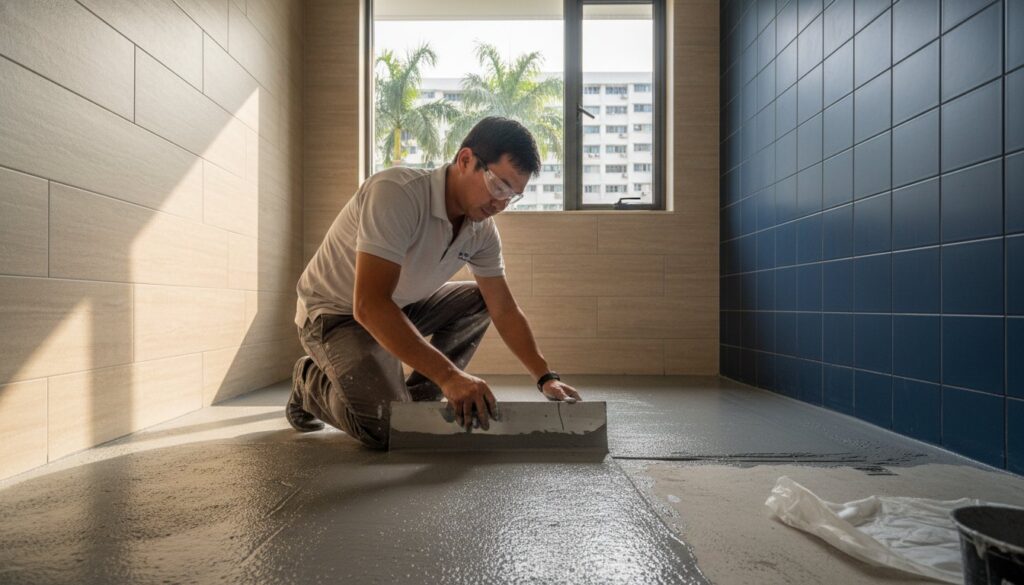
Choosing the wrong bathroom renovation contractors based on the lowest initial quote often leads to a S$5,000 repair bill for water leakage in less than 36 months. It’s a common trap in Singapore where hidden masonry costs and poor waterproofing workmanship are masked by flashy 3D drawings. You probably feel that a renovation should be simple, transparent, and built to last. We agree that you shouldn’t have to worry about sub-contractors cutting corners or surprise invoices for cement screeding that should’ve been included from day one.
This 2026 professional checklist helps you master the technical and financial aspects of your remodel using direct-contractor standards. You’ll learn how to secure factory pricing and ensure your waterproofing exceeds HDB requirements. We’ll walk you through the entire process, from managing HDB and MCST permits to verifying that your tiling work is actually hollow-free and durable. This guide ensures your next renovation is handled with the technical competence and honesty you expect from a seasoned builder.
Key Takeaways
- Navigate the latest 2026 HDB and MCST permit requirements while determining if your project requires full hacking or a cost-effective overlay.
- Ensure long-term structural integrity by mastering the technical standards for waterproofing membranes and PUB-regulated plumbing installations.
- Make informed material choices by prioritizing tile R-ratings for slip resistance and comparing the durability of sintered stone against traditional quartz.
- Learn the professional way to vet bathroom renovation contractors to avoid “low-balled” quotes and hidden middleman markups.
- Maximize your budget by adopting the direct contractor model, ensuring transparent S$ pricing and direct access to the master tiler on-site.
The Essential Bathroom Renovation Checklist for Singapore Homeowners
Renovating a toilet in Singapore isn’t just about aesthetics. It’s a technical process of improving a structure that requires a firm grasp of HDB and BCA regulations. Before engaging bathroom renovation contractors, you need a clear roadmap to avoid hidden costs and project delays. Most standard bathroom overhauls take between 10 to 14 working days. You’ll need to arrange for alternative toilet facilities during this period, as the space will be a construction zone. Many homeowners opt to stay with relatives or book a short-term stay, but you can also request a temporary toilet setup if your flat’s layout allows it.
- Identify if you’re hacking to the bare concrete or overlaying new tiles.
- Check your HDB or MCST permit status for 2026 requirements.
- Set a budget that focuses on material and labor costs, excluding unnecessary “design fees.”
- Prepare for at least 10 days of restricted water access and heavy dust.
Hacking vs. Overlaying: Which is Right for You?
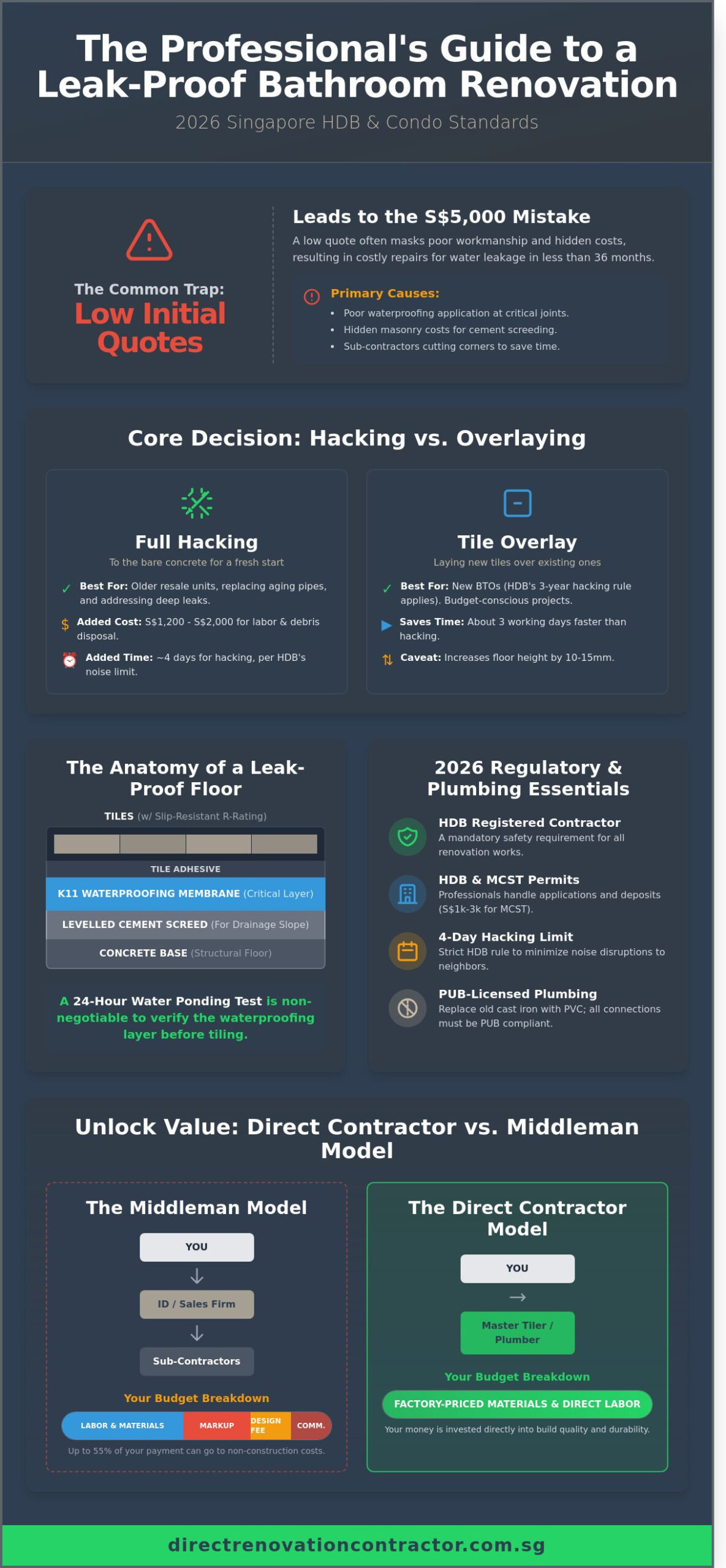
If you live in a new BTO flat, the HDB 3-year rule prohibits hacking bathroom floor and wall tiles. This regulation protects the original waterproofing membrane. In these cases, overlaying is your only option. For older resale units, hacking is often necessary to replace aging pipes and address deep-seated leaks. Hacking costs significantly more, typically adding S$1,200 to S$2,000 to your bill for labor and debris disposal. Overlaying is a budget-friendly alternative that saves 3 days of work but increases floor height by roughly 10mm to 15mm.
Permits and Regulations in 2026
Every contractor you hire must be an HDB Registered Contractor. This isn’t optional; it’s a safety requirement for structural integrity. For 2026, HDB maintains a strict 4-day limit for noisy hacking works in residential blocks to minimize neighborly disputes. If you’re in a condominium, your MCST will likely require a renovation deposit ranging from S$1,000 to S$3,000 before work starts. Professional bathroom renovation contractors will handle these permit applications for you, ensuring all work follows the latest fire safety and waterproofing standards.
Focus your budget on high-quality masonry and plumbing. Direct contractors provide factory pricing because they don’t charge “design fees” or middleman markups. You’re paying for the actual tiles, cement, and skilled labor. This transparent approach ensures your money goes into the build quality rather than a sales commission. Always demand a detailed breakdown of costs before signing any contract to ensure there are no hidden charges for haulage or site cleaning. For a comprehensive understanding of all renovation expenses beyond just bathroom work, check our detailed renovation cost Singapore breakdown to plan your entire home improvement budget effectively.
Technical Requirements: Waterproofing and Plumbing Standards
A bathroom’s visual appeal is secondary to its structural integrity. Reliable bathroom renovation contractors focus first on the “wet” elements to prevent costly leaks that could damage your neighbor’s ceiling or your own flooring. In Singapore, HDB and private property owners must adhere to strict technical standards to ensure long-term durability and safety.
Waterproofing Systems and Screeding
K11 waterproofing is a two-part cementitious slurry that creates a flexible, water-resistant barrier when applied directly to masonry surfaces. Before this membrane is applied, the floor screed must be perfectly level and free of debris. If the screed is uneven, tiles won’t sit correctly and the waterproofing layer might crack under pressure. We pay extra attention to critical zones like shower kerbs, floor traps, and wall-to-floor joints. These are the most common failure points where water seeps through if the application is rushed.
Sanitary and Plumbing Compliance
Plumbing isn’t just about moving water; it’s about following PUB-regulated standards for safety and hygiene. If you’re renovating an older resale flat, you’ll likely find old cast iron pipes that are prone to rusting. We replace these with modern, corrosion-resistant PVC alternatives to prevent future leaks and blockages. All final connections must be handled by a PUB-licensed plumber to ensure the system meets national safety codes. Proper positioning of floor traps is also vital. A poorly placed trap leads to frequent choking and unpleasant odors. While modern BTOs often follow BCA’s PBU performance requirements for factory-standardized quality, on-site renovations require manual precision to match these high benchmarks.
The 24-hour water ponding test is a non-negotiable step in our process. We plug the floor traps and fill the bathroom floor with water for a full day. This confirms the waterproofing membrane is 100% airtight before any tiling begins. If the water level drops even by a few millimeters, we strip it back and redo the seal. We also ensure a proper floor gradient, typically a 1:80 or 1:100 slope. This ensures water flows directly into the floor trap without pooling. Without this precise angle, you’ll deal with standing water and slimy grout lines within months. If you want to ensure your wet areas are handled by experienced bathroom renovation contractors, you can get a transparent quote from our technical team today.
Material Selection: Balancing Durability with 2026 Trends
Choosing materials for a Singapore bathroom isn’t just about picking a color palette from a catalog. It’s about how those surfaces perform after 1,000 hot showers in our humid climate. By 2026, the focus has shifted toward “invisible maintenance,” where material science reduces the need for constant scrubbing. Professional bathroom renovation contractors should provide a clear breakdown of material grades before any hacking begins. If you’re unsure about technical specs, follow the Straits Times advice for engaging contractors to ensure your builder is being transparent about sourcing and durability standards.
Tiling and Flooring Choices
Safety in wet zones is non-negotiable. We specify tiles based on R-ratings, which measure slip resistance. For most HDB or condo bathrooms, an R10 rating is the baseline for dry areas, but R11 is mandatory for shower floors to prevent accidents. The 2026 trend favors large-format tiles, typically 600x1200mm or larger. These minimize grout lines, which are the primary site for mold growth in Singapore. While ceramic tiles are budget-friendly, homogeneous tiles are the superior choice for longevity. They have a water absorption rate of less than 0.5% and the color runs through the entire tile, meaning a small chip won’t reveal a different colored clay underneath.
Vanities and Storage Solutions
Standard plywood or MDF carcasses often swell and rot within 3 to 5 years due to high humidity. We recommend using aluminium or high-density PVC carcasses for bathroom cabinets. These materials are 100% waterproof and termite-proof, ensuring the vanity lasts as long as the house. For countertops, sintered stone is overtaking quartz in 2026. Sintered stone is manufactured at much higher pressures and temperatures, making it nearly impossible to stain or burn, unlike quartz which can scorch if exposed to high heat from hair tools. Since a high-quality bathroom is the primary space for personal grooming, many individuals also seek specialized hair restoration and scalp care from Terra Medical to complete their self-care regimen. Consider these functional upgrades:
- Integrated Sinks: These eliminate the silicone joint between the basin and counter, removing a common spot for black mold.
- WELS 3-Tick Fittings: PUB standards require water efficiency; 3-tick fittings can save a four-person household over S$50 annually on water bills.
- Smart Lighting: LED-integrated mirrors with de-misting functions are now standard for modern BTO renovations.
Evaluating Bathroom Renovation Contractors: Beyond the Quote
Choosing between bathroom renovation contractors involves more than just looking at the bottom line. Most Interior Design (ID) firms act as middlemen, adding a 20% to 30% markup on top of sub-contractor costs for their project management services. A direct contractor eliminates these extra layers. This gives you factory-direct pricing and direct communication with the people actually doing the work. You’re paying for technical skills and materials, not a fancy showroom or sales commissions. Understanding the full scope of renovation cost Singapore pricing structures helps you identify when quotes include unnecessary middleman fees versus transparent, direct contractor rates.
Don’t be fooled by quotes that seem significantly lower than the market average. If a full bathroom overhaul is quoted under S$4,000 for a standard HDB flat, something is missing. Usually, it’s the cost of haulage or the quality of the waterproofing membrane used. We’ve seen cases where cheap contractors skip the 24-hour ponding test to save time. This leads to costly repairs and neighbor disputes later. A reliable quote should be detailed and realistic about the labor involved in Singapore’s current construction market.
Comparing Quotations Accurately
Check if the quote covers the “dirty work” in detail. Hacking, haulage, and debris removal are labor-intensive and essential. Some contractors leave these out to make the initial price look attractive, only to bill you later as “unforeseen costs.” Watch out for “Provisional Sum” (PS) items. If a contractor allocates only S$3.00 per square foot for tiles, you’ll likely face a price hike when you pick standard S$4.50 tiles at the showroom. A transparent quote breaks down masonry work by specific areas like the shower kerb and vanity base so there are no surprises during the final billing.
Assessing Technical Competence
Design renders are nice, but technical proof matters more for your home’s longevity. Ask for photos of their waterproofing process, specifically the ponding tests. This ensures your neighbors downstairs won’t deal with leaks in six months. Always verify their HDB Registered Renovation Contractor (RRC) status. It’s a legal requirement for HDB flats. While some direct contractors focus on the build, reputable ones still provide 3D drawings to ensure the layout works before the first tile is laid. Our in-house teams handle everything from masonry to carpentry, ensuring high standards across the board.
- Waterproofing Warranty: Look for a minimum 5-year coverage period to ensure long-term protection.
- Workmanship Warranty: A standard 12-month period should cover any settling issues or installation defects.
- Direct Sourcing: Ask to see their carpentry workshop to verify they aren’t outsourcing your cabinets to a third party.
Why the Direct Contractor Model Wins for Bathroom Remodelling
Choosing the right bathroom renovation contractors involves more than just picking pretty tiles. It’s about who actually does the work. When you hire an interior design firm, you’re often paying a 25% to 35% premium just for project management and sales commissions. At Direct Renovation Contractor Singapore, our direct contractor model eliminates these middleman markups. You save thousands of dollars because your budget goes straight into materials and skilled labour rather than a fancy showroom or a salesperson’s pocket.
Working directly with us means you talk to the site supervisor and the master tiler. This direct line of communication is vital. In a bathroom, technical precision is more important than aesthetics. We focus on structural integrity first. We ensure the waterproofing membrane is applied correctly and the floor gradient is pitched perfectly for drainage. This technical-first approach prevents leaks that could cost you S$5,000 or more in future repairs. We also offer flexible DIY support packages. If you’ve already purchased your own vanity or premium rain shower set, we’ll provide the professional installation expertise without forcing you into a restrictive, marked-up bundle.
- Direct Accountability: No “lost in translation” errors between a designer and the worker.
- Technical Expertise: Hands-on masonry and plumbing knowledge from day one.
- Cost Efficiency: You pay the actual cost of hacking, tiling, and piping.
- Flexibility: Customise your renovation level based on your specific budget.
The Direct Renovation Contractor Singapore Advantage
Our factory-direct model keeps your carpentry costs low. We manufacture our own bathroom cabinets and mirrors, which removes the retail markup entirely. We’re committed to transparent pricing. Every quote we issue is a fixed-sum contract with no hidden “coordination fees” or surprise administrative charges. You get high-quality workmanship at a fair, honest price. Explore our HDB Bathroom Renovation Packages to see exactly how we structure our value-driven pricing.
Next Steps: Booking Your Site Survey
A professional site measurement is the only way to get an accurate quote. During this 30-minute visit, we assess your existing plumbing, check for wall dampness, and measure the exact square footage for hacking. Please have your HDB or condo floor plan ready. This allows us to spot potential layout issues before you commit. Once the survey is done, we’ll provide a detailed breakdown within 48 hours. Contact us for a direct contractor quote today to get started on a hassle-free renovation.
Secure Your 2026 Bathroom Renovation Success
A successful bathroom remodel in Singapore requires strict adherence to technical standards. You must ensure your waterproofing and plumbing meet current HDB and PUB regulations to avoid future hacking and repair costs. By hiring experienced bathroom renovation contractors, you protect your home from moisture damage while staying within your targeted S$8,000 to S$15,000 budget. Choosing a direct contractor model is the smartest way to save. You’ll avoid the 20% to 30% middleman markups often charged by interior design firms while gaining access to factory-direct carpentry pricing. Our team handles every stage, from hacking and masonry to final tiling, with total financial transparency.
Don’t settle for hidden fees or sub-par workmanship that fails within two years. As an HDB Registered Contractor, we provide the technical expertise and honest pricing needed for a durable, high-quality finish. We focus on functional results that stand up to Singapore’s high humidity. Get a Direct Quote from Our Master Builders and start your project with total peace of mind. Your ideal bathroom is well within reach when you work with the right local experts.
Frequently Asked Questions
How much does a bathroom renovation cost in Singapore in 2026?
A standard bathroom renovation in 2026 typically costs between S$6,000 and S$12,000 per toilet. This range covers basic hacking, waterproofing, and tiling for HDB flats. If you choose premium sanitary ware or complex masonry, your budget might increase by 20%. Working with direct bathroom renovation contractors helps you avoid 15% middleman markups often charged by design firms.
How long does a typical HDB toilet renovation take?
A typical HDB toilet renovation takes 10 to 14 working days to complete. The process starts with 2 days of hacking and clearing debris, followed by plumbing and 24-hour waterproofing tests. Tiling takes another 4 days, while the final 3 days are for installing vanity units and heaters. We stick to this schedule to minimize disruption to your daily routine.
Can I renovate my HDB bathroom if it is less than 3 years old?
You can’t hack floor or wall tiles in a new HDB flat if it’s less than 3 years old. This regulation exists to protect the original waterproofing membrane installed by HDB. If you want to change the look, you can overlay new tiles on top of the existing ones. This method is faster and doesn’t void your structural warranty.
Is it better to hack or overlay bathroom tiles?
Hacking is the better choice for long-term durability because it allows us to replace old pipes and refresh the waterproofing. Overlaying saves about S$1,500 in labor and disposal costs but adds 10mm to your floor height. If your unit is over 15 years old, we always recommend a full hack to prevent future leaks that damage your neighbor’s ceiling.
What is the standard warranty for bathroom waterproofing in Singapore?
The standard warranty for bathroom waterproofing in Singapore is 5 years. This covers the integrity of the membrane and the labor required to fix any leaks. Our direct bathroom renovation contractors provide this guarantee in writing before we start any hacking work. Always check that your contractor’s warranty specifically includes both material and workmanship to avoid surprise repair costs.
Do I need a permit for a simple bathroom makeover?
You need an HDB renovation permit for any work involving hacking tiles or changing the position of your toilet bowl. Simple makeovers that only involve changing faucets or painting don’t require official approval. However, replacing wall tiles or floor finishes requires a permit that takes 3 to 7 working days for HDB to process. We handle these applications directly to ensure your project stays legal.
How do I prevent water leakage after my renovation is complete?
Conduct a 24-hour water ponding test after the waterproofing membrane is applied but before tiles are laid. This test involves flooding the floor and checking the ceiling below for damp spots. You should also use high-quality epoxy grout for your floor tiles. This material is 100% waterproof and won’t crack or absorb moisture like traditional cement grout does.
Can I manage my own bathroom renovation without an interior designer?
You can manage your renovation without an interior designer by hiring a direct contractor who handles the technical coordination. This approach saves you 20% to 30% on design fees and management markups. You’ll need to be clear about your layout and material choices since you’ll be the main point of contact. It’s a pragmatic choice for homeowners who value functional quality over artistic renderings.