
A full home renovation takes longer than the weeks spent on site. In Singapore, on-site works typically take 10–12 weeks, while the full process from shortlisting renovators through move-in usually takes 9 to 12 months. During and after your renovation, a realistic schedule matters as much as the work itself, because delays can affect when you move in and how you plan each day.
It’s normal to want a clear handover date and a home that’s safe, clean and ready to use. This guide explains what can extend the timeline, how to plan for delays, what to inspect before handover and how to secure your home at the end of each workday. You’ll also find practical checks for lights, power points, appliances, carpentry and plumbing, so you can track progress and spot issues while there’s still time to address them.
Key Takeaways
- Test lights, power points, appliances, carpentry and plumbing during the final walkthrough, and record any defects for follow-up.
- Build flexibility into your schedule because site conditions, material lead times and late decisions can affect the work sequence.
- At the end of each workday, keep tools packed away, secure the home and protect valuables, especially if you’re living there during the renovation.
- Keep renovation and appliance documents together, and ventilate the home before settling in after the work is complete.
1. Checking lights, power points, appliances, carpentry and plumbing
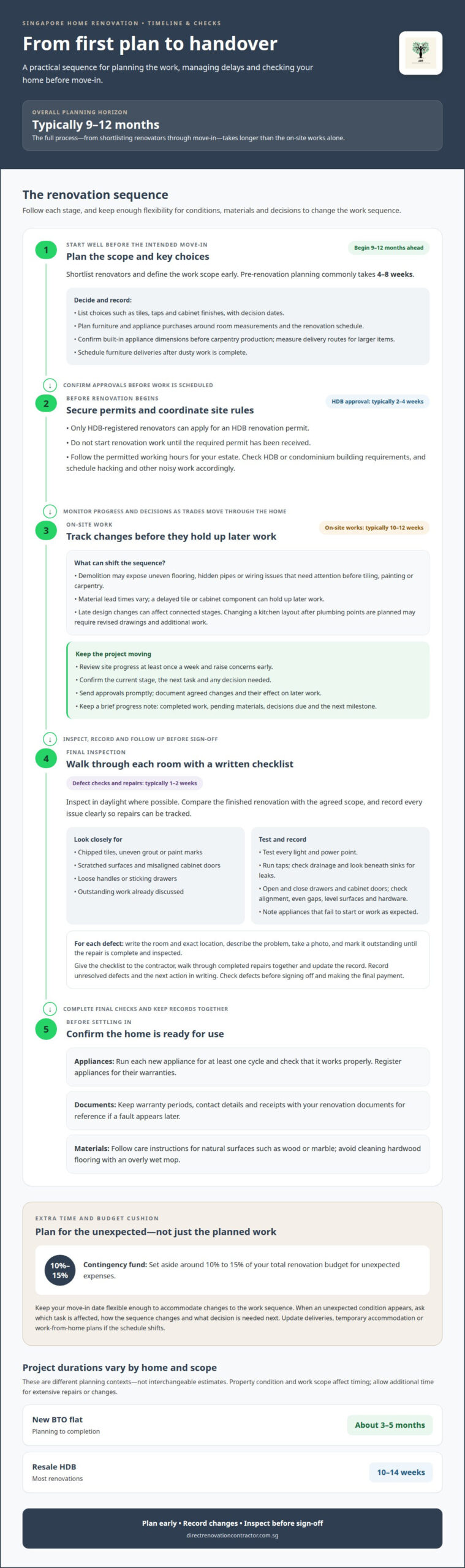
Start planning early: Singapore homeowners are advised to begin renovation planning 9–12 months before the intended date. Pre-renovation planning commonly takes 4–8 weeks, and HDB permit approval typically takes 2–4 weeks. Renovation work should not start until the required permit has been received. Only HDB-registered renovators can apply for an HDB renovation permit, so include the application in your timeline before work is scheduled.
For noise, follow the permitted working hours for your estate. HDB and condominium projects may also have building or estate requirements, so schedule hacking and other noisy work accordingly.
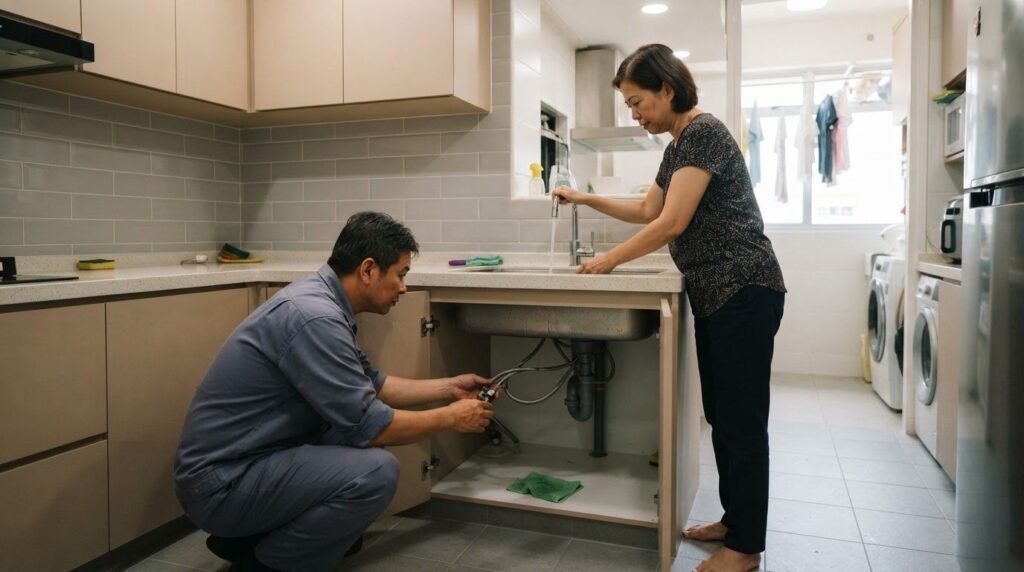
Before handover, test every light and power point, operate plumbing fittings and check that water drains properly. Run the kitchen and bathroom taps, then look beneath the sinks for leaks. Open and close every drawer and cabinet door; check alignment, even gaps, level surfaces and hardware. Use a During & After Your Renovation checklist to record each issue and its location. Before walls, tiles or cabinets conceal access points, confirm that the electrical and plumbing work matches the final layout.
Plan furniture and appliance purchases around room measurements and the renovation schedule. Confirm built-in appliance dimensions before carpentry production begins, and measure delivery routes for larger items. Research your options rather than buying everything in a rush: changing a fridge or washing machine late in the process can affect cabinet space and connections. Schedule furniture deliveries after dusty work is complete.
Before using new appliances, run each one for at least one cycle and check that it works properly. Register appliances for their warranties, then keep warranty periods, contact details and receipts with your renovation documents. Keep these During & After Your Renovation records handy in case a fault appears later. For natural surfaces such as wood or marble, follow the material’s care instructions; avoid cleaning hardwood flooring with an overly wet mop.
2. So How Long Does a Full Home Renovation Take?
In Singapore, the full renovation process includes planning, on-site work, inspection and move-in. A new BTO flat renovation process often takes about 3 to 5 months from planning to completion. Most resale HDB renovations take 10 to 14 weeks, depending on the property’s condition and work scope. Allow additional time if the home needs more extensive repairs or changes.
Final inspection and defect rectification typically take 1–2 weeks. Arrange a final walkthrough with your contractor, and bring a written defect checklist. Inspect each room in daylight where possible, then record the location and details of every issue. Clear notes make it easier to track repairs before handover.
Look for visible damage and test the completed work. Check for chipped tiles, uneven grout, paint marks, scratched surfaces, misaligned cabinet doors, loose handles and sticking drawers. Look under sinks for leaks, check that water drains properly, and test lights and power points. Make a note of any appliance that fails to start or work as expected.
- Record the room and exact location, such as “hairline crack beside the kitchen backsplash.”
- Describe the problem clearly, then take a photo for the contractor’s reference.
- Mark each item as outstanding until the repair is complete and inspected.
Compare the finished renovation with the agreed scope, including any outstanding work already discussed. At handover, the home should be ready for moving in, subject to those agreed items. Record unresolved defects and the next action in writing rather than relying on a verbal reminder.
Check the defects before signing off and making the final payment. Give the contractor the checklist, walk through completed repairs together, and update the record. If you’re planning an HDB project, HDB renovation planning can help you consider the work scope before setting a move-in date.
3. Allowing extra time for renovation delays
In Singapore, renovation schedules can shift when demolition exposes uneven flooring, hidden pipes or wiring issues. These conditions may need to be addressed before tiling, painting or carpentry can proceed. Material lead times also vary, and a delayed tile or cabinet component can hold up later work. Keep your move-in date flexible enough to accommodate changes to the work sequence.
Design decisions can also cause delays. For example, changing a kitchen layout after plumbing points have been planned may require revised drawings and additional work. An interior designer or project lead needs timely decisions on materials, fixtures and drawings to coordinate the trades. Last-minute approvals can affect connected stages, not just the item being changed.
Build a practical plan for delays into your renovation budget and calendar:
- Set aside a contingency fund of around 10% to 15% of your total renovation budget for unexpected expenses.
- List key choices, such as tiles, taps and cabinet finishes, on a checklist with decision dates.
- Confirm what stage the project has reached and what work comes next.
- Review progress at the site at least once a week and raise concerns early.
When an unexpected condition appears, ask which task is affected, how it changes the sequence and what decision is needed next. If a wall opening reveals a pipe where a cabinet was planned, the layout may need to be adjusted before carpentry proceeds. Record the change and its impact on later work, then update your move-in arrangements if the schedule shifts.
Keep communication direct. Send questions and approvals promptly, and document agreed changes so the contractor and trades have the same instructions. A brief progress note can list completed work, pending materials, decisions due and the next milestone. This helps surface delays early and gives you a clear basis for adjusting deliveries, temporary accommodation or work-from-home plans.
4. Cleaning up and securing the home daily
Before work begins, move valuables to a safe place or store larger items elsewhere. Cover belongings and flooring outside the work area, and close doors between occupied rooms and dusty spaces. If you’re staying in the home, set aside one clean room for sleeping and daily essentials. Ask workers to pack away tools and equipment and secure the property at the end of each workday. Your During & After Your Renovation routine can include checking that access points are closed before you leave.
Keep a vacuum, mop and all-purpose cleaner ready for daily dust control. The renovation team should collect debris and leftover materials and remove them through the estate’s designated process. Keep waste out of shared corridors and lift areas, and agree on removal arrangements before materials build up. Follow estate requirements for protecting and using common areas. To limit dust spreading into living spaces, separate the work area and clean nearby surfaces as needed.
When work is complete, ventilate the home by opening windows and doors, and leave cabinets and wardrobes open. Paint, adhesives and sealants can release VOCs; ventilation helps clear indoor air. A HEPA-filter air purifier can run for a full day or two to help absorb pollutants. Clean surfaces before unpacking, then wipe floors and fittings without using abrasive cloths on metal hardware. Add these steps to your During & After Your Renovation checklist.
Cabinet design affects how easy it is to clean. Shaker-style cabinets have crevices where dust, fingerprints and food stains can collect. If easy upkeep is a priority, consider simpler cabinet fronts and accessible hardware. Check corners, hinges and handles while cleaning, as dust and residue can gather there.
For final closeout, compare the invoice with the agreed work scope and recorded changes. Keep outstanding defects documented, and settle the remaining agreed payment in line with handover arrangements once the listed work is addressed. Store the renovation contract, appliance warranties and receipts together for future reference. To plan practical cabinetry and flooring for a home renovation, discuss your renovation work.
Direct Renovation Contractor Singapore: HDB BTO Renovation Packages
Direct Renovation Contractor Singapore offers HDB BTO Renovation Packages for homeowners planning a new flat renovation. Its direct renovation approach provides 3D drawings and a curated list of direct contractors and material suppliers, helping homeowners manage project decisions and coordinate work. It also offers HDB Resale Renovation Packages, Condo Renovation Packages and Landed Property Renovation.
This approach may suit homeowners who want practical project support while staying involved in choices, scheduling and progress. Use the checks above on permits, work sequencing, daily security and handover to plan what you need from your renovation project. A clear scope and documented decisions help keep the work aligned with your home and priorities.
To discuss your renovation plans, contact Direct Renovation Contractor Singapore.
Set Up Your Next Renovation Step
Before work begins on site, turn your priorities into a clear project brief. Note which rooms matter most, what must remain usable, and which finishes or fixtures are essential. A practical brief gives each decision a purpose and helps ensure the finished home supports your everyday needs.
Keep a written record of decisions made during and after your renovation, including approved changes and outstanding tasks. It gives you a useful reference as the project progresses and helps you keep track of what matters most to your household.
If you’re ready to put your plans into action, start a renovation conversation with Direct Renovation Contractor Singapore. Take the next step at a pace that works for you, with your priorities clearly in hand.
Frequently Asked Questions
So How Long Does a Full Home Renovation Take?
On-site renovation work in Singapore typically takes 10–12 weeks, while the full process from shortlisting renovators through move-in usually takes 9 to 12 months. These figures cover different periods, so use the on-site estimate for construction and the longer window for planning, approvals and settling in. A resale flat may need 10 to 14 weeks of renovation work, depending on its condition and scope.
How Long Does Each Renovation Stage Take?
Timings vary by project, and some stages overlap. A typical Singapore schedule places demolition and hacking in weeks 1–2, electrical and plumbing work in weeks 3–5, then waterproofing, flooring and wall tiling in weeks 5–7. Later stages include ceiling work, painting, flooring, carpentry installation and touch-ups. Treat these as planning milestones, not isolated blocks: a change to plumbing can affect cabinet installation.
What Happens Behind the Scenes After You Confirm Your Renovation?
After confirmation, the renovation team aligns the work scope, drawings, materials, fixtures and expected timeline. Site measurements may be checked again before work starts, even if they were recorded during an earlier visit. The team also coordinates the trade sequence and material procurement. Custom carpentry can be produced in a factory while hacking, electrical or wet works take place at home, allowing stages to progress in parallel.
What is a Renovation Schedule?
A renovation schedule is a working plan that sets out the task order, expected milestones and decisions needed from you. It might show hacking before plumbing adjustments, followed by tiling and cabinet installation. Use it to see which tasks depend on others, when materials must arrive and when you need to approve a selection. Update the schedule when site conditions or design choices change.
What should homeowners expect during a renovation in Singapore?
Expect trades to work in a coordinated sequence, with dusty hacking and wet works completed before new kitchen cabinets are installed. HDB and condominium projects may also need to follow estate or building management requirements. Keep decisions and questions moving, and review progress regularly. If you plan to live at home during the work, separate a clean area from the work zone and plan around restricted access.
What are the key renovation milestones and typical timelines in Singapore?
Useful milestones include permit approval, site preparation, hacking, electrical and plumbing work, wet works, finishes, carpentry installation, touch-ups and handover. HDB permit approval typically takes 2–4 weeks, while on-site work commonly takes 10–12 weeks overall. The exact sequence varies with scope and site conditions. Track each milestone against its dependencies, such as completing tiling before installing kitchen cabinets.