
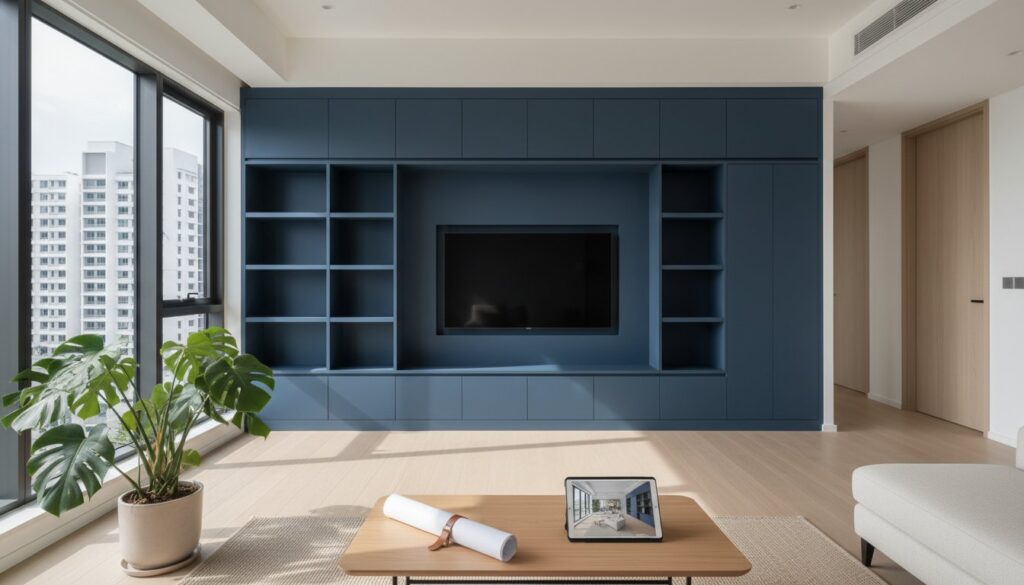
You don’t need a middleman to get a designer home, but you do need one if you want to pay 30% more for it. Most Singaporean homeowners walk into a showroom expecting a seamless project, only to be hit by hidden costs in their interior design quotes later. It’s frustrating when your renovation budget disappears into “management fees” instead of tangible results like solid plywood carpentry or premium floor tiles. We know you’re looking for a partner who values technical skill and honest communication over flashy sales pitches.
This 2026 guide simplifies the entire building process so you can work directly with the contractors who actually do the work. You’ll learn the essential steps for a successful Singapore home renovation, including how to handle HDB regulations and avoid common permit approval delays. We provide a clear roadmap for everything from masonry and hacking to the final handover. By following this pragmatic approach, you’ll secure transparent pricing and durable finishes while skipping the unnecessary markups of traditional firms.
Key Takeaways
- Understand how to bypass traditional interior design markups to save up to 30% on your project costs through factory-direct pricing.
- Discover the essential sequence of a renovation project, ensuring technical standards like masonry are completed before carpentry begins.
- Navigate the 2026 HDB and Condo permit application process with a clear, step-by-step timeline for a stress-free handover.
- Master the practicalities of budgeting and scheduling to manage an efficient 8-to-12 week timeline for your home transformation.
- Gain access to professional 3D planning tools and a curated list of reliable sub-contractors to take full control of your home’s execution.
Understanding the Renovation Landscape in Singapore
The Singapore renovation landscape in 2026 is defined by a shift toward technical precision and financial accountability. Homeowners are moving away from overpriced design packages that prioritize aesthetics over structural integrity. This evolution is deeply connected to the history of urban renewal in Singapore, which has created a diverse mix of aging HDB estates, modern condominiums, and complex landed properties. Each property type now requires a specialized approach to construction and refurbishment.
Rising costs are the primary concern for homeowners this year. Material scarcity and tightening labor quotas for foreign workers have pushed prices upward. Because of these pressures, transparency in pricing has become the most critical factor for a successful project. You need to know exactly where your money goes. Hidden markups and vague “coordination fees” are no longer acceptable in a market where every dollar must provide tangible value in masonry, carpentry, or electrical works.
HDB vs. Private Property: Key Differences
HDB renovations are strictly governed by Housing & Development Board regulations. You cannot simply tear down walls; you must secure specific permits for hacking and ensure that electrical rewiring meets current safety standards. We manage these technical requirements to ensure your flat remains compliant with government mandates. Private properties present different challenges. Condominium owners must navigate MCST rules, which often include strict renovation hours, heavy deposits, and mandatory lift protection. For landed properties, the scope expands to include URA and BCA requirements, especially when dealing with structural extensions or roof works. We focus on these technicalities so you don’t face legal or structural setbacks.
The Role of the Direct Renovation Contractor
The “Direct-to-Homeowner” model has replaced the traditional interior design firm for savvy clients. We eliminate the middleman to provide factory prices directly to you. This shift means you’re no longer paying for a salesperson’s commission or a fancy showroom’s rent. Instead, you’re hiring technical partners who handle the actual execution of the renovation.
Technical competence in masonry and carpentry is far more valuable than a flashy 3D render. While a render looks good on a screen, it doesn’t account for pipe positions or load-bearing walls. We prioritize the “ins and outs” of the build. Our focus remains on quality workmanship and straightforward communication. By working directly with the people building your home, you ensure that the final result matches the technical specifications promised at the start. This direct relationship builds trust through honesty and functional results.
Direct Contractor vs. Interior Designer: The 2026 Cost Reality
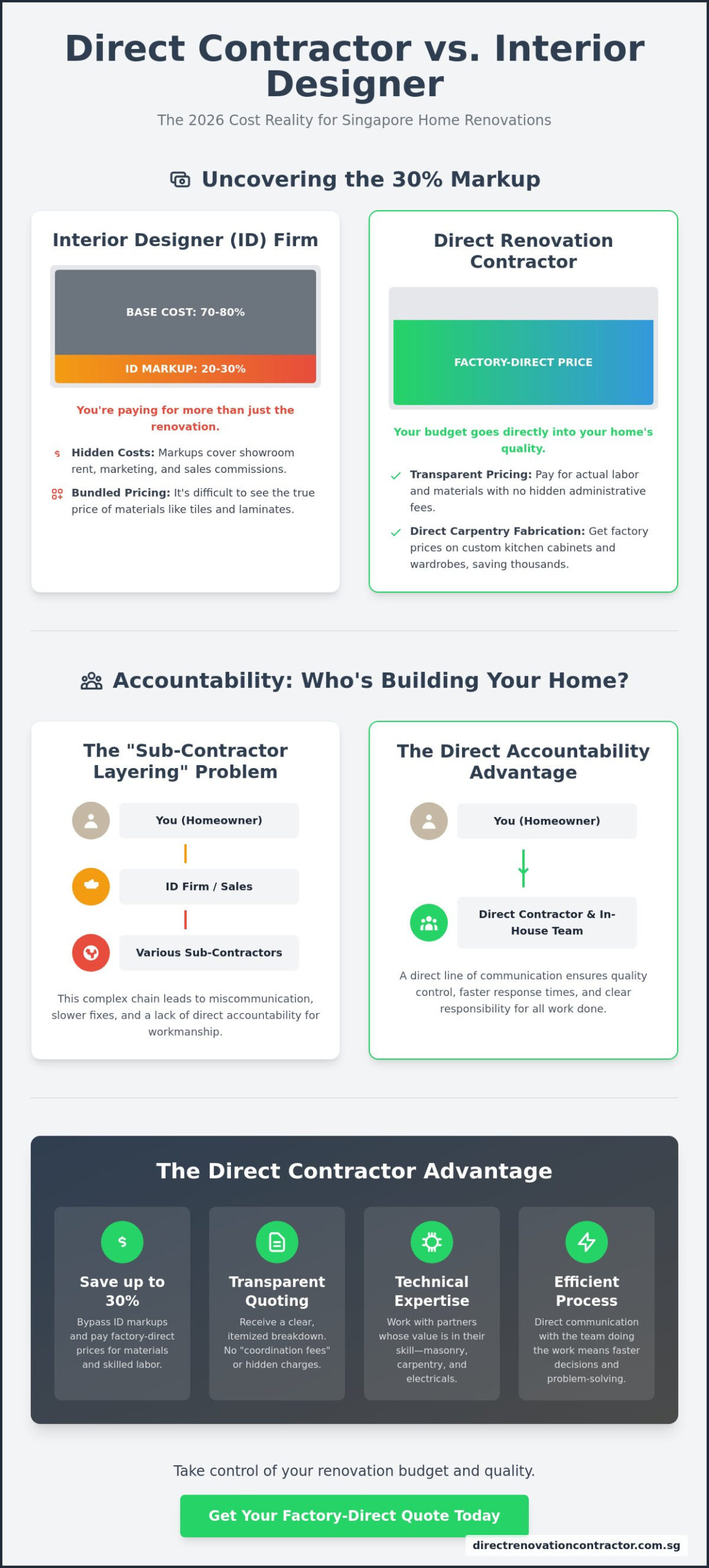
Most Singaporeans don’t realize that an Interior Design (ID) firm typically adds a 20% to 30% markup on top of raw material and labor costs. This isn’t just for profit. It covers expensive showroom rentals, extensive social media marketing, and sales commissions for the consultants. When you work with a direct contractor, you’re paying for the actual work done on-site. There are no “coordination fees” or hidden administrative charges buried in your quote. You get a transparent breakdown of labor and materials from the start.
Analyzing the Price Gap
Direct carpentry fabrication is the biggest cost-saver in any 2026 renovation project. Most ID firms don’t own their own production facilities. They send your drawings to a third-party factory and add a margin for the referral. By going direct, you get factory prices on kitchen cabinets and wardrobes. You also avoid the common practice of material supply markups. For example, if you choose a specific laminate or floor tile, a contractor usually charges the actual supply cost. ID packages often bundle these items, making it difficult to see the true price of each component. You pay for execution and project management, not for a glossy 3D render that adds zero structural value to your home.
Quality of Workmanship and Technical Accountability
Workmanship quality often drops when there’s “sub-contractor layering.” Large ID firms might hire a main contractor, who then hires separate teams for hacking, masonry, and plumbing. This creates a gap in accountability. If a pipe leaks or a cabinet door is misaligned, the ID has to call the sub-con, who then calls the actual worker. This three-tier system slows down fixes and increases the risk of miscommunication.
Choosing between an ID and a contractor depends on your priorities. Hire an ID if you need someone to pick your color palettes and handle every aesthetic detail. Choose a direct contractor if you already have a clear vision and want to maximize your renovation budget for high-quality materials and technical precision. It’s about getting the best value for your investment. You can consult a direct contractor to see exactly how much you can save on your upcoming project through transparent, factory-direct pricing.
Core Renovation Works: From Hacking to Carpentry
A successful renovation depends on a logical sequence of works. We always prioritize masonry and wet works before any carpentry begins. This order is non-negotiable because cabinets and wardrobes require perfectly level surfaces for a flush fit. Installing carpentry before the floor is tiled or the walls are plastered leads to gaps, uneven doors, and structural instability. We follow a strict “bottom-up” approach to ensure every fixture sits on a solid, finished foundation.
Masonry, Tiling, and Hacking Essentials
Custom Carpentry: The Heart of the Home
Precise site measurements happen only after the masonry is complete. Our team takes final dimensions to the millimeter to ensure your kitchen cabinets and TV consoles fit perfectly against the finished walls. We use high-grade plywood for cabinet carcasses in wet areas like the kitchen sink unit to prevent wood rot. For wardrobes and dry cabinets, PVC-wrapped carcasses offer a clean, easy-to-maintain finish. By working with a carpenter singapore specialist, you bypass showroom markups and get direct factory pricing on premium laminates and soft-close hardware.
Electrical, Plumbing, and Painting
Modern homes now require robust electrical planning for smart home hubs and high-speed data points. We install Cat6 cabling as a standard to support 10Gbps home networks. All electrical works are carried out by EMA-licensed technicians to meet HDB safety standards. For plumbing, we recommend stainless steel piping for all exposed runs. It resists corrosion better than older plastic alternatives and lasts over 20 years. The final touch is painting. We use low-VOC (Volatile Organic Compounds) paints that contain less than 5 grams of toxins per liter. This ensures your home is safe for move-in immediately after the final coat dries, protecting your family from harmful chemical fumes.
Planning Your Renovation: Timeline, Permits, and Budgeting
Planning a renovation requires a strict schedule to avoid costly delays. Most HDB and Condo projects in Singapore take 8 to 12 weeks to complete from the first day of site hacking to the final handover. BTO units usually sit on the shorter end of this range because they require less structural preparation. Resale flats often hit the 12-week mark or longer because they involve extensive hacking and re-wiring. You should expect the first 2 weeks to be dedicated strictly to permit approvals and site protection.
Applying for an HDB permit in 2026 is a streamlined digital process. Your contractor submits the application through the HDB e-Service portal using their registered license. You’ll receive an SMS notification to acknowledge the works before HDB processes the request. Approval typically takes 3 to 7 working days. For resale units, set aside a 10% contingency fund. This buffer covers hidden issues like corroded pipes or uneven subfloors that only appear after the old tiles are removed. If you don’t use it, you’ve saved 10% on your project.
Comparing quotes can be difficult if you aren’t familiar with industry terms. Look for specific measurements rather than “lump sum” entries. A direct contractor quote should clearly list the unit price for masonry, carpentry, and plumbing. This transparency ensures you aren’t paying for hidden markups. Check if the quote includes “haulage and debris removal” and “general cleaning,” as these are often omitted to make a price look lower than it actually is.
Navigating HDB and MCST Regulations
Strict guidelines govern what you can and cannot do. Hacking of load-bearing walls is prohibited, and all window replacements must be performed by an HDB-approved contractor. For air-con installations, you must ensure the stainless steel brackets are installed according to safety standards. Managing your neighbors is equally important. You are required to inform your immediate neighbors at least 3 days before hacking begins to manage noise expectations. For more details on specific flat types, read our guide on hdb renovation in singapore.
Budget Management and Payment Milestones
Standard payment structures protect both the homeowner and the builder. You should never pay 100% upfront. A typical cycle involves a 10% deposit, 40% after hacking and masonry materials arrive, 40% after carpentry and tiling completion, and the final 10% only after the rectification of the punch list. Watch out for “optional” add-ons like premium soft-close hinges or extra power points that can inflate your bill by 15% if not tracked. Focus your budget on structural integrity and plumbing first, then adjust your aesthetic choices to fit the remaining funds.
Ready to start your project with a transparent, no-nonsense team? Get a direct contractor quote today and skip the middleman markups.
Navigating the Renovation Process with Direct Renovation Contractor
Direct Renovation Contractor operates on a lean, direct-to-consumer model designed to eliminate the standard 20% to 30% markups typically charged by interior design firms. We focus on delivering high-quality HDB and Condo projects by removing the middleman from the equation. Our approach is built for homeowners who know what they want and prefer to pay for actual labor and materials rather than sales commissions. By working directly with us, you gain access to factory-direct pricing on carpentry and masonry works without sacrificing professional oversight.
Quality control is managed through our dedicated fabrication facility located at Paya Ubi Industrial Park. This internal workshop allows us to oversee every cabinet, wardrobe, and feature wall from the initial cut to the final laminate application. We don’t outsource our carpentry to third-party workshops where quality can be inconsistent. This hands-on involvement ensures that the renovation standards meet our strict technical requirements before any materials arrive at your site. We provide transparent, unmarked-up pricing for both residential and commercial spaces, ensuring every dollar of your budget goes toward the physical improvement of your property.
The Direct Renovation Advantage
Working with us means you have direct access to our specialized carpentry, masonry, and electrical teams. We’ve built a reputation for delivering BTO and resale packages that prioritize structural integrity and functional design. Our “no middleman” policy applies to every stage of the build. This ensures that technical instructions aren’t lost in translation between a salesperson and a site supervisor. For a clearer understanding of how this model benefits your bottom line, read our direct renovation contractor singapore comparison for more details.
Starting Your Renovation Journey
Your renovation journey starts with a detailed site measurement and a technical consultation. We identify potential site constraints, such as beam locations or plumbing bottlenecks, before you commit to a design. We provide unique DIY support by offering professional 3D drawings and a curated list of vetted sub-contractors for specialized trades. This gives you the tools to maintain creative control while we handle the heavy lifting of project execution. We manage the workflow from the first day of hacking to the final handover. Our process is designed to be predictable and orderly, providing a clear timeline for every installation. You receive a final product that is built to last, backed by the assurance of a local contractor who understands Singapore’s building regulations and HDB requirements.
- Direct-to-factory carpentry from our Paya Ubi facility.
- Transparent quotes with no hidden management fees.
- Technical expertise for HDB, Condo, and Landed properties.
- Curated sub-contractor lists for specialized electrical and plumbing works.
Streamline Your 2026 Renovation Project
Success in any Singapore renovation depends on clear communication and technical expertise. You’ve learned how skipping the middleman allows for direct factory pricing and removes unnecessary interior design markups. Managing a project involves strictly following HDB renovation permits while coordinating core works like hacking, masonry, and electrical installation. As an HDB-registered contractor, we specialize in BTO, resale, and condo projects. We provide the technical reliability required for complex layouts. Our in-house carpentry workshop ensures that your custom furniture is built to last without the inflated costs of third-party suppliers. We focus on the practicalities of building so you don’t have to worry about hidden charges or delayed timelines. It’s about getting the job done right the first time with honest, straightforward workmanship. Your home deserves a foundation built on transparency and skill. We’re ready to help you transform your space into a functional, high-quality environment that fits your lifestyle perfectly.
Get a transparent, direct contractor quote for your renovation today
Frequently Asked Questions
Is it cheaper to hire a direct contractor or an interior designer in Singapore?
Hiring a direct contractor is typically 20% to 30% cheaper because you eliminate the interior designer’s management fees and design markups. You pay factory prices for materials like carpentry and tiling. This model works best if you already have a clear plan and don’t need the 3D renderings that IDs charge for. It’s a pragmatic choice for a home renovation where workmanship is the priority.
How long does a typical HDB 4-room flat renovation take in 2026?
A standard renovation for a 4-room HDB flat currently takes 8 to 12 weeks to complete. This timeline accounts for the 2026 industry average where masonry and carpentry take up 60% of the schedule. Delays often occur if you request changes after the hacking phase starts. Finalize your floor plan early to keep the project moving according to the agreed timeline and avoid unnecessary extensions.
Do I need an HDB permit for all types of renovation work?
You don’t need a permit for minor works like painting or installing window grilles, but hacking walls and changing flooring always require HDB approval. Structural changes must be performed by a builder listed on the official directory of registered contractors. Always check the specific HDB guidelines for 2026 to ensure your masonry work complies with current safety standards and avoids heavy fines.
Can I stay in my house during a major renovation?
You shouldn’t stay in your home during major works due to safety risks and high dust levels. Hacking and masonry produce 85 decibels of noise or more, which exceeds comfortable living levels. Most homeowners move out for the 6 to 10 weeks required for heavy construction to avoid health issues from debris and the temporary loss of basic utilities like water and electricity.
What are the most common hidden costs in renovation quotes?
Haulage fees and debris removal are the 2 most common hidden costs that aren’t always listed in initial estimates. You might also find extra charges for electrical point relocation or plumbing rectification after the hacking phase reveals old pipe issues. We provide transparent pricing to ensure these site requirements are discussed before you sign any contract, preventing budget shocks during the final handover phase.
How do I verify if a renovation contractor is HDB-registered?
Verify a contractor’s status by searching the HDB e-Service directory using their ACRA business registration number. It’s a legal requirement for any builder performing work in HDB flats to be listed there. This check ensures the builder understands the 2026 structural guidelines and won’t compromise the building’s integrity during your project. It’s the best way to avoid fly-by-night operators and ensure technical competence.
What is the difference between hacking and reinstatement work?
Hacking involves the controlled demolition of existing structures like walls or tiles, while reinstatement is the process of restoring a space to its original condition. Reinstatement is mandatory for commercial leases and some rental returns. In residential projects, hacking is the first step of a remodel. This phase usually takes 3 to 5 days depending on the unit size and floor level of your property.
Is custom carpentry always better than ready-made furniture?
Custom carpentry is better for maximizing storage in small Singaporean flats because it’s built to the exact dimensions of your walls. Ready-made furniture often leaves 5cm to 10cm gaps that collect dust and waste space. While it takes 3 weeks to fabricate in our factory, custom work provides a seamless look that off-the-shelf items can’t match for functionality, especially in oddly shaped BTO or resale units.