
The 30% markup on your interior designer’s quote often pays for sales commissions rather than better tiles or sturdier pipes. Most Singaporean homeowners approach a toilet renovation with a mix of excitement and genuine anxiety, fearing the potential costs of a botched waterproofing job that leaks into the unit below. It’s a common struggle to balance HDB’s strict 3-year waterproofing warranty with the desire for a modern aesthetic. You shouldn’t have to choose between a stylish space and technical structural integrity.
This 2026 guide gives you the technical sequence and direct contractor strategies needed to achieve a leak-proof, PUB-compliant bathroom without hidden costs. You’ll learn exactly how to manage the hacking, masonry, and plumbing phases to ensure your project stays on track and within budget. We’ve compiled a practical checklist that covers everything from HDB permit applications to selecting low-maintenance materials, giving you the clarity to manage your overhaul with the confidence of a seasoned builder.
Key Takeaways
- Navigate HDB regulations and the mandatory 3-year restriction on hacking to determine if a full overhaul or tile overlay is right for your toilet renovation.
- Learn how to verify waterproofing integrity through the “Flood Test” to prevent costly leaks and ensure long-term structural durability.
- Save 20-30% on your project costs by hiring direct contractors and eliminating the middleman markups typically charged by interior design firms.
- Master the technical sequence of works, from initial hacking and plumbing rough-ins to the final installation of sanitary ware and electrical points.
- Select the right fixtures for your home by understanding PUB WELS ratings and the technical differences between various toilet bowl mounting types.
Planning Your Toilet Renovation: HDB Regulations and Core Decisions
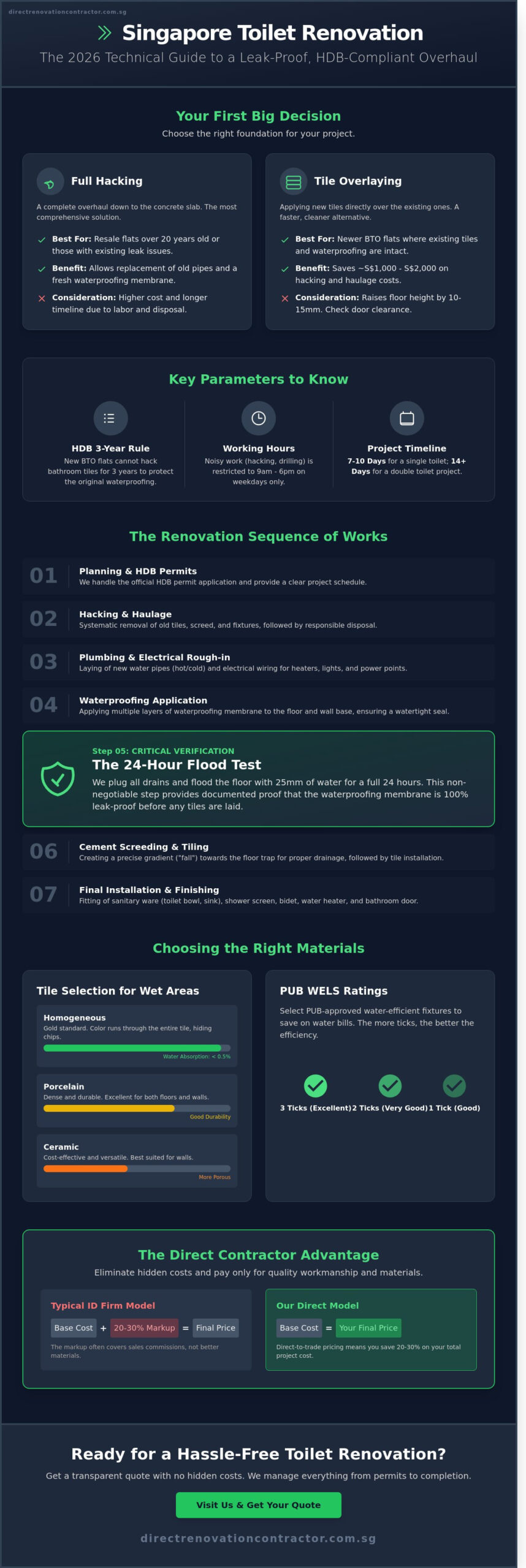
A successful toilet renovation in Singapore requires more than just picking out tiles. It involves strict adherence to HDB and BCA guidelines to avoid heavy fines or structural damage. Before you start, you must decide on the scope of work. Most homeowners choose between a full hacking of the existing screed or a tile-on-tile overlay. For older resale flats, we usually recommend a full hack to replace aging copper pipes and refresh the waterproofing layer. For newer units, an overlay is a faster, cleaner alternative that saves you money on labor and disposal fees.
Timing is another critical factor. A single toilet overhaul typically takes 7 to 10 working days, while a double toilet project can span 14 days or more. We manage these timelines strictly to minimize the disruption to your daily routine. As a direct contractor, we provide a clear schedule at the start so you know exactly when the masonry, plumbing, and electrical teams will be on-site. This transparency is part of our commitment to no-nonsense service with no hidden costs or middleman markups.
HDB and Condo Renovation Rules in 2026
If you own a new BTO flat, you must follow the 3-year restriction on hacking bathroom wall and floor tiles. This rule exists to protect the internal waterproofing membrane and prevent leaks into the unit below. If you hack before this period ends, you void the HDB warranty. For any work involving the shifting of sanitary positions or floor traps, you must apply for a specific permit. HDB rarely allows moving floor traps because it compromises the structural slab.
Working hours in 2026 remain strictly regulated. Noisy works like hacking or drilling can only take place on weekdays between 9:00 am and 6:00 pm. You cannot perform noisy work on Saturdays, Sundays, or Public Holidays. We handle the permit application process for you, ensuring all neighbors are notified and that our team follows the approved noise and dust control measures to keep your project compliant.
Hacking vs. Overlaying: Which is Right for You?
Hacking involves removing every layer down to the concrete slab. This is the only way to address deep-seated mold or recurring leaks. It also allows you to replace old plumbing lines that might be brittle. Good Bathroom design considerations start with structural integrity. If your flat is over 20 years old, hacking is the safest choice to ensure the longevity of your renovation.
Tile overlaying is a viable, cost-effective alternative if your existing tiles are still firmly bonded. It involves applying new tiles over the old ones using high-strength adhesive. While this saves about S$1,000 to S$2,000 in hacking and haulage costs, it raises the floor height by approximately 10mm to 15mm. You must check your door clearance before choosing this option. If the new floor height blocks the bathroom door from swinging freely, you will need to trim the door or replace it entirely.
The Technical Deep Dive: Waterproofing and Masonry Standards
Waterproofing is the most critical stage of any toilet renovation. It’s the invisible barrier that protects your home’s structure and prevents costly disputes with neighbors living below you. We treat this phase with absolute precision because a single pinhole leak can lead to ceiling damage that costs upwards of S$3,000 to rectify. As a direct contractor, we manage this process in-house to ensure every layer meets HDB and BCA standards without shortcuts.
Verification is just as important as application. Every project we handle undergoes a mandatory 24-hour “Flood Test” before we lay a single tile. We plug the floor traps and fill the bathroom floor with 25mm of water. If the water level remains unchanged after a full day, it confirms the membrane is watertight. This step is non-negotiable for a reliable toilet renovation, as it provides documented proof of quality workmanship before the masonry hides the evidence.
Choosing the right materials for wet areas is a functional decision, not just a stylistic one. We categorize tiles into three main types:
- Ceramic: Cost-effective and great for walls, but more porous than other options.
- Porcelain: Denser and more durable, suitable for both floors and walls.
- Homogeneous: The gold standard for wet areas. These tiles have a water absorption rate of less than 0.5% and the color runs through the entire tile, meaning chips are less visible.
The final technical hurdle is cement screeding. Our masons focus on creating a precise “fall” or gradient toward the floor trap. Without a calculated slope, typically at a 1:80 ratio, water will pond in corners, leading to slime buildup and slip hazards. If you want to ensure your floor drainage is handled by experts, you can get a direct quote from our masonry team today.
Waterproofing Membranes and Application
In Singapore, we primarily use liquid-applied polyurethane (PU) membranes or cementitious systems. For a robust seal, the membrane must extend at least 150mm up the wall. This “upturn” prevents water from seeping into the wall joints when you’re showering. In older HDB flats, waterproofing failure usually occurs because the original bitumen layer has become brittle over 15 to 20 years. We strip these layers back to the bare concrete to ensure the new application bonds perfectly.
Masonry and Tiling Excellence
Step-by-Step Toilet Renovation Checklist: The Sequence of Works
A successful toilet renovation requires a strict sequence of works to avoid costly rework and delays. At Direct Renovation Contractor Singapore, we follow a five-phase process that ensures structural integrity and functional efficiency. We begin with the protection of common areas, using corrugated plastic sheets to cover HDB lift lobbies and corridors. This is followed by the hacking of existing floor and wall tiles, along with the removal of old sanitary ware. Our team handles the disposal of debris directly, ensuring the site remains clear for the technical stages.
Plumbing and Electrical Rough-ins
Once the bathroom is stripped, we focus on the internal “skeleton” of the space. We position the shower mixer and water heater points based on your specific height requirements and the layout of your glass partitions. Many Singaporean homeowners now opt for concealed piping. While this requires more intensive masonry work to hide pipes within the wall, it delivers a minimalist aesthetic that’s easier to clean. On the electrical side, we install IP44 or IP66 rated power points. These are mandatory for safety when installing electronic bidets or illuminated mirrors near water sources. We ensure all wiring complies with local safety standards before any surfaces are sealed.
The middle phase of the project focuses on moisture protection and surface finishing. We apply a high-quality waterproofing membrane across the entire floor and up the wall to a minimum height of 300mm, or 1800mm in shower zones. A mandatory 24-hour flood test is conducted to check for leaks to the unit below. Only after a successful test do we proceed with masonry. We follow a “walls first, then floors” tiling sequence. This order protects the floor tiles from being chipped by falling tools or grout during the wall installation. We use grade C2 tile adhesive to ensure a permanent bond, especially for heavy porcelain tiles.
Fitting Out: Sanitary Ware and Accessories
The final phase involves the installation of fixtures and the finishing touches that define the room’s functionality. We follow a specific order: vanity cabinets and mirrors are installed before the toilet bowl. This prevents accidental damage to the porcelain and gives our installers more room to maneuver. We seal every joint between the tiles and the fixtures using high-grade anti-fungal silicone. This specific material is vital in Singapore’s humid climate to prevent black mold from forming in the corners.
To complete the look, we often integrate l box false ceilings. These structures serve two purposes. They hide the ventilation exhaust ducts and provide a clean platform for recessed LED lighting. This creates a soft, layered lighting effect that makes a small bathroom feel significantly larger. Once the accessories like towel rails and bidet sprays are mounted, we perform a final cleaning and a thorough pressure test on all plumbing joints to ensure no leaks exist before handover.
Sanitary Ware and Material Selection Guide for Singapore Homes
Selecting the right fixtures for your bathroom isn’t just about matching tiles. In Singapore, you must prioritize PUB compliance and material durability. Every tap, mixer, and showerhead sold locally comes with a Water Efficiency Labelling Scheme (WELS) rating. We recommend choosing 3-tick fittings for your toilet renovation. While 2-tick models are available, 3-tick fixtures significantly reduce water consumption, which lowers your monthly utility bills. It’s a practical choice that pays for itself over time.
Material choice for cabinets is another area where many homeowners make mistakes. Standard plywood carcasses often swell and rot within three years due to Singapore’s high humidity. For wet zones, we always advise using PVC or stainless steel for vanity carcasses. These materials are 100% waterproof and won’t harbor mold. When it comes to shower screens, 10mm tempered glass is the industry standard for safety. However, tempered glass can still spontaneously shatter due to nickel sulfide inclusions or thermal stress. You should always insist on a professional-grade safety film. This film holds the glass shards together if a breakage occurs, preventing injuries.
Selecting the Right Toilet Bowl
You can’t just buy any bowl you like. You must first calculate the “set-out” distance, which is the measurement from the finished wall to the center of the floor waste pipe. Most HDB flats use an S-trap with a 150mm or 250mm set-out. If you’re looking for a modern aesthetic, wall-hung toilets look great but require a concealed cistern and a sturdy bracket system. For easier maintenance, rimless flushing technology is now the preferred choice. It removes the internal “lip” of the bowl, leaving no place for germs to hide. Whether you want a simple bidet spray or a 13A powered electronic bidet seat, ensure the plumbing and electrical points are positioned correctly before hacking begins.
Bathroom Lighting and Ventilation
Electrical safety is paramount in wet areas. Any light fixture installed inside the shower zone must have a minimum rating of IP44, though IP65 is safer for direct water exposure. If your bathroom doesn’t have a window for natural airflow, a mechanical ventilation fan is a necessity, not an option. These fans extract moisture quickly, which prevents the ceiling paint from peeling and stops mold growth. You should integrate these requirements into your home renovation plan early. This ensures all wiring and ducting stay hidden behind the false ceiling for a clean, professional finish.
Ready to upgrade your bathroom fixtures with expert installation? Contact us for a direct contractor quote today and avoid middleman markups.
The Direct Way: Navigating the Contractor Model for Bathroom Upgrades
Bypassing the traditional interior designer model allows homeowners to save between 20% and 30% on total project costs. You’re essentially removing the middleman markup that covers design fees and firm overheads. In a standard toilet renovation, these savings can be redirected toward higher-quality tiles or premium sanitary ware. You take on the role of the coordinator, but you gain full control over the budget and the timeline. Direct pricing means you pay for the actual labor and materials, ensuring every cent of your budget stays on the site rather than in a showroom commission.
Managing the project yourself requires clear communication with your plumber and tiler. You must specify the exact placement of floor traps and the height of shower mixers before the first pipe is laid. 3D drawings are a vital part of this support package. They serve as a technical blueprint that prevents costly mistakes during the masonry stage. When your tiler sees a 3D render, they understand the grout line alignment and niche placements without needing constant supervision. It’s a pragmatic tool that bridges the gap between your vision and the builder’s execution.
Communicating with Your Contractor
Providing clear instructions to a renovation company singapore prevents mid-project disputes. Always ask your contractor about their waterproofing methods and the specific brands of cement screed they use before signing any agreement. A direct-to-factory approach is particularly effective for bathroom vanities. By ordering directly from the fabricator, you avoid retail markups and get custom dimensions that fit your HDB or condo layout perfectly. This ensures your carpentry is moisture-resistant and built to the exact specifications of your space.
Budgeting for Your 2026 Toilet Reno
A successful toilet renovation requires a line-by-line budget breakdown. You need to allocate funds for four main pillars: hacking, masonry, plumbing, and sanitary ware. Hacking involves removing old tiles and fixtures, while masonry covers the new screeding and tiling work. Don’t forget to account for debris removal and haulage fees. These hidden costs can add S$300 to S$600 to your bill depending on the volume of waste. Before committing to any firm, it’s worth reviewing how renovation companies in Singapore structure their pricing and workmanship standards so you can make a fully informed comparison. Finalizing your project with a direct renovation contractor singapore ensures you receive a transparent quote with no hidden charges. This model provides maximum value by focusing on technical competence and durable results rather than flashy sales pitches.
Take Charge of Your 2026 Bathroom Upgrade
A successful project starts with technical precision rather than just picking out pretty tiles. You now understand how critical HDB 3-year waterproofing rules and BCA masonry standards are for a leak-free home. By following a structured sequence of works, you avoid the common pitfalls that delay many local projects. Choosing the direct contractor route isn’t just about saving the 20% to 30% markup typically charged by interior design firms; it’s about having a direct line to the craftsmen doing the hacking and tiling.
Get a Transparent, Direct Quote for Your Toilet Renovation Today
Your new bathroom should be built to last for decades. Let’s get started on a space that’s as functional as it is fresh.
Frequently Asked Questions
How long does a typical HDB toilet renovation take?
A full toilet renovation in an HDB flat typically takes between 10 and 14 working days to complete. This timeline includes hacking the existing tiles, applying waterproofing, completing the masonry work, and installing new plumbing fixtures. If you’re opting for a minor makeover without hacking, our team can usually finish the job within 3 to 5 days.
Do I need an HDB permit for a simple toilet makeover?
You don’t need an HDB permit for simple aesthetic changes like replacing a washbasin, shower set, or toilet bowl. However, any work that involves hacking floor or wall tiles requires a formal HDB renovation permit. As a direct contractor, we handle all permit submissions to ensure your project complies with current building regulations and safety standards.
What is the average cost of a toilet renovation in Singapore for 2026?
Based on current market trends and material inflation, the average cost for a full toilet renovation in 2026 is projected to range from S$4,500 to S$7,500 per bathroom. This estimate covers hacking, waterproofing, and basic plumbing for a standard HDB layout. You can save approximately 20% on these costs by working directly with a contractor instead of an interior designer who adds management fees.
Can I change my toilet bowl without hacking the floor tiles?
Yes, you can replace your toilet bowl without hacking the floor tiles by matching the existing plumbing “trap” distance. Our plumbers measure the “S-trap” or “P-trap” setup to ensure the new unit fits perfectly onto the existing outlet. This is a practical step in a toilet renovation that avoids the mess of masonry work while immediately improving your bathroom’s hygiene and water efficiency.
Is it better to use a direct contractor or an interior designer for a small bathroom?
Choosing a direct contractor is better if you want technical expertise and transparent pricing without paying for high-concept design fees. Since HDB bathroom layouts are mostly fixed by structural pipes, you don’t need complex floor plans. Dealing directly with the builder ensures you get factory prices on materials and a straightforward project timeline without middleman markups.
What is the 3-year waterproofing warranty for HDB BTO flats?
HDB provides a 3-year warranty against floor and wall leaks for all new BTO flats, starting from the date of your key collection. If you decide to hack or overlay your tiles within this 3-year period, the original HDB warranty becomes void. We recommend checking your flat’s age before starting work; otherwise, ensure your contractor provides a separate warranty for the new waterproofing layer.
How do I prevent mould growth in my newly renovated toilet?
You can prevent mould by installing a high-suction exhaust fan and using anti-mould silicone for all joints and corners. We also recommend applying a dedicated anti-mould ceiling paint, which reduces fungal growth by up to 90% compared to standard emulsion paints. Keeping the area well-ventilated and dry after use is the most effective way to protect your new tiles and cabinetry.
Can I install a wall-hung toilet in an HDB flat?
You can install a wall-hung toilet in an HDB flat, but it requires the construction of a muret wall to house the concealed cistern. This muret wall typically takes up about 150mm to 200mm of floor space. While it involves extra masonry work, it’s a popular choice because it clears the floor area, making it much easier to wash the bathroom floor thoroughly.