
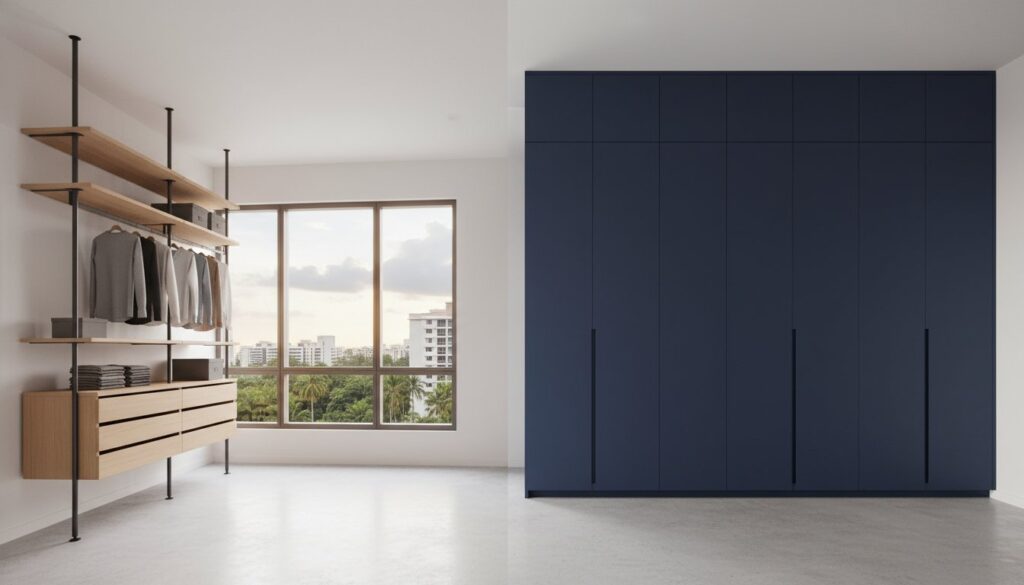
The traditional built-in wardrobe is often seen as the gold standard for Singapore homes, but it might actually be the wrong choice for your specific BTO layout. Most homeowners assume that maximizing storage requires permanent carpentry, yet they often struggle to calculate the total cost of built-in wardrobe singapore installations when faced with complex quotes or hidden markups. You’re likely dealing with awkward aircon trunking, structural beams, or the constant worry that a sealed cabinet will trap moisture and lead to mould in our humid climate. It’s a common frustration to find that a fixed design doesn’t adapt well to the tight corners of modern apartments.
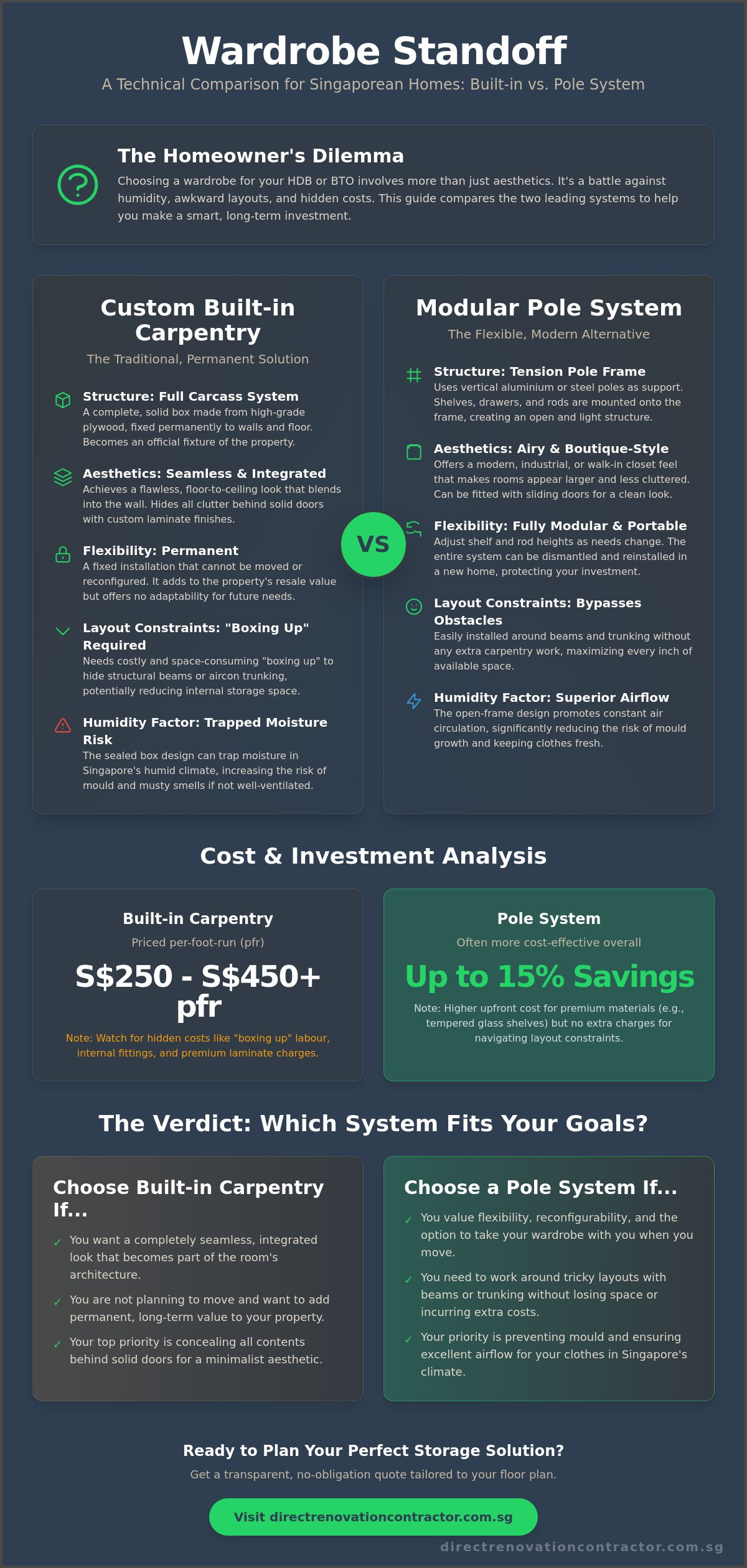
This guide cuts through the marketing fluff to provide a direct, technical comparison between solid plywood carpentry and modular pole systems. We’ll break down the specific material specs, installation timelines, and price differences to help you choose a solution that fits your budget and floor plan. You’ll get a clear look at how each system handles Singapore’s unique environmental challenges, from humidity resistance to reconfigurability. We’ll examine why pole systems are often 15% more cost-effective than fixed carpentry and which option maximizes every square inch of your bedroom while ensuring your storage remains functional and durable for years to come.
Key Takeaways
- Identify the structural differences between permanent plywood carpentry and modular aluminium pole systems to see which suits your 2026 renovation timeline.
- Break down the total cost of built-in wardrobe singapore installations by understanding “per foot run” pricing and avoiding hidden labour fees.
- Learn how to bypass common HDB layout constraints like aircon trunking and ceiling beams without the need for costly and space-consuming “boxing up” works.
- Assess the 10-year durability of both systems in Singapore’s humid climate to ensure your storage solution remains resistant to mould and warping.
- Use our expert checklist to vet carpentry quotes and ensure you’re paying for technical quality rather than high-concept design markups.
Defining the Fundamentals: Built-in Carpentry vs. Pole System Wardrobes
Choosing the right storage solution starts with understanding the structural foundation of your room. In Singapore, homeowners usually decide between a permanent fixture and a modular frame. Defining a built-in wardrobe often comes down to how the unit interacts with your walls. A built-in system is a fixed architectural addition, while a pole system is a versatile, pressure-mounted assembly. Both options affect the total cost of built-in wardrobe singapore projects, but they serve very different lifestyle needs. We see a shift in 2026 where homeowners prioritize technical performance over pure aesthetics, leading to a more critical look at how these systems are actually built.
The Mechanics of Custom Built-in Carpentry
We fabricate custom built-in wardrobes using a full carcass system. This involves constructing a complete box with sides, a back, a top, and a bottom. We use high-grade plywood for the core because it resists warping in our local humidity much better than cheaper MDF alternatives. Once the structure is ready, we apply selected laminates to finish the exterior. To achieve that seamless floor-to-ceiling look typical of modern BTO layouts, we install a plinth at the base and top-up panels to close any gaps against the ceiling. It’s a permanent installation. Because these units are fixed to the floor and walls, HDB classifies them as permanent fixtures during resale valuations. You can’t take them with you, but they add long-term value to the property.
The Logic of Modular Pole System Wardrobes
The pole system takes a different approach. Instead of a heavy timber box, it uses vertical aluminium or steel tension poles as the primary support. Shelves, drawers, and hanging rods are then suspended from these poles. This modularity allows you to adjust heights as your storage needs change. While many people associate pole systems with open-concept walk-in closets, you can actually add sliding doors to a pole frame for a cleaner look. The biggest advantage is portability. If you plan to move after your 5-year MOP, you can dismantle the system and reinstall it in your next home. This flexibility is a major factor when weighing the initial cost of built-in wardrobe singapore versus modular alternatives.
The Direct Comparison: Aesthetics, Durability, and the Humidity Factor
Visual integration often dictates the first step of a renovation plan. For many Singaporeans, the goal is a flush, hidden look where the wardrobe appears as part of the wall. Custom built-in carpentry achieves this through full-height doors and precision-cut panels that mask every gap. In contrast, pole systems offer an industrial, boutique-style aesthetic that makes a room feel larger. This open-concept approach is one of the key benefits of modular pole systems, especially in compact BTO bedrooms where heavy furniture can feel suffocating. While the aesthetic choice is subjective, it directly impacts the cost of built-in wardrobe singapore projects due to the varying levels of finish and material volume required.
Aesthetics and Visual Integration
Achieving a minimalist look requires seamless execution. We use floor-to-ceiling carpentry doors to hide internal clutter and create a clean architectural line. You can choose from hundreds of laminate textures to match your flooring or wall paint. Pole systems rely on powder-coated metal and glass, which lean towards a modern, airy feel. If you prefer a walk-in wardrobe vibe without the heavy price tag of a full room conversion, the pole system’s lack of side panels creates an uninterrupted visual flow. This works well with existing home themes that favor metal accents and open shelving.
Durability in Singapore’s Tropical Climate
Humidity is the silent enemy of furniture in Singapore. Traditional built-in wardrobes, while sturdy, create enclosed microclimates that trap moisture. If your room lacks consistent ventilation, this often leads to mould growth on leather bags and cotton shirts. Pole systems excel here because they allow 360-degree airflow around your garments. From a technical standpoint, we assess durability based on a 10-year lifespan. Solid plywood carcasses (at least 18mm thick) resist sagging better than thin particle boards, but metal poles are virtually immune to warping. For ground-floor HDB units or older estates prone to pests, metal frames also provide an extra layer of termite protection that timber cannot match.
Maintenance requirements differ significantly between the two. Closed built-in units keep dust away from your clothes, reducing the need for frequent cleaning. Open pole systems require a disciplined lifestyle; dust accumulation is visible, and your organization skills are always on display. To bridge this gap, many homeowners now install internal LED sensor lighting and specialized accessory trays within their custom units to combine the “boutique” look with the protection of a closed cabinet. If you are uncertain about which structure suits your room’s ventilation, consulting an expert in expert wardrobe carpentry can help you avoid costly mistakes. Balancing the cost of built-in wardrobe singapore with long-term maintenance is the key to a successful bedroom makeover.
Space Management: Solving HDB and Condo Layout Constraints
Singaporean apartments, especially new BTO units, are notorious for structural obstacles that complicate furniture placement. You’ll often find air-conditioning trunking running across the top of walls or thick structural beams that create awkward recessed niches. These aren’t just aesthetic eyesores; they’re physical barriers that dictate how you can build storage. Many homeowners find that the final cost of built-in wardrobe singapore installations increases significantly when contractors have to account for these complex obstacles through custom hacking or “boxing up” works.
Pole systems act as a practical “cheat code” for these layout issues. Because they lack a solid timber carcass, the vertical poles can be positioned to bypass surface-mounted pipes and trunking without any structural modification. You don’t need to pay for expensive carpentry cut-outs that essentially waste internal cabinet space. In small bedrooms where every centimetre of floor clearance matters, an open pole configuration eliminates the need for door swing space, making the room feel less congested than a traditional wardrobe setup.
Trunking, Beams, and DB Boxes
We use custom built-ins when the goal is to hide unsightly features like DB boxes or electrical panels. A carpenter can design a shallow cabinet with a “false” back or a hidden door that provides access to the meters while maintaining a flush wall appearance. For L-shaped corners, the “dead corner” dilemma is real. Carpentry often results in a hard-to-reach dark spot, whereas pole systems keep the corner open, allowing you to slide clothes along the rail more freely. However, if your walls are at odd angles or not perfectly straight, precision-fitted carpentry is still the superior choice to bridge those gaps and create a level finish.
Reconfigurability for Growing Families
Your storage needs in a 3-bedroom BTO will change over a decade. A nursery requires more shelving for folded clothes and toys, while a teenager’s room needs full-height hanging space for school uniforms and jackets. Pole systems allow you to adjust the height of shelves and rods yourself using a simple hex key. You can convert a double-hanging section into a series of drawers without hiring a new contractor. This adaptability is a major financial advantage; you aren’t locked into a fixed design that might become obsolete as your family grows. While the initial cost of built-in wardrobe singapore carpentry is a permanent investment, the modularity of a pole system offers long-term functional value for those who prefer a dynamic home layout.
For high-ceiling units or loft-style apartments, verticality is your best friend. We can install extra-tall poles that reach up to 3 metres, allowing for seasonal storage at the very top. This maximizes your cubic volume without increasing the footprint of the furniture. Whether you choose the permanence of carpentry or the flexibility of metal frames, the focus should always be on solving the specific constraints of your floor plan rather than following a generic design template.
Cost Analysis: Built-in Carpentry vs. Pole System Investment
Understanding the financial structure of your renovation is just as critical as the design itself. In the 2026 Singapore market, most contractors quote based on the “per foot run” (pfr) model. This simplifies the initial estimate, but it can hide the complexity of the final bill. The total cost of built-in wardrobe singapore projects is heavily influenced by the internal configuration you choose, such as the number of drawers, pull-out racks, and specialized hardware. You should also account for hidden costs like delivery fees, installation labour, and the prevailing GST, which can add hundreds to your total contract price if not disclosed upfront.
Working directly with a fabricator provides a significant financial advantage. By removing the 20% to 30% markup typically charged by interior design intermediaries, you ensure your budget goes directly into material quality and workmanship. We prioritize technical transparency, providing a clear breakdown of where every dollar is spent. This straightforward approach is essential for savvy homeowners who value functional results over flashy presentations.
Breaking Down the Carpentry Quote
We look at three main variables: material grade, laminate complexity, and hardware choices. Solid plywood with high-pressure laminates is our standard, but adding soft-close hinges or premium runners from brands like Blum adds to the final tally. Labour is the biggest driver of cost here. Custom carpentry is hand-built, requiring significant man-hours for precision fabrication and on-site installation. For a deeper look at how direct sourcing can lower your renovation bill, see our guide on Carpenter Singapore: Custom Carpentry and Direct Savings.
Pole System Pricing Dynamics
Pole systems are generally viewed as a more budget-friendly alternative. Industry data suggests they’re approximately 15% more cost-effective than traditional built-in carpentry. However, high-end aluminium extrusions or custom-coloured poles can narrow that gap. You should also factor in future labour. While the system is portable, you’ll still need to pay for professional dismantling and re-installation if you move to a new flat after your MOP. It’s a lower upfront cost of built-in wardrobe singapore alternative, but one that requires a different long-term maintenance mindset.
Evaluating long-term ROI is vital if you plan to sell your property. Valuers often view permanent, high-quality carpentry as a fixed asset that increases a home’s resale value. Pole systems are often classified as personal property because they can be removed. If you’re looking for a permanent upgrade that enhances your property’s marketability, a well-executed built-in unit is the superior choice. If you’re ready to get a transparent quote without hidden commissions, check out our wardrobe carpentry services.
The Verdict: Which System Fits Your 2026 Renovation Goals?
Choosing between a pole system and a traditional built-in unit isn’t just about the initial cost of built-in wardrobe singapore quotes. It’s a technical decision based on your property tenure and the specific physical constraints of your bedroom. While built-ins offer a permanent, high-value upgrade, pole systems provide the tactical flexibility needed for modern, fast-paced Singaporean lifestyles. The right choice depends on whether you value architectural integration or modular adaptability.
When to Choose a Pole System
Pole systems are the ideal choice for renters or homeowners who don’t plan to stay past their 5-year MOP. They’re also perfect for temporary nurseries where storage needs will change drastically within 36 months. If your room has complex aircon trunking or poor natural ventilation, the open structure of a pole system is the only way to ensure your clothes don’t develop a musty smell. Because these systems are mostly pre-fabricated, they offer a much faster on-site installation timeline compared to custom carpentry.
When Custom Built-in is the Gold Standard
Custom built-in carpentry remains the gold standard for luxury master suites where a flush, seamless appearance is non-negotiable. It’s the superior choice for maximizing every millimetre of space, especially if you’re dealing with slanted walls or recessed niches that modular kits can’t fill. A permanent wardrobe is an investment in your property’s equity. For a broader look at how carpentry fits into your overall home improvement plan, check out our HDB Renovation in Singapore: The Ultimate 2026 Guide.
Getting the Best of Both Worlds
You don’t have to choose just one. Many of our clients now opt for hybrid solutions, where we build a custom timber ‘shell’ with doors to maintain a clean exterior look, but install a modular pole system inside. This gives you the aesthetic of a built-in unit with the airflow and reconfigurability of a pole system. To see how this hybrid approach affects your total cost of built-in wardrobe singapore, you can request a transparent, direct quote from Direct Renovation Contractor Singapore. We focus on structural integrity and technical precision, ensuring that regardless of the system you choose, the installation is level and durable.
Before you sign any carpentry contract, ask yourself these five critical questions:
- Is the wall surface perfectly level, or does it require custom carpentry to mask gaps?
- Do I plan to relocate or sell the property within the next 5 to 7 years?
- Does the room have a history of moisture or mould issues that require better airflow?
- Are there aircon pipes or DB boxes that need to be accessed or bypassed?
- Am I paying an intermediary commission, or am I dealing directly with the fabricator?
Securing Your 2026 Storage Solution
Navigating the technical differences between modular pole systems and permanent carpentry is the only way to ensure your bedroom remains functional and mould-free. You now understand that while pole systems offer unmatched airflow and flexibility for BTO layouts, custom built-ins provide the structural permanence that increases property equity. Balancing the cost of built-in wardrobe singapore homeowners face requires a clear look at material grades and the rejection of unnecessary intermediary markups. Whether you’re bypassing aircon trunking or maximizing a compact master suite, the focus remains on technical precision and honest pricing.
Direct Renovation Contractor Singapore handles every stage of the process with our in-house expert carpentry team. Our specialists are deeply familiar with HDB, BTO, and Condo layout challenges across the island, ensuring your installation is level and durable without the 20% to 30% markups typical of interior design firms. We provide direct-to-homeowner pricing and technical transparency for every project. Get a Direct Contractor Quote for Your Wardrobe Today and start building a storage system that actually fits your lifestyle. Your ideal home setup is just a straightforward conversation away.
Frequently Asked Questions
Is a pole system wardrobe cheaper than a built-in one in Singapore?
Pole systems are typically more cost-effective because they require fewer raw materials and less on-site carpentry labor. While the cost of built-in wardrobe singapore projects includes full carcass construction and specialized laminate finishes, pole systems rely on pre-fabricated metal extrusions. This streamlined assembly reduces the total billable man-hours for your bedroom renovation.
Can I install doors on a pole system wardrobe to prevent dust?
You can absolutely install sliding or casement doors on a pole system to mimic the look of a traditional built-in unit. We often install floor-to-ceiling tracks that allow the doors to glide independently of the internal pole structure. This hybrid setup protects your clothes from dust while maintaining the internal flexibility of modular shelving and hanging rails.
How much weight can a pole system wardrobe shelf actually hold?
A standard aluminium pole system shelf can typically support between 15kg and 25kg when installed correctly with heavy-duty brackets. The weight capacity depends on the pole’s wall thickness and the tension of the floor-to-ceiling mounts. For heavier items like books or safe boxes, we recommend using reinforced plywood shelving rather than thin glass or wire racks.
Does HDB have specific rules about installing built-in wardrobes?
HDB does not require a renovation permit for installing wardrobes, as they are considered cosmetic carpentry. However, you must ensure your contractor doesn’t hack into or drill excessively into structural walls or columns. For condominium residents, always check your MCST bylaws regarding work hours and the required refundable renovation deposits before starting any carpentry work.
Can a pole system wardrobe be moved to a new house easily?
Relocating a pole system is straightforward because the components are held together by hex-bolt connectors rather than permanent glue or nails. You can dismantle the entire frame, pack it flat, and reconfigure it to fit the ceiling height of your next home. This makes it a tactical choice for those who don’t plan to stay in their current flat permanently.
Which system is better for preventing mould in Singapore’s humidity?
Pole systems are technically superior for mould prevention because they eliminate the enclosed, stagnant air pockets found in traditional cabinets. In Singapore’s high average humidity, consistent airflow is your best defence. If you prefer a built-in look, ensure your contractor uses high-grade, moisture-resistant plywood and leaves a small ventilation gap behind the back panel to prevent moisture buildup.
How long does it take to install a built-in wardrobe vs. a pole system?
A custom built-in project usually takes 4 to 7 weeks from the initial site measurement to final installation. The actual on-site assembly for a built-in unit takes 1 to 2 days, whereas a pole system can often be fully installed in just a few hours. This rapid turnaround makes pole systems ideal for homeowners who need to move in on a tight timeline.
Are pole systems suitable for heavy luggage and winter coat storage?
Heavy luggage and winter coats are best stored on the lower tiers or reinforced hanging rails of a pole system. While the poles are strong, the cost of built-in wardrobe singapore carpentry might be a better investment for “dead storage” needs. Built-in units provide a solid base plinth that distributes the weight of heavy suitcases more evenly across the floor surface.